5 Ways To Leave Your Parents After Marriage

Leaving your parents after marriage isn’t only about moving out to a different house. It’s much deeper than that. Too bad for me, I learned this lesson a little too late. The tension in our family has already reached its peak where my wife and I got into a fiery argument with my dad and brother.

You leave your parents after marriage by emotionally separating yourself from them. This means setting up clear boundaries that will allow you to give priority to your spouse, support yourself, set up your own rules, and care for your parents without obligation.

Thank God we’re all doing great now. The transformation began when we started to draw clear lines in our relationships. I know this may sound selfish, rude, or even rebellious. But what these lines truly represents is respect. Respect for each other’s interests, resources, and freedom. This article aims to give you ideas on how to set up healthy boundaries with your parents after marriage. It is inspired by the book, Boundaries, by Dr. Henry Cloud and John Townsend.

I highly recommend you get a copy of the book if you want to dive deeper into this topic. You can purchase it by following the links in the recommended reading section below. I’ll earn coffee money from the referral with no extra cost to you.

Disclaimer: this post is based on the author’s own experiences and opinions.
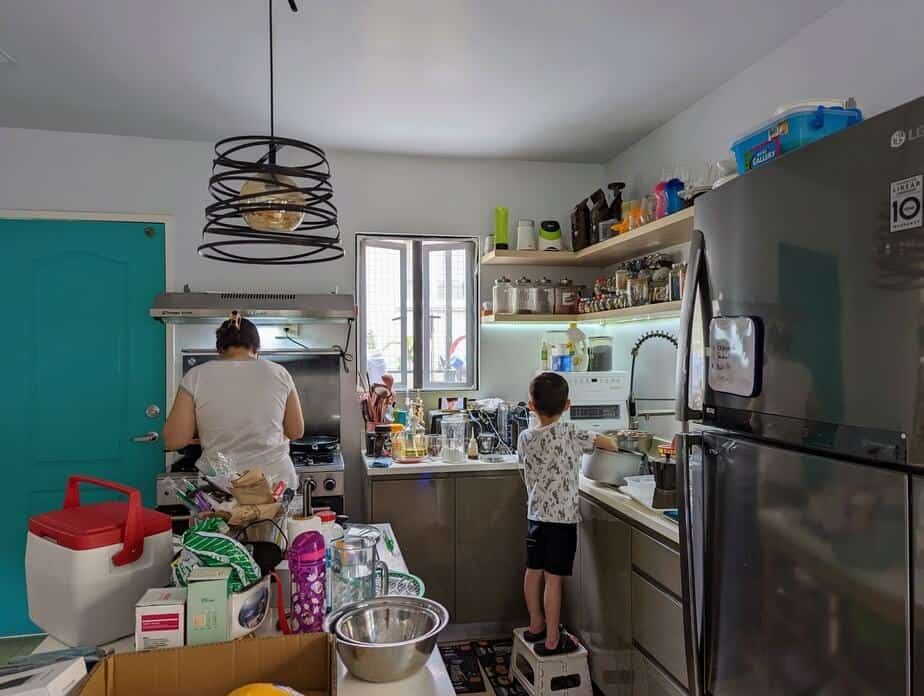
Mother and son cooking in messy kitchen.
Mother and son cooking in a messy kitchen.

1. Move Out Of Your Parents’ House

Moving out is the easiest and most basic way to set boundaries with your parents. Distance will naturally act as a fence that separates our new family from the old. I lived with my parents for three years before we changed address. The truth is we didn’t have plans to move out. I’m the eldest in the family, so my wife and I have already accepted our fate of taking care of my parents in their old age.

But our plans changed when tension in the family started to brew. I’m not one hundred percent sure when it began, but my suspicion is at the time when our first child was born. It seems like everyone got too excited about their new roles in the family, which eventually resulted in overstepping our personal boundaries:

  • The brother, now an uncle, who likes to play even when it’s already sleeping time.
  • The parents, now grandparents, who offer foods we don’t permit.
  • The sister, now an aunt, who kisses on the lips.
  • We, the new and tired parents, who overthink and overprotect.

I’m sure nobody has any ill-will toward the first baby in the family. Each person has good intentions. Yet those intentions don’t necessarily align with one another. We talked over this matter many times in hopes everybody can look at the same page. But it seems each one of us is already sold in our own positions.This is why putting distance is way better than arguing over something that both parties could be right in their own respect.

Newly married couples can greatly benefit if they live separately from their parents right after their wedding day. It doesn’t matter whether you have loving or toxic parents. Living with them alone increases the potential of conflicts due to boundary issues. Distance will protect each other’s interests and promote a more harmonious family life.

2. Prioritize Your Spouse.

But not all who moved out of their parents’ house have actually left their parents after marriage. Many couples live away physically, but they’re fully attached emotionally. One of the most vital lessons I learned from our marriage counselor is there is such a thing as an order of priority in relationships. She said besides God, my number one priority now should be my wife, and then my children.

  1. God
  2. Spouse
  3. Children
  4. Others

Marriage should detach us from the temporary parent-child bond and be united to the permanent husband-wife covenant. Essentially, it means my wife must come before my mother, father, brother, sister, and even my children. The same goes to her. As her husband, no other person should be more important than me. Many marriages struggle because they do it the other way around. They give the leftovers to their spouses.

Lalaine and I enjoy our marriage more today because aside from moving out physically, we have also learned how to detach ourselves from our parents emotionally. It took us awhile, but after we got the hang of it, our married life has never been the same. We were happier and more secure with one another.

Prioritizing our spouse is not easy. Many are deeply attached to their parents even after marriage. Some are even scared of getting married simply because they can’t bear the thought of leaving mom and dad. Unfortunately, based on experience, there is no convenient way of doing this than to decide. Decide that you will detach yourself from your parents and be fully attached to your spouse. Ironically, the literal meaning of decide is to “kill-off”. De = off; Cide = kill or cut. This may mean:

  • Saying “no” to your parents, so you can say “yes” to your spouse.
  • Leaving the family corporation to start a husband-and-wife business.
  • Moderating communications and interactions with your parents.
  • Going with your spouse’s gut feeling rather than your parents’ advice.

Of course, not all parents would take this positively. You may need to sit this down with them and explain why you must focus on your spouse more.
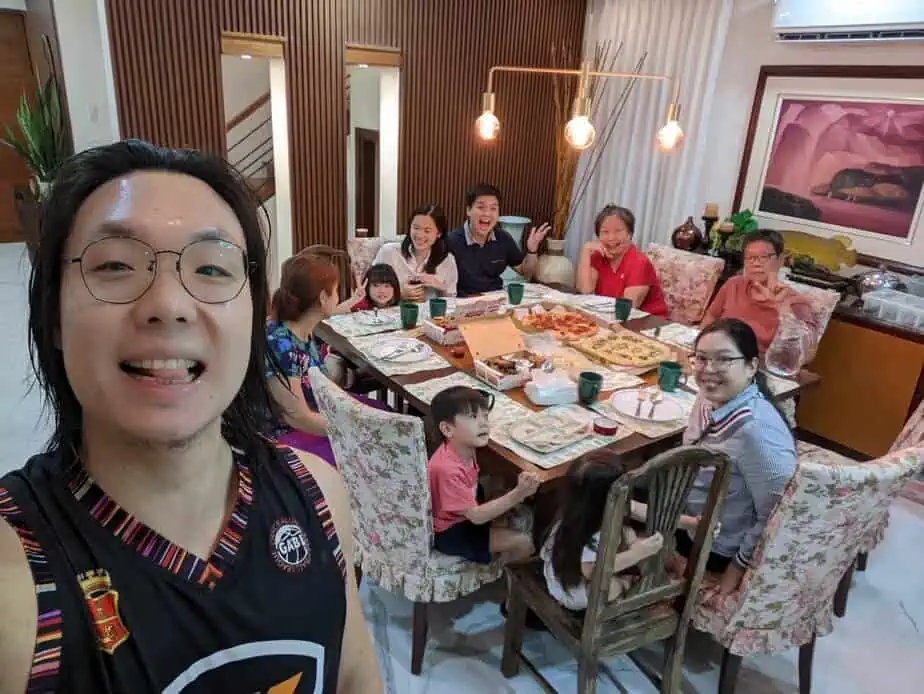
family dinner with pizza and pasta.
First family dinner at my brother’s new house.

3. Support Your Parents Out Of Love, Not Out Of Obligation.

Parents should take care of their children, but children aren’t obliged to do the same for their parents. This is a controversial take, but I didn’t make this up on my own. I learned this in one of my sessions in family counselling, and also from the book Boundaries. I’m not sure how your relationship with the Word of God is, but the foundation of this notion is in 2 Corinthians 12:14. It says, “For children are not obligated to save up for their parents, but parents for their children.

I don’t know if it’s just me. But have you observed that poor families have more children than those who are affluent? I see wealthy families have two to three kids, while those who don’t know where to get their next meal have a dozen. All these years I thought it was a result of too much time in their hands. They have nothing to do all day, so…what better way to spend it than manufacturing babies, right?

But I later learned from a friend, who works in a charity institution, that these poor families don’t produce offspring because they are bored. No, they don’t do it randomly. Rather, these babies are part of their master plan. He said their goal is to produce children who can one day be successful and get them out of poverty. It’s like playing the raffle: more entries, more chances of winning!

Poor kids. They’re not even born yet, and they are already destined to take care of their parents. It’s a duty they didn’t sign up for. To be fair, this doesn’t only apply in lower class families. The rich and the middle-class also have the same expectations from their children.

As the eldest son, I felt the pressure too. Caring for my parents more than I should have has affected me earlier in my marriage. There are times when I feel guilty when I give more attention to my wife and kids than them. I felt like I was not being a responsible son.

Leaving our parents after marriage also includes embracing the truth that we are not in any way indebted to them. We are their responsibility, not the other way around. This also applies to me now that I am a dad myself. I am obliged to take care of my kids, but I should not expect them to take care of me when I get old. I hope they do, but I won’t pressure them to do so.

Create A “Parents Fund”

While we are not bound to give financial support to our parents, this doesn’t give us the license to ignore them completely. The Bible also says we should honor our father and mother. I’m not sure what this means to you. But to me, it is taking care of them not out of obligation, but of love.

The way I do this currently is to allocate a budget called the “Parents Fund”. Here, I set aside a portion of my income to honor my parents. Whatever amount I saved there will be spent solely for them. I can use it to treat them out to nice restaurants, add it to their health budget, or give it to them in cash. The only caveat is this fund should not hamper my ability to provide for my family – which is my greater responsibility.

4. Set Your Parents Free From Their Obligation Towards You.

Another way to leave our parents after marriage is to stop depending on them. We must set them free from their obligations. Married couples should now be fully dependent on each other. Let mom and dad enjoy their season as empty-nesters.

Do you still let mom and dad buy your groceries? Drive you to your office? Pay your utilities? Or give you allowances? This is a sign that you are still dependent on your parents. This has to stop ASAP because it could hamper your growth and affect your marriage negatively. According to Dr. Henry Cloud, “Adults who do not stand on their own financially are still children.”

How do you stop depending on your parents?

  • Practice. Remove the crutches slowly. Try to eliminate one benefit you get from your parents every month. Do it consistently until you become fully dependent on yourself or spouse. Start with the little things like paying for your own internet next month.
  • Remove your parents from the equation. Do you always expect your parents to save the day? Cut it out from now on. Always try to resolve matters within your means first. Only consider them in emergency situations.
  • Separate your accounts. Cut any banks, credit cards, and other accounts you have linked with your parents. The only account should be linked to you is your spouse’s. This also applies to possessions. Their house is no longer your house. Their car is no longer your car. Even the house helpers and drivers who served you when you’re a kid are no longer under your authority.

Family breakfast in a hotel.
Having breakfast in a budget hotel before heading to church.

5. Establish Your Ground Rules.

You have fully left your parents after marriage when you finally established your own ground rules. Many husbands and wives clash because they still operate under their parents’ authority and family’s culture. Someone close to me says his main struggle in marriage is his wife always quotes her mom:

  • “Mom said I cannot eat this.”
  • “Mom said we should do it this way.”
  • “Mom said we must go here.”

Marriage won’t work if you don’t establish your house rules. Yet what worked in one family may not work in another. Thus, we cannot simply copy our parents’ rules and paste them into our own. Husband and wife should develop a family constitution that applies to them both and commit to it.

Here are twelve rules we live by as a family (thus far):

  1. There is time for everything. (If it’s time to eat, time to eat; if it’s time to sleep, time to sleep.)
  2. If it costs you your peace, it’s too expensive.
  3. Be on time. Especially on payments.
  4. Live with integrity. Be authentic and transparent.
  5. Always use what’s available.
  6. Live within your means.
  7. Let your yes be yes, your no be no. (Be decisive and committed)
  8. It’s okay to make mistakes, as long as you take responsibility.
  9. Take care of your stuff.
  10. If you don’t know, learn. If it’s hard, practice.
  11. Don’t make permanent decisions based on temporary emotions.
  12. If you want to win everything, be prepared to lose everything.

Summary

Leaving your parents after marriage is less about the physical and more about the emotional. Many couples may have left their houses after the wedding day, yet are still fully attached to their parents. Leaving home after marriage means you now put your spouse first, relieve mom and dad of their obligations, and have established your own ground rules.

More From The Learning Dad Blog


Follow the Journey

This journal is my way of making sense of the lessons from the journey. Get the next full entry delivered straight to your inbox.

8 Important Things You Should Know Before You Move Out

Leaving home for the first time? I feel you. There sure are lots of questions going around your head right now. I’ve already moved out thrice in my thirty plus years of existence, and I get that iffy feeling every time. Don’t worry, let’s tackle some of those stuff bugging you in this post, shall we? Here are 7 things you should know before you move out.

Disclaimer: this post is based on the author’s own opinion and experiences.

Driving with mountain view
Driving on a gloomy day with tangerine colored trees and majestic mountain view.

Planning and preparation are keys.

Start moving with a pen and paper. Create a moving out plan; or download a printable checklist on the internet. Don’t try to wing it like me when I moved out the first time. Moving out is a process that needs careful planning and preparation. Doing so will make your moving experience less taxing.

I’m a type who likes to keep things simple, so the way I plan is to ask myself these questions: where, when, what, how and who?

Where to move?

  • Country
  • City
  • Neighborhood
  • Type of house

When to move?

  • Availability of the house
  • Urgency of the move
  • Feasible timeframe

What do I need to accomplish?

  • Moving requirements and permits
  • Buy the necessary materials
  • Save up for the cost
  • Do the needed repairs
  • Notify the people involved (your parents or landlord)

How will I move my stuff?

  • Hire a mover
  • Pack everything in a cardboard box
  • Check how many trucks are needed to fit all the stuff

Who can help me?

  • A relative
  • A friend
  • Their availability
  • Their willingness

You’ll experience mental and emotional distress.

Don’t be alarmed when you experience the following when you move out:

  • Anxiety
  • Homesickness
  • Loneliness
  • Fear

It’s normal for everyone to undergo mental and emotional distress during this transition phase. According to Merryl Gee, a psychotherapist in M1 Psychology, the main cause of stress is due to the adjustment to your new environment and lifestyle.

I had no control over my tears after I moved out of my parents’ house for the first time. They randomly flow down my cheeks throughout the day for a week. I recall experiencing all the four symptoms mentioned above, and they’re strongest at night; just when you’re about to sleep. I’m not sure if there’s a better way to overcome them than to simply brave through it. Try to distract yourself with video games and Netflix. But what worked for me are books, prayer, and Planetshakers. It’s going to be hell the first week, but it should get better after.

Move first. Buy stuff later.

It’s easy to fall into the trap of buying all the stuff we “think” we need before we even moved in. This happened to us when my wife and I were expecting our first child. The moment we learned his gender, we bought clothes, shoes, toys, gadgets, furniture, and appliances based on our own projection. Ultimately, only 10% of what we had purchased were useful. The worst part is we even have to spend more on buying the stuff we actually need!

Learning from the experience, my wife and I decided to move into our new apartment with only the essentials. I recall we only bought four items before we moved in:

  • A dining set (a table with six chairs).
  • A queen size mattress with pillows.
  • An air-conditioner.
  • A rice cooker.

The rest we only bought as needed.

The same idea applies to renovations. There are a bunch of things I want to upgrade in our new house before we moved in. I want the lavatory to be bigger, wooden bathroom doors instead of plastic, and a glass shower enclosure. But due to budget constraints I decided to delay them instead. One and a half years later, I still haven’t done the upgrades. The funny thing is I don’t even think about them anymore. I eventually got used to living in my new home as it is, and didn’t see the need for improvements as I’d seen it before moving in.

There will be a high probability of damages and losses.

I’m meticulous with my stuff. So when we were about to move out, I made sure we packed everything properly. We wrap them in bubble wraps, put them inside high quality cardboard boxes, and mummified them with packaging tapes. But despite the effort, we still found some scratches and bruises on them after. It ain’t anybody’s fault. Moving simply exposes our stuff to certain risks like damage and loss. Here are a few notes to myself if ever we’d move again in the future to minimize the hazard:

  • Empty drawers that contain valuables and sharp objects. Transport them in separate boxes.
  • Move by batches. Transport the fragile ones last.
  • Cover the delicate areas with Styrofoam; bubble wrap isn’t enough.

Moving out is an opportunity to declutter.

Have you found stuff in your cabinet and said to yourself, wow I have this? I was surprised to find I have a Canon digital camera, a Nintendo DS, and a black/gold Casio G-Shock watch in one of my drawers. It’s been almost a decade since I decluttered, and I have totally forgotten I owned these cool stuff back then.The truth is we don’t use 80% of the things we use in our house; and you don’t need to pack these up and bring them to your new address. Take this chance to throw out or give away things that no longer add value to your life.

To help you declutter when moving, I’d share with you one technique I learned from a podcast channel I listen to. It’s the “90/90 Minimalism Rule” by The Minimalists. The way this works is you pick up an item and ask yourself, have I used this in the last 90 days? If you haven’t, then ask yourself next, will I use this in the next 90 days? If the answer is no, then let it go.

I struggled with this rule at first because I have the tendency to get attached to my things – even if I don’t use them. So to make this process easier for me, I made my own rule. It’s the 365/365 rule. Have I used this in the past year? If not, will I use this next year? And then I let it go.

You will never be ready to move out.

Moving out is like getting married. You’ll never be 100% ready. My wife and I had been in a relationship for thirteen years before we tied the knot. Yes, thirteen years. That’s not a typo. Some of our batch mates already have children that age, and we haven’t started life yet. Just imagine. Thinking back now, I can’t blame those people who pester us with the question, when are you guys getting married? Or, what’s keeping you from getting married? These are valid questions I don’t have an honest answer to. My usual response was:

  • “We still can’t afford it.”
  • “We want to focus on our careers first.”
  • “Her grandma died, so we can’t get married for three years according to our Chinese culture.”
  • “My grandpa died, three years after her grandma died. So we need to wait another three years.”

While my answers are generally true, these were mere excuses. The bigger picture is as much as we love each other, we weren’t ready to settle down. Or was it only me? Whatever the case, we could’ve got married if we indeed wanted to. Even with the demise of a family member, we still have the option to marry within 100 days of the person’s death according to the rule book (whatever book that is).

The feeling is the same when we were about to move out of my parents’ house. I made excuses like, the location is too far, the apartment is too small, I need a better parking slot, I don’t trust the landlord, where the reality is, I was only trying to delay the inevitable.

So what to do when you have to do something, but you’re not ready to do it? What worked for me is setting a deadline. We got married on January 9, 2016, and moved out of my parents’ house on September 15, 2019. Am I already 100% ready during those times? I wish. But I made it. Putting a date on it gives you time to prepare. But when the day arrives, you have to do it whether you’re ready or not. So if you’d ask me what are the best months to move, my answer would be the month when you WILL move.

The Kitchen Is The Hardest Room To Pack

The kitchen is the hardest room to pack because they’re bulky, fragile, and messy. Besides the need for extra careful handling of appliances and glass wares, you’ll also need to get rid of the foods in the refrigerator and carefully pack them in special containers to ensure they won’t spoil or spill.

Of course not everyone will find moving their kitchen tedious. I know some friends who don’t own much kitchenware because they don’t cook. They live on food deliveries and take-outs. They only need a refrigerator to store the leftovers and a microwave oven to heat them up the next day. I know because this is how I lived as a bachelor.

But for most families who prefer to cook their own food, there’s a good chance you’ll also struggle in moving your kitchen. If you relate to this, here are a few of our lessons learned you might find helpful:

  • Empty ref/freezer before transporting to minimize risks of damage.
  • Let the ref/freezer sit for at least 6 hours before turning on after transportation. This allows the refrigerant to settle, making the appliance function safely. I learned this from a clerk in an appliance store.
  • Secure liquid and grainy items with a cling or plastic wrap.
  • If possible, consume all perishable goods before the moving out day.
  • Remove the glass tray from the microwave oven.
  • Wrap vegetables in newspaper to remove excess moisture.

Lastly: your move out day will be emotional.

It’s okay to let it all out on the day you say goodbye to your parents and the house where you grew up. I disappeared extra frequently to the bathroom two weeks before moving out of my parents’ house. Everyone thought I had a bladder problem, but what I had was a tear duct issue. I can’t hold my tears from coming out, so I lock myself up because I don’t want anyone to see me sob. For many of you who don’t know me, I’m a 5 foot 10 inches guy who weighs 185 pounds at that time. I’m considered big by Philippine standards. It’d be a terrible sight for a person my size to cry like a baby.

On September 15, 2019. 10 A.M. The movers arrived and loaded our stuff into their trucks. I told myself, this is it. I knocked at my parents’ bedroom door with the plan of only waving my hand to say my goodbye. I’m sure I can’t utter a word, or I’ll burst into tears. Terrible plan. Because as soon as they opened the door my body acted on its own. I pounced on them and just let all my emotions out.

I’m not sure how you feel about moving out. But whether it’s joy, sadness, anger, or fear, expect them to magnify on your move out day.

More From The Learning Dad Blog

Recommended Reading

Sources


Follow the Journey

This journal is my way of making sense of the lessons from the journey. Get the next full entry delivered straight to your inbox.

Is It Worth Moving Out Of Your Parents’ House?

Moving out of parents’ houses is not mandatory from where we live. Leaving home is not customary unless it is mutually agreed by both parents and their adult children. In fact, many Asian families today prefer to live together due to practical reasons. But as someone who has experienced living away from home, I say moving out of your parents’ house is an essential chapter of our lives – especially when you are planning or have already started your own family.

Moving out of your parents’ house will help your personal growth. You will learn self-reliance, discipline, and responsibility. You will be able to do things you previously thought would not be able to do. Leaving home for the right reasons is like investing in yourself that gives worthwhile returns long term.

Can moving out change your life? Is it good for your mental health? Will it make you happier? These are the questions we will focus on in this post. Make sure to continue reading below if you are planning to move out of your parents’ house.

Disclaimer: the content of this article is based on the author’s opinion and experiences and is not intended to be taken as professional advice.

Family in a swimming pool. We went out of town to celebrate our eldest’s birthday.

Can Moving Out Change Your Life?

For transparency’s sake, the best overall answer to the questions presented in this article is “it depends”. Moving out of your parents’ house is like being given the key to a Ferrari. It will enable you to start the car, but where it goes and what happens to it is entirely up to you. Here’s the point. You will be 100% responsible for how your life turns out after you leave home. Can moving out change your life for the better? Sure it can. Can it get worse? You bet. At the end of the day, your life will steer toward the direction you chose. So choose wisely.

It has already been three years since my family and I moved out of my parents’ house. To give you a taste of a real life story, here is how moving out changed me thus far.

  • I am now a morning person. Before moving out, I considered myself a night owl. I go to bed at 2am and wake up at around 10am. Waking up at 7 or 8 is unimaginable to me. I don’t even know what breakfast means. But since I left home, I became a morning person. I now get up at 6:30 to do my house chores.
  • I became a neat freak. I meant it on a positive note when I said “house chores”. There is a sense of accomplishment when my house is in order. I don’t know where it came from, but I could no longer tolerate a messy house. I didn’t even clean my own room when I was with my parents. It’s like there is a switch inside me that was turned on and made me abhor clutter. I guess this is a positive change on my end.
  • I learned how to take care of myself. When I am sick, all I have to do is go to my mom. She would give me medicines and I would take them without even looking at the labels. Now I keep a first aid kit and an inventory of the necessary supplements and medicines. Furthermore, I also saved the contact numbers of our family doctors, whom I can get online consultations with. It’s hard when you are sick and alone. Keeping myself healthy has become a priority.
  • I am now an expert in operating household appliances. It’s embarrassing, but I didn’t have any idea on how to operate a rice cooker, washing machine and a coffee maker prior to moving out. I simply eat, wear, and drink. I am accustomed to things putting in front of me ready to be consumed. Three years later, I can say that I can now maneuver many household appliances even with my eyes closed.
  • I can now deal with insects and pests in our house. When I see rats, cockroaches, and other creepy things inside the house, all I do is run and call dad. But since moving out, I have learned to conquer my fear. I still struggle when I see them inside my home, but I have already devised a plan on dealing with them.
  • I have more respect and appreciation for my parents. I am always thankful for what my parents have done in my life. But that appreciation seems to have gone to another level after I left home. Maybe because my eyes have opened to the realities of life. What I thought they did ordinarily, like sending us to school, going on vacations and being together for 36 years, is actually extraordinary. Fact is, I have a better relationship with my parents now than when I was still living with them.
  • I learned to live simply. Maybe because it’s easier to maintain a house with less stuff. Or because most of my budget goes to paying the bills. Whatever the reason is, I am grateful I learned to embrace the minimalist lifestyle. I no longer collect basketball sneakers or toys. Whenever I receive a shirt, I donate my old one. I now only maintain enough clothes in my closet. It has become my mission to remove the fluff from my life and focus only on what matters to me and my family.

Is moving out good for mental health?

People commonly undergo mental and emotional distress when they move out. It is normal for them to experience homesickness, loneliness, and anxiety during the transition phase. But leaving home can also benefit you mentally by giving you a fresh start and experience life differently.

I suffered from a mental health issue (on and off) for about two or three years. I’m not sure if it’s anxiety, depression or both. It was one of the darkest moments in my life. I’m unsure about the cause. But my suspicion is I got overwhelmed by the fact that I became a dad after my business failed and got myself into a huge pile of debt. This was way before I moved out of my parents’ house.

My most observable symptoms were:

  • Difficulty sleeping at night.
  • Panic attacks.
  • Hopelessness.
  • Hyper acidity.
  • Easily angered.
  • Boredom.

I battled it with my wife for years. She would wake up at 3am to cook a meal for me when I am having an episode of panic attack. Her egg over rice dish never fails to calm me down. Yet it is only a band-aid solution, as I continue to have at least three attacks per week.

But praise God, I eventually overcame it. There were many contributing factors to my healing, such as prayer, getting enough rest, counselling, and reading the book Anxious For Nothing by Max Lucado. But I also noticed moving out of my parents house has helped me with the process. I still experienced panic attacks the first year after we left home, but not as bad as before. My episode has diminished to about twice a month, to almost none. All glory to God!

Here is a quick run down on how moving out helped my mental health:

  • It gave me a fresh start.
  • The change in scenery broke the loop where I am seemingly trapped in.
  • Moving from the city to the suburbs allows me to experience life differently.
  • Managing my own household gave me a sense of control.
  • I get to meet new people.
  • Restoring an old house gave me something to look forward to.
  • I get to explore new places like the best restaurants and coffee shops near us.
  • I am learning new things.
Mom, son, and daughter in a pool.
The kids love to swim. My wife does not.

Will moving make me happier?

Overall, leaving home doesn’t guarantee happiness. Do remember that there are many downsides to moving out of your parents’ house, like:

  • Having additional monthly overhead costs – such as rent and utilities.
  • Doing house chores.
  • Dealing with pests on your own. (yuck)
  • Experiencing mental and emotional distress.
  • Paying the initial cash out for rent deposits, house renovation, appliances, furniture, etc.
  • Adjustment period to familiarize yourself with the new environment, community, and lifestyle.
  • Giving up the perks you have while living with your parents.

Yet the same is true when you stay put. Below is a list of the leading causes of psychological stress when you live with your parents under one roof, according to a study.

  • Less privacy and more rules.
  • Societal pressure to move out while finding a job and paying off student loans.
  • Loneliness.
  • Challenge on dating life.
  • Establishing clear boundaries.

Here’s the point. You can’t be happy elsewhere if you don’t learn to be happy where you are now. It doesn’t matter whether you move out or you stay put. You will always feel unhappy or dissatisfied when you focus on its negatives. Ultimately, it is the people around us that affect our emotional health, not the place per se. If you are unhappy where you are, put more effort into working your relationships than thinking of moving out.

Summary

Moving out of your parents’ house is worth it if it leads you to become a mature individual. Leaving home will hand you the key to choosing the life you want, but it doesn’t guarantee happiness or better mental and emotional health overall. Whether your life changed for the better or worse depends on your focus, the choices you make and the people you surround yourself with.

More From The Learning Dad Blog

Sources


Follow the Journey

This journal is my way of making sense of the lessons from the journey. Get the next full entry delivered straight to your inbox.