How To Adjust To Moving Out Of Your Parents House

You have finally moved out of your parents’ house. Great! Now what? Chances are, you might now have some regret for leaving home. You know it’s going to be challenging, but you didn’t envision it to be THIS hard. I can relate. No matter how we prepare ourselves, moving out on our own will be one of the most painful phases we will experience in our lives.

I have now lived away from my parents for three years. I also went through a tough process of adjustments after I left. In this post, I will share with you some practical ways I did to effectively cope with moving out of home. I hope you will find these tips helpful.

Disclaimer: this post is based on my own experiences and opinions. It is not intended to give professional advice.
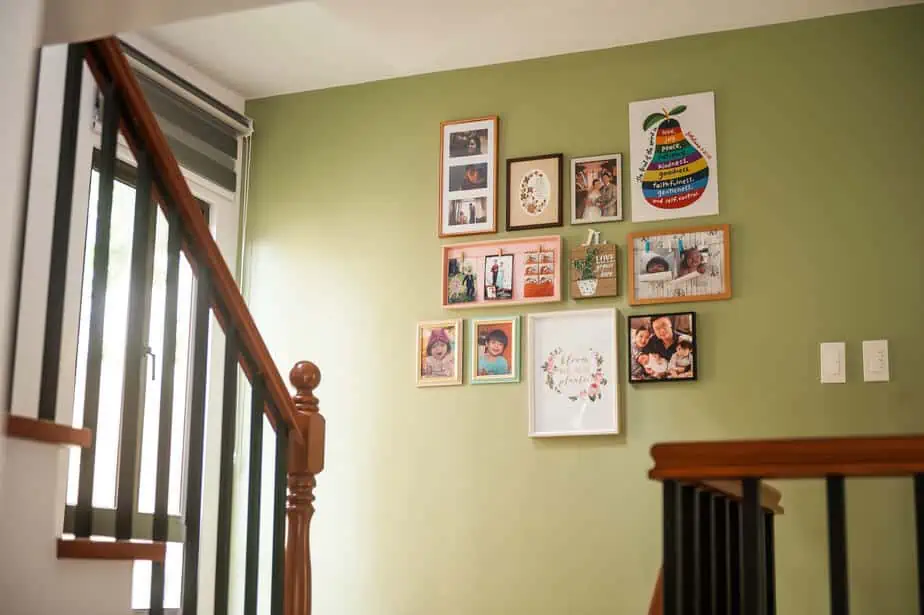
A collage of family photos on an olive green wall.

In general, there can be at least four mental and emotional distress you’re battling now. We’ll name some of them in this post and tackle them one by one.

Homesickness

According to WebMD, Homesickness is the feeling of emotional distress when you’re away from home and in a new and unfamiliar environment. It affects those who’ve moved both temporarily and permanently, such as students, migrants, refugees, and those in the military. It’s estimated that 50% to 75% of the general population have felt homesick at least once in their life.

If you live in the same home with the same people your entire life, I’m sure you’re feeling pretty homesick right now. Here are some adjustments that worked for me:

Set a schedule for regular meet-ups with your parents.

The first time I moved out, my parents and I agreed to meet each other weekly. Either I’ll go visit them, or they’ll come over to my house. There are times when I even spend my weekends back at home with them. Being able to look forward to meeting with them each week helped me cope up with my homesickness.

Stay connected to your family but not too often.

Social media made my homesickness worse. Getting constant updates about my parents and siblings triggers my emotional distress. As much as it pains me, I only limit my communication with them during weekends. This helped me become more present with where I am today.

Season your new home with family pictures or favorite furniture from your old house.

We’re fond of fishes when we were kids. My dad had dozens of four-foot aquariums with various kinds of tropical marine creatures. One unforgettable tip I got from him, is that fish can die due to unfamiliarity. That’s why every time we buy new sets of fish, we let their bags float on top of the aquarium for a few minutes before we release them – including the water inside the bag. This will give the fish the opportunity to adjust to the water and get familiar to their new environment.

I’m not sure if this is a myth or not. But I observed in many cases when a fish die suddenly after we change its water and environment. That’s why when we clean the aquariums, we make sure we only replace half of the water.

I felt the same way when I first moved out of my parents’ house. My homesickness was so bad I couldn’t run my day-to-day life normally. All I can think about is going back home. But one advice from a mentor saved me from this terrible feeling. He said to bring something from the old house to my new home; like pouring the water in the bag to the aquarium. So I brought a couch, a blanket, and a set of dining wares. True enough, those items brought some old vibe to my new home.

Take time to appreciate your new neighborhood.

Speaking of familiarity, it is also therapeutic to set aside some time to explore your new neighborhood. Know the people, the food, or even the shortcuts. When my wife and I moved to the suburbs last year, we drove around town each week hopping from one coffee shop to another. We called it our coffee expedition. This helped us appreciate the place we’ll call home until God told us to move again.

Iced coffee at xtremely xpresso.
Happy to find there’s a Xtremely Xpresso café in the near us.

Sadness

VeryWellMind described sadness as an emotional state characterized by feelings of unhappiness and low mood. It is a normal response to situations that are upsetting, painful, or disappointing. Sometimes these feelings can feel more intense, while in other cases they might be fairly mild.

Don’t beat yourself up for being sad after moving out. It only means you’re human. But also don’t be sad for too long. Prolonged sadness may lead to depression. Below are some practical tips to cheer yourself up:

Cry.

Just between you and me. I cried like a baby for about a week after I moved out of my parents’ house. Men, I know many of us want to keep our macho image. But seriously, try to cry it all out. You will feel a lot better after. Crying has many soothing benefits such as:

  • Enhances mood.
  • Aids sleep.
  • Releases toxins and relieves stress.
  • Fights bacteria.
  • Improves vision.

Do something fun.

Now that you are “free,” try something you haven’t tried before. Do something you always wanted to do, but can’t because of your parents. Of course, as a reminder, please don’t do anything crazy that will make you regret later. Enjoying the perks of your independence and freedom will make you feel better about leaving your family. Examples are:

  • Going home beyond 12am.
  • Traveling with friends.
  • Owning a pet.
  • Setting up a gaming room.
  • Inviting friends to sleep over.

Let go of stuff that makes you sad.

While bringing stuff from your old house can help you with homesickness, there are things that can also make you even sadder. To me, it’s the picture of my dog. The apartment I moved in to doesn’t allow pets, so I don’t have a choice but to leave my buddy with my parents. Take time to note these things in your house and keep them until you have finally moved on. This will help you cope up better with sadness.

This is temporary.

Another effective way to deal with sadness (at least for me) after you move is to recognize that this is only temporary. The reality is you actually have the power to go back home if you really want to. Furthermore, sadness is also a temporary emotion that will eventually go away with time. One mantra that helps me ease my sadness, especially when I did not get what I wanted is, “No for now, but not forever.”
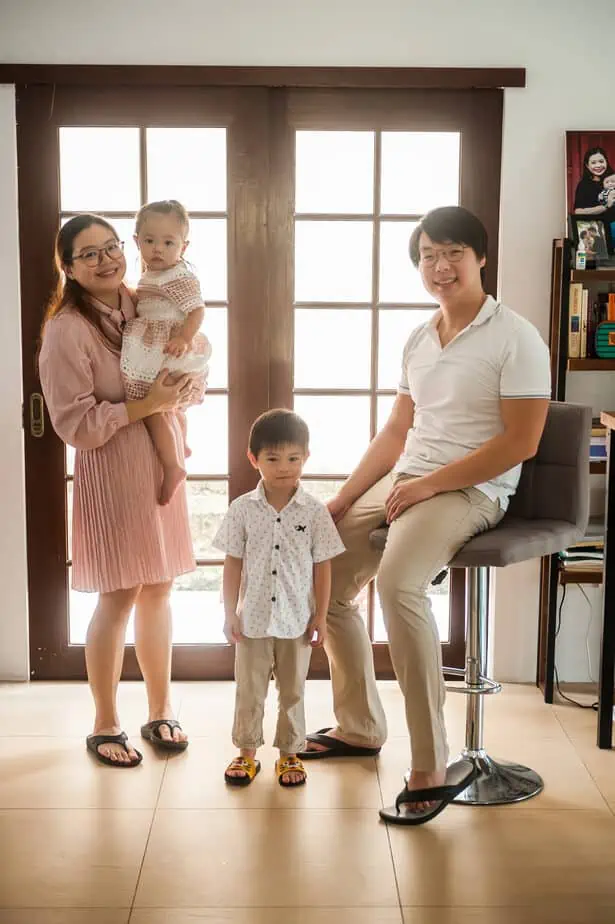
Family of four posing for a picture.
Our first family pictorial after we moved to our own house in Cavite, Philippines.

Loneliness

The feeling of being alone, regardless of the amount of social contact. This is how the Centers for Disease Control and Prevention (CDC) defined loneliness.

I am an introvert. Being alone does not bother me. I actually feel recharged when I don’t have to connect socially. But with that said, loneliness was still able to creep in when I moved out from home. How do you deal with loneliness after moving?

Build your community.

I took the time to at least know the names of the people around me. The janitors, security guards, admin staff, and my neighbors. From time to time I give them food and greet them whenever I see them in the hallway. Furthermore, I also started a small group in our church where we regularly meet online to share about our lives. These efforts helped me have that sense of community which aided my feeling of loneliness.

Create happy memories in your new home.

Sometimes loneliness isn’t about connecting with people per se. You can have lots of friends and still feel lonely. The key is creating moments that can eventually turn into beautiful memories. Since my wife and I now live away from our families, we started a new habit of inviting people into our house. Together we will prepare food and enjoy the fellowship over free-flowing coffee. We became fond of collecting memories we can look back to in the future.

Read a book.

A book is a magical thing that lets you travel to far-away places without ever leaving your chair. — Katrina Mayer

Have you heard of Anne Frank? She is a Jewish diarist who hid from the Nazis from 1942 to 1944. For two years she and her family lived in a forty-two square meter space they call the “Secret Annex.” Imagine having no contact to the outside world for 24 months; how lonely can that be? But you know what made them through? Books! Here’s what she said on page 37 of her diary, “Ordinary people don’t know how much books can mean to someone who’s cooped up.”

I can attest to this. Books also helped me with my loneliness after I left home. It indeed has transported me to places I have never been while sitting on my couch. Reading Anne Frank’s diary for example allowed me to be in the Secret Annex even though I had never been to the Netherlands. But on top of that, what I enjoyed about reading good quality books is it also feels like you are having a meaningful conversation with people you haven’t met.

If you want to buy the digital copy of Anne Frank’s diary, you can check it out here.

Know that you are never alone.

Elisha and the Chariots of Fire surrounding the Arameans.

I don’t intend to sound spiritual. But for transparency’s sake, the above image was the real clincher to my battle with loneliness. It’s a historical account in 2 Kings 6 of the Bible where the servant thought they were already surrounded by their enemies. The prophet Elisha told him not to be afraid, and prayed to God to open this person’s eyes so that he may see the real picture. Turns out there was a legion of horses and chariots of fire surrounding their enemies. The servant thought they were alone, but the reality is God’s presence is with them all along.

This passage in the Scripture taught me not to rely too much on my feelings or what I can see. There is a God who is always with me.

“Have I not commanded you? Be strong and courageous. Do not be frightened, and do not be dismayed, for the LORD your God is with you wherever you go.” — Joshua 1:9 ESV

Fear

Psychology Today says fear is essential to our survivability. They said it is our vital response to protect ourselves from physical or emotional dangers. With that said, fear is also one of the most common emotions we’ll experience after moving away from our family. It helps us navigate our new environment cautiously. Furthermore, it also spurs us to plan our defenses and emergency procedures.

Get busy.

Among the quickest ways to counter fear is to devote yourself to work. The one thing I feared most when I moved out with my family is not being able to provide for them. I was spoiled in my parents’ house as they take care of everything we need. They paid for our food and utilities. I wasn’t sure if I would be able to handle these added costs as I was still in debt, and expecting baby number to arrive in a couple of months.

Thanks to God, because He gave me the work I needed to support my family. Despite the additional expenses, we didn’t feel lacking during those times. I am not sure what you are fearful about today. But facing it head-on with its needed work will definitely help.

Have a plan for emergency situations.

My cousin contracted Covid-19 and was transferred to an isolation facility. He says it’s one of the most terrifying experiences he has ever had in his life. His fear stems from the fact that he is dealing with a life-threatening condition alone. That if anything happened to him, no one would be able to come to his aid.

Being aware of his fear, he devised an emergency plan. He told his wife that he would call her three times a day at their agreed time. And if he didn’t call, it’s a signal that she should go to where he is. Thank God his wife never needed to find him in the isolation facility. Nonetheless, his plan gave him comfort throughout his quarantine period.

Put the most important person on speed dial.

Several years ago I had trouble with anxiety disorder. It usually strikes around 3 am a few times a week. There was a season when I was scared of sleeping because I dread the feeling of panicking in the middle of the night. In short, I was anxious about being anxious. But what normally comforts me during these intense ten to twenty-minutes period is a bowl of egg rice or talking to my wife, who’s still my girlfriend that time. With this, one thing I did that helped me tremendously was putting her number on speed-dial. Knowing that I could reach her anytime I am under attack helped me sleep in peace.

Put your confidence in God.

Again, I don’t want to sound Holy or something. I’m far from it. But putting God in the equation always results in something good. I thank God for healing me from my anxiety disorder. It’s been a long time since I experienced an attack. And this started when I put my confidence in His goodness, love, and sovereignty. Understanding that there is a good and loving God who is always in control allowed me to sit back, relax, and trust His plan for me.
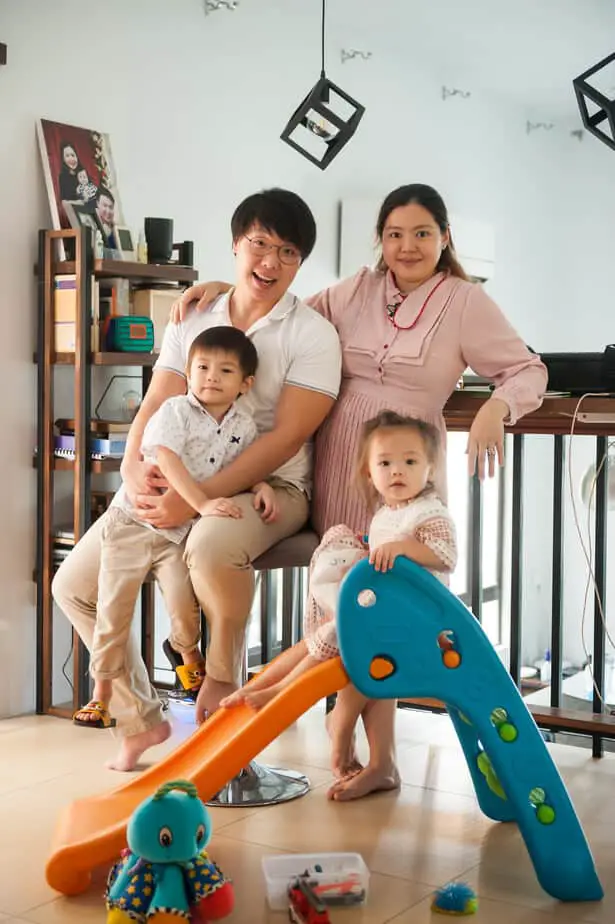
I was still talking to our family photographer, Derrick Lim, when he took this shot.

Closing Thoughts

Besides the mental and emotional distress mentioned above, there are other more you may experience like guilt, regret, or even anger. As I remember, it took me about three months before I got the hang of living on my own. In your case, this may take longer or shorter depending on how deep your attachment is to your family and neighborhood. Whatever the case, adjusting to your new life requires time. There’s no need to pressure yourself. Let the process groom you to a better version of yourself.

More From The Learning Dad Blog

Sources


Follow the Journey

This journal is my way of making sense of the lessons from the journey. Get the next full entry delivered straight to your inbox.

How To Survive Moving Out On Your Own

How do people afford to live alone? It’s one of the many hesitations I hear when someone ponders about moving out of their parents’ house. The rule of thumb is to not leave the nest unless you have enough savings and a stable income. But I understand there are myriad of reasons that could push us out of the house before we even set up a solid financial foundation. Some reasons may include:

  • Toxic relationships.
  • Quarrel in the family.
  • Boundary issues.
  • Growing family.
  • Health problems.

Thanks to God, the first time I left home wasn’t because of these matters. I generally have a healthy relationship with my parents. But that perhaps is the problem. My relationship with them may have been too healthy; I became overly dependent on them. Everything I need is being met by mom and dad, and I felt like I was not growing as a person. I see myself getting married in two or three years, yet I still didn’t know how to live on my own.

It was after my twenty-eighth birthday when I decided to leave home. I didn’t have anything when I moved out except my struggling business. There were no plans of coming back, but I returned home after six months because I could no longer sustain myself financially. It was short, but I learned many lessons from the experience.

Fast-forward, I’m now thirty-seven, and I have been living away from home with my wife and children for three years. In this post I intend to share with you the game plan my wife and I had to successfully move out and survive living on our own.

Disclaimer: I wrote this post based on personal opinions and experiences. It’s not meant to give professional advice.

Grey Hatchback Car in the forest
Grey hatchback SUV driving on a street full of dried leaves.

Opportunity Cost

How do most people go broke? By saying yes all the time! To appreciate the strategy I’m about to tell you, you need to understand the idea of opportunity cost. It’s among the most profound lessons I have learned when I lived on my own for the first time. It simply means the choices we make aren’t free. When we say yes to one thing, we are technically saying no to another; and vice-versa. When you agree to go out with your friends tonight, you will be losing on other opportunities like: Having a nice dinner with your family, story time with the kids, doing extra work, or getting in bed early.

It’s the same with our finances. Getting the latest smartphone means we have less money to save, to invest, or to buy the things we need. Being aware and being able to apply the concept of opportunity costs in our life is crucial, especially when we are in survival mode. The margin of error is slim, thus focusing on choosing the options that will improve our survivability is the key to surviving living on our own.

Turtle-Up And Farm

Now let’s go to the overarching strategy: Turtle-up and farm. If you are a gamer, I’m sure you’ll have no trouble grasping this tactic. For non-gamers, I’ll do my best to make this as simple as possible.

Turtle-up is the term my friends and I use in gaming when our health is low. It simply means going into a defensive mode. Imagine you are only one hit away from game over, what will you do? One strategy is to stay in one corner and shoot the enemy when they pass by. Another way is to flee or hide from the high-level enemies and focus instead on the weak ones. The essence behind this tactic is to stay on the game as long as possible while you farm.

Farming is the act of strengthening your character. You do this by defeating lots of weaker enemies to get experience and gold that are used to level-up and upgrade your weapons. I hope you now see where this plan is going. The strategy to survive on your own is to stay defensive while you work your way towards improving yourself little by little.

We should focus our choices more on the things that will keep us on the game and personal growth. Forgo anything that does not contribute to this mission. Now how do we apply this practically? Let’s talk about it in the next section.

Girl with glasses studying on the floor with her laptop, books, and coffee.

Practical Ways To Turtle-Up

Simplify your lifestyle

The cheapest way to live alone is to manage your desires. Simplifying your lifestyle means you focus on the essentials. Track where your money is going and cut those that aren’t necessary. Delay your wants. Concentrate on your needs. Choose only to spend on what will increase your character’s health. One Bible verse summed this up beautifully:

“Why do you spend your money for that which is not bread, and your labor for that which does not satisfy? Listen diligently to me, and eat what is good, and delight yourselves in rich food.” — Isaiah 55:2 ESV

Here are some things Lalaine and I gave up when we moved out on our own:

  • Junk food and sugary beverages.
  • Watching movies in theaters.
  • Netflix and other TV-related subscription services.
  • Home decorations.
  • Eating in eat-all-you-can buffets.

I wrote about this more in detail in a separate post. You can check it out here: Assets and Liabilities. To be fair, simplifying our lives doesn’t mean we should deprive ourselves. Having fun is also essential. Just do it moderately. Maybe 90% needs, 10% wants.

Save Ten To Twenty Percent Of Your Income

Overconsumption is a poor way of living. Many people are stuck in 9 to 5 jobs because they don’t have enough margin. One hit, and they’re dead. Living paycheck to paycheck is normal to many individuals, but it isn’t the situation you want to be in. Another practical way to turtle-up is to save ten to twenty percent of your income. This helps you prepare for emergencies or secure profitable opportunities.

The Bible says in Proverbs 21:20, “Precious treasure and oil are in a wise man’s dwelling, but a foolish man devours it.” You need to build a cushion if you want to survive living on your own. You want to have that extra health potion in your belt when you go into enemy territory to increase your chances of success – and the way to do this is manage your consumption.

Pay Your Bills On Time

Believe it or not, paying your bills on time is another way to defend yourself. Late payments will cost you added charges from penalties. It’s like giving your enemies the ammo to shoot at you. If you always end up feeling broke, check how much interest you are paying, especially on credit cards.

Be vigilant of any obligations that cost you to pay extra recurring fees each month. This is like being poisoned by your enemy. Your character’s health will slowly dwindle until it dies. You can drink more health potions, but it will only be a waste of resources as your health will continue to go down until you find a remedy. Paying off your debts and paying your bills on time are the two most powerful antidotes to this type of venom.

Three happy students in a library carrying a bunch of paper materials.

Practical Ways To Farm

Don’t Compare

Farming may feel like you are a loser. Waiting for the weaker enemies to come while you see other players being aggressive is like looking at your friends’ new cars and travel photos on Instagram. How come he already has five cars and I can’t even afford to buy one? She travelled again?! Didn’t she just come home from Japan? Poor me, I can’t even go on a local trip!

I feel you. That’s my internal monologue many years ago. But you should defend yourself from this mentality. Focusing on others is detrimental to our overall strategy. Comparison will discourage us from playing the game. Surviving on our own takes time and patience. Winning is not yet the goal, staying in the game and bettering ourselves is. As long as you are playing the game, you still have the chance to eventually win.

This is what the book, The Tortoise And The Hare, taught me. The tortoise didn’t care how far the hare was. He didn’t even know whether his opponent had already won or not. He just stayed in the game and moved forward according to his pace.

What to do if you are feeling poor? Here are a few suggestions:

  • Be grateful for what you have now. What you appreciate, appreciates.
  • Look back and celebrate how far you’ve come.
  • Share your loot. Be generous.
  • Keep working, work is always part of the equation.
  • Compare down. See how blessed you are.

Get A Second Job

In most games there’s what we call the main quests and the side quests. You beat the game when you complete all the main quests. But that doesn’t mean side quests aren’t important. It’s in the side quests where you usually unlock special items and abilities that can aid you in finishing the main quest.

Treat farming as a side quest. Be involved in something that will contribute to your main quest.

I love writing. I am excited about the idea of being able to support my family through publishing articles. Becoming a full-time blogger is my “main quest.” But a blogging business takes a significant amount of time to build, and it’s not even a guarantee I will succeed. Being aware of my risks, I took on a side-quest. I started an online business where I sell Chromebooks, and this allowed me to continue writing and put food on the table at the same time. By the way, I highly recommend you to check out SpreadSimple if you are also considering opening your own e-commerce site.

What are good side hustle jobs? Below are a few ideas:

  • Buy and sell online.
  • Rent out unused space on Airbnb.
  • Do freelance work on Fiverr.
  • Make a course about something you are good at on Udemy.
  • Publish and sell your own e-book with Designrr.

If you want to start a business but have no ideas, I highly recommend you check out this post: How To Start A Business With No Idea (A 4-Step Guide)

Learn The Necessary Skills

We learn new skills as we level up. But not all skills are equal. Some have a better impact on your main quest than the others. Remember opportunity cost? It’s much more shrewd to spend time honing three to five skills than learning ten that do not really have much contribution to your goal. Here are five essential skills you need to focus on:

  1. Cooking. Cooking? Yes, cooking. Food is one of the biggest cost of living expenses for most people I’ve talked to. When you learn how to prepare your own meal, or make your own coffee, you will be cutting your food costs by about 30% to 40%.
  2. Selling. Many people are afraid of sales. I also used to hate this job. But if you want to make good and quick money, you should learn how to sell.
  3. Financial management. Making money is useless if you don’t know how to manage them. You’ll only spend everything you’ve earned.
  4. Truthfulness. Based on the book, The Millionaire Mind by Thomas J. Stanley, integrity or being honest and truthful is the number one factor to success. Good things happen when people trust you.
  5. Social skills. We need people to succeed. We cannot do this on our own. Learning how to talk and work with others is vital to our success.

Team-up With People You Trust

We mentioned social skills. One strategy that could speed up our farming process is to team up with other players. Teaming up will allow us to defeat tougher enemies or complete a more challenging quest which in return can give us a much higher experience and better quality equipment. There are several ways to do this, such as being plugged into a community, partnering with a friend, or getting married. But please note that teaming-up with others does not always go well. It’s better to move forward alone than be with people you don’t trust.

Is being single harder financially? Technically, it should be easier in your pocket living on your own. But based on experience, my finances got better in marriage. And this is also true based on the data Thomas J. Stanley gathered after interviewing one thousand American millionaires. They said 92% of them are married, and having a supportive spouse is among the top 5 factors for their financial success.

Related: How Can Family Life Impact Work?

Closing Thoughts

Understanding opportunity costs, being defensive, and improving ourselves each day will help us survive moving out on our own. But there’s another practice we should not forget. It’s prayer. In the game, this can be considered “Luck”.

Many people underestimate the power of luck in the game. They prefer to level-up strength, agility, or their durability. But luck is the x-factor in developing your character. The higher the luck, the better your chances of hitting critical damages, evading attacks, or even getting ultra rare weapons and items. I personally do not believe in luck in real-life. My belief is there is a God who loves me and is in control of everything. As long as I am being in fellowship with Him, there is nothing I have to worry about.

More From The Learning Dad Blog


Follow the Journey

This journal is my way of making sense of the lessons from the journey. Get the next full entry delivered straight to your inbox.

8 Tips To Make Moving Away From Family Easier

We have all finally moved out of the house where we lived for seventeen years. My parents were offered a deal they could not resist. It’s been two weeks, and I am still mourning. Writing this post now doesn’t make it easier. I can feel those tears brimming my eyes as I recall the memories we have in that house. My body craves to be back there.

It’s technically my fourth time moving out of a house. Moving away from our family and the place we call home is an excruciating phase in our lives we may all experience. The goal of this article is to help you somehow ease the pain. Here are 9 tips I wish to share with you today:

Disclaimer: this post is based on the author’s own experiences and opinions.

family photoshoot in living room.
Our family photo in the living room. With kids and in-laws.

1. Have something to look forward to

Saying goodbye to my parents while closing the front door of our house for the last time was among the saddest moments of my life. I thought anyone in my position would feel the same way. Apparently, not. A friend of mine talked about the day he moved out of his parents’ house in one of our lunches together. We’ll call my friend Bruce because he reminds me of Bruce Lee. Bruce told me he didn’t feel any sadness when he moved out. He said he was actually excited.

Excited?! How can anyone be excited about leaving your home? I asked. He said he was obsessed with the thought of living on his own. He had already made plans to move away from his parents long before he graduated from college. So when the day of moving out finally arrived, his excitement drowned out any feelings of sadness.

There’s nothing wrong with feeling sad when you leave the family. But if you wish to ease your sadness, focus on what you’d gain from moving out instead of what you’ll lose. Be excited and look forward to the new opportunities and experiences it may bring to your life.

Some perks you’ll enjoy when living on your own include:

  • Having a fresh start – which can be good for your mental health.
  • Managing your own space.
  • No more curfews.
  • Better intimacy with your spouse.
  • Establishing your own rules.
  • Learning how to take care of yourself.
  • Meeting new people.

Still need more inspiration? I highly recommend you to check out these posts:

Family in bedoom with orange and yellow background.
The bedroom where Lalaine and I stayed for three years after marriage.

2. Make Sure You are Moving For the Right Reasons

More than sadness, guilt is another emotion that can make your moving away difficult. As my conversation with Bruce progressed, he said one of the primary reasons he moved out was because of father issues. He can’t stand his dad’s mouth, and it was costing his relationship with him. Furthermore, he also began to feel emotionally and mentally wounded.

Bruce was ecstatic about moving away from his dad, yet he, at the same time, struggled with guilt. He wasn’t sure whether he was moving out for the right reasons or not. On the outside, it seems like he made a very mature decision of living on his own. But on the inside, as the eldest son in the family, he felt as if he was abandoning his parents and siblings.

Guilt will bother you if you move away from your family without having the right reasons. You will always doubt the decision you made if you know your intentions weren’t pure from the beginning. Here are some examples of good versus questionable reasons for leaving home:

Good

  • Marriage.
  • Challenging yourself.
  • Study.
  • Setting up healthy boundaries.
  • Health improvement
  • Moving away for a job.

Questionable

  • Cohabiting with a partner.
  • Running away from responsibilities.
  • Jealous of your friends who are living on their own.
  • To prove your parents wrong.
  • You hate having curfews.
Man posing in front of TV and computers.
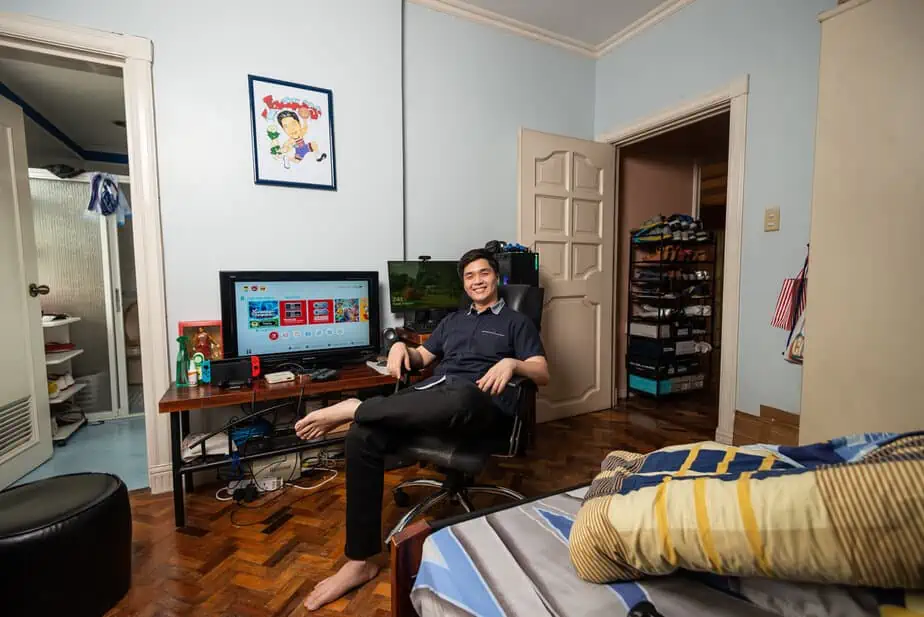
My younger brother’s bedroom (slash) headquarters (slash) man cave.

3. Move Away Gradually

Moving away from family for the first time is the toughest. But there’s a trick to ease this out: do it little by little. What do I mean by this? Let’s say, you are moving to an apartment near the place you work. Instead of living there seven days a week after the move, maybe you can start with three. Three days in your apartment, four days at your parents house. Then increase the days gradually until you are fully living on your own.

There are other ways to do this.

  • 11:1 = Spend eleven months with family and one month away.
  • 12:12 = Spend the entire year away and come back next year.
  • 6:6 = Move away semi-annually.
  • 1:1:1 = Move away every other month.

The idea is to train yourself to detach from your family. Bruce chuckled when I shared how I applied this strategy to my life. He said he now knows why moving out was easy for him. It’s because he was so used to living away from family. On top of spending an entire year in China to study Mandarin, he also lived four and a half days a week in a dormitory during college.

Mom cooking in a kitchen with a green background.
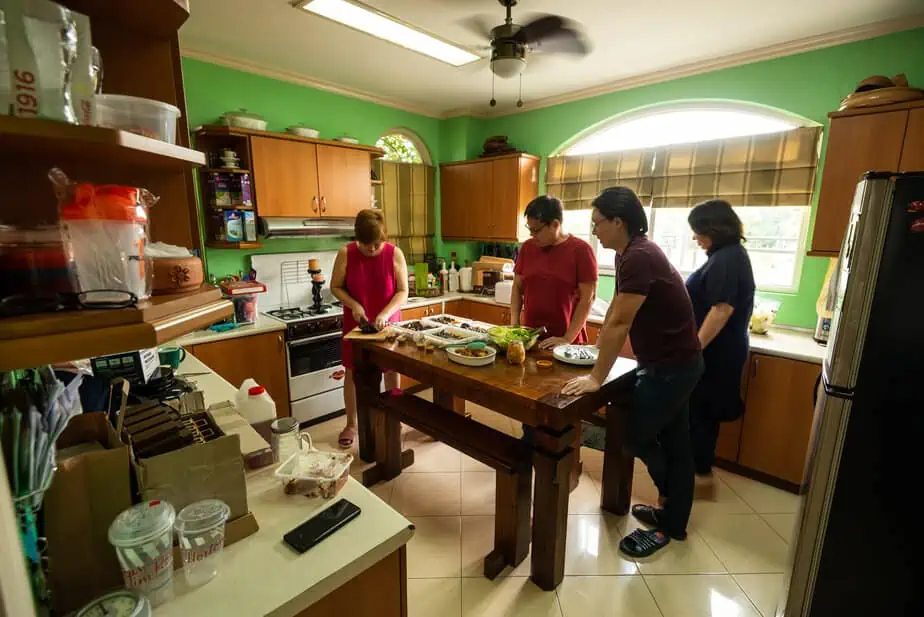
The breakfast area where most conversations happen.

4. Live Nearby

Another way to move out gradually is by distance. Instead of moving to another town right off the bat, why not rent a place a few blocks away from home? Living near your family can be an important step to moving away as it eases the separation anxiety while you practice being independent.

I find this strategy extremely helpful.

  • The first time I moved out was to a studio unit thirty minutes away from my parents house. I was still a bachelor at that time. I lived there for about three months. I cried every night.
  • The second time was to a two-bedroom apartment with my son and pregnant wife. It’s fifteen minutes away. We lived there for one year and three months. This phase made us more comfortable living away from our family.
  • Third, we moved to another town about an hour away down south. We’ve been here for one year and eight months as of this post. But I was a bit anxious during the first three weeks – perhaps due to the new environment and distance. The idea that family won’t be able to help us instantly in case something happens made me uncomfortable.
  • Fourth. We didn’t move, but my parents did. They transferred to a new home thirty minutes up north last month. This means we’re now about an hour and a half away from each other. I didn’t experience any more separation anxiety after they moved. But I’m badly missing our old house.
An overlooing sight of a living room with family and peach background.
I’ll miss this overlooking view of our living area.

5. Take Time To Know Some People In Your New Neighborhood

Getting to know the people in your new neighborhood will help you move away from your family easier. I have a habit of staying long hours in the place I am about to transfer to before I actually leave. This gave me the needed boost of confidence to move out. Here are some of the activities I do to get to know people and be more familiar with the area:

  • I work out in their gym and swim in their pool.
  • I personally apply for the permits needed, so I can get to know the management team.
  • I ask for their names and take note of them in my Google Keep.
  • I meet-up with clients in their lobby or restaurant.
  • I’d do my grocery shopping within the vicinity.
  • I’d treat my future home as my 9 to 5 office first.
Lady in dark pink in front of wooden table with various office stuff.
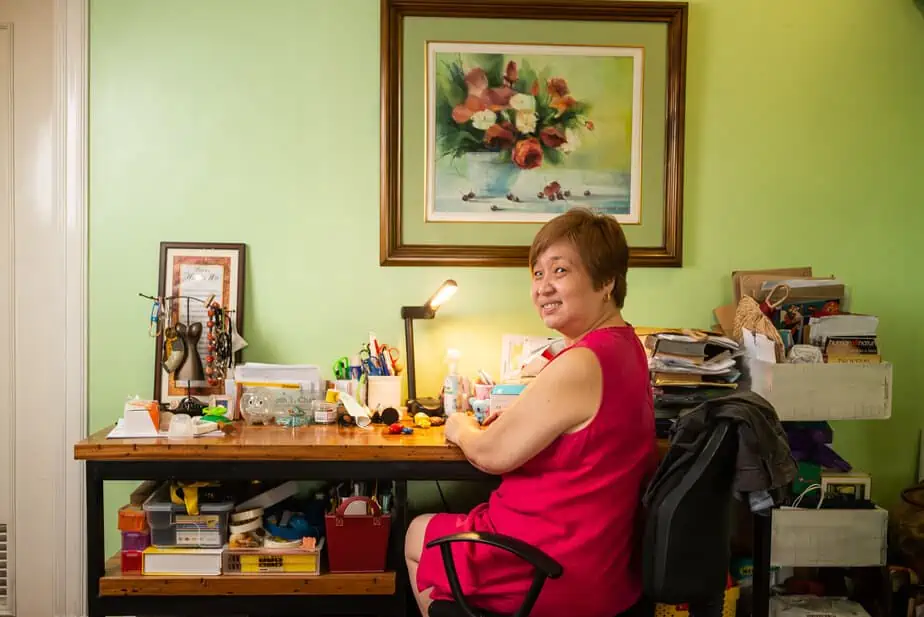
Mom’s work area. It may look messy, but she knows where her stuffs are.

6. Get Blessing From Your Family

Not all parents and siblings will take leaving them positively. An unsupportive family will make moving away from home punishing. Be sure to tell them about your intentions before you even start planning to move out. I know this is not an easy task. But if you want to make leaving home four times easier, it is imperative to get their consent.

Here are a few ideas on how to tell your family about your plan of moving away:

  • Invite them out and announce during dinner.
  • Talk to them one by one in a coffee shop.
  • Write them a letter.
  • Send a video message.

Bruce said this is the area he missed out on. He knew his dad would react negatively, so he kept the plan to himself until the day he moved out. Nobody knew what he was up to and keeping it as a secret made the process extra challenging.

Happy family in mini garden.
Dad’s mini garden. He spends most of his day here.

7. Save Up For Six Months Worth Of Expenses

It is normal to be scared of moving away from your family, especially if it’s your first time. But this emotion can be magnified if you are not financially prepared. Fear is another one of those things that can make moving out grueling due to the uncertainties of life. Saving money before leaving home will greatly boost your confidence to push forward.

I recommend saving up to six months worth of your expenses. It will give you an adequate buffer as you adjust to your new life. Being financially prepared will reduce the worries and anxieties you may experience now that you are on your own. Here are a few tips to help you save up:

  • Create a budget. — Try the 30/70 principle. Save 30 percent of your income and live on the 70.
  • Stop eating out for a while.
  • Make your own coffee at home.
  • Open a high-interest savings account. — Savings account with 2-6 percent annual interest.
  • Quit the vices. — Smoking/vaping, alcohol, junk food, etc.
Living room with grand staircase with peace background.
One last look before we say goodbye to our home.

8. Grieve In Advance

I am grieving for our old house. I’m longing to be back there. But I’m certain it would be worse if I had not grieved for it in advance. Experts called this anticipatory grief.

Anticipatory grief is like mourning for a dying person even though the person hasn’t died yet. The purpose of this is to give family members the opportunity to focus on the most important things while the person is still in their midst. Examples of this are:

  • Closure of unresolved issues.
  • Forgiveness.
  • Chance to say goodbye.
  • Relational healing.
  • Delegation of assets or responsibilities.

Being able to do these things before someone passes will make letting go a hundred times easier. What’s good is you can also apply this to other aspects of your life. You can even use anticipatory grief to emotionally let go of your house. After I got the news that our home had been officially sold, I scheduled a photoshoot with my friend Derrick Lim right away. My grieving has already started and the most important thing for me is to preserve the memories we have in that house.

God, thank You for the memories and the opportunity to live here.

Summary

Overall, the key to making moving away from our family easier is preparation. The process of detaching ourselves from our loved ones will never be painless. But I know you can brave through it if you have the right mindset, do the proper planning, and allow time to do its work.

More From The Learning Dad Blog

Sources


Follow the Journey

This journal is my way of making sense of the lessons from the journey. Get the next full entry delivered straight to your inbox.