When Should You Move Out Of Your Parents’ House?

Moving out of your parents’ house is one of the most challenging transitions you will ever experience. But how would you know it’s time to say goodbye and take the reins for your own life? Different cultures, different takes. There are countries where children HAVE TO move out by a certain age, while others are expected to live with their parents their whole life. But no matter the culture you live in, leaving home will ultimately be your choice. Here are 10 indications you are ready to move out.

Disclaimer: the content of this post is based on the author’s opinion and experiences, and it’s not intended to give professional advice.

Cutting the baby's umbilical cord.
This is the second time I’m cutting my child’s umbilical cord after birth. We had already moved out of my parents’ house by this time. Dec 2019.

1. You Have Your Own Family.

Starting your own family is a good indication of moving out of your parents’ house. This creates the physical and emotional boundary that will give you and your spouse the freedom to grow the family you want. It’s ideal for both men and women to leave home after marriage.

There is a term used here in the Christian world. It’s called leave and cleave. This is based on the verse in Genesis 2:24, which said, “Therefore a man shall leave his father and his mother and hold fast to his wife, and they shall become one flesh.” The essence of leave and cleave is to teach the new couple independence as they are now considered one flesh. They detach themselves from the parent-child bond to be united to the new husband and wife covenant. This means mom and dad are no longer the number one priority in your life, but your spouse. If you want to learn more about this topic, I wrote an article about leave and cleave here.

2. You Gave The Decision Enough Time And Prayer.

Did you give enough time to think and pray this through? Have you devised a well-thought plan for moving out and your life after? If you have done so, this is also a good signal that you are ready to move. Many people leave home on impulse and regret it afterward. Never leave home simply because you had a fight with your parents. Be sure you are thinking logically, not emotionally.

My wife and I spoke to our counselors before we decided to move. We seek their advice and ask for tips on living away from our parents. We allowed time and prayer to mature our decision before pulling the trigger.

3. You Have A Stable Income And Saved At Least $2,000.

How will you fund your move? How do you sustain your monthly expenses? If you plan to leave home, make sure you have a stable income and have saved at least $2,000. It’s the amount I set aside before I moved out with my wife and kids, so this should work more or less for your new life. Things can get hairy if you don’t stabilize yourself first financially before moving out.

I am not saying you must become rich before you leave home. All I am suggesting is to build yourself enough cushion to make your adjustment period more pleasant. If ever you get in the spot where you have to decide whether you should move out or save money, I’d say, save money first.

But there’s a caveat. Saving should have a deadline. Give yourself 12 months. By the end of 12 months, you move out with whatever amount you have saved. Having the deadline will show how serious you are with your decision, and also pushes you to be more intentional with your savings. Not having a deadline may drag your plan to the point where you won’t be able to move at all.

4. You Know Basic Financial Management.

This is related to the previous point. It’s ideal to have a stable income and savings before moving out. But they should be partnered with knowledge in financial management. Knowing how to handle your money is critical when you start living independently. This can make or break your life after moving out of your parents’ house.

Are you familiar with the story of the Prodigal Son? To recap, a son asked for his inheritance and left his father and brother. He dwindled his money on lavish living and eventually became so poor that he worked as a pig feeder. Ultimately, we went home to his father because he could no longer take living in poverty.

Do you know how to budget? It’s one of the basic money management skills you have to master. Be sure to invest in financial literacy. Read books, enroll in classes, and listen to podcasts about money. These will help you hone your financial management skills and knowledge. Check out the resources I recommend below.

5. You Have Talked To Your Parents About Leaving Home.

It’s not only us who go through an arduous process when we move out. Our parents too. They may suffer from what’s commonly called empty-nester syndrome after we leave home. It’s a condition where our parents may experience depression, anxiety, sadness, grief, and other emotional distress during this transition phase.

That’s why discussing your plan to move out with your parents is imperative. Invite them to coffee, or to a fancy restaurant. Be sure to process this together with positive energy. Lay down the whys as well as the pros and cons to make it more objective. Getting the blessing from your parents will definitely be one of the most dreadful tasks you have to complete, yet also the most important. If you do this, you are 80% on your way out.

6. You Already Have A Place Transfer To.

Have you thought about your new address? Do you already have a place to transfer to? I know this is obvious, but before you move out, be sure you have already secured a house for yourself. This means you have already paid the down payment, signed the contract with your landlord, and got the keys to your new place. I heard a few stories where people paid in advance but didn’t sign an agreement or secure their key. They thought they already had their home, only to find out they were scammed.

On another note, you must not move out of your parents and into a friend’s house. The goal of leaving home is to promote your personal growth and independence, not to simply distance yourself from your parents. The whole process would be for nothing if you only became an obligation to another family.

7. You Already Experience Living Away From Home.

Moving out of your parents’ house need not be a one-time deal. It could be a process of a few years of living in and out of your home to “test the waters” and prepare yourself before you move out for good. I experienced living by myself for a few months before I changed my address permanently. The experience gave me insights and confidence in taking care of myself. My homesickness wasn’t too bad either because I knew I could still go home anytime.

If you have already experienced living away from home for a season, great! You more or less know what you are getting yourself into. If not, I suggest you try it out first before pulling the trigger. This will help you solidify your plan of leaving home for good.

8. You Have A Support Group.

Leaving home should promote independence, but it doesn’t mean we should journey on our own. You wouldn’t go scuba diving or mountain climbing alone, would you? You will encounter many obstacles before and after you move out of your parents’ house, and it will be wise to establish a support group during this process.

This may sound contradictory, but while independence is a goal, it is NOT the ULTIMATE goal of leaving home. Interdependence is. It’s being independent and dependent at the same time. Leaving home is like diving into the open seas instead of your swimming pool. It’s joining a group of scuba divers where you look after each other at the bottom of the sea. In essence, interdependence is being mutually dependent on one another.

9. You Have The Right Reasons For Moving Out.

Finally, your decision to move out of your parents’ house must be backed with the right reasons. Leaving home shouldn’t be a selfish act. If these reasons fuel your decision to move out, I implore you to reconsider your plan:

  • You still have a curfew.
  • You hate giving updates of your whereabouts to your parents.
  • You feel jealous of your friends moving out of their parents’ house.
  • You feel limited in what you can watch or listen to.
  • You’re tired of doing your parent’s errands.
  • You begin to feel like you don’t own anything.
  • You have a significant other and want more privacy.
  • You want a pet, but your parents disagree with it.

Good reasons to move Out

On the other hand, these are generally sound reasons to leave home:

  • You feel like living at home is harming your personal growth.
  • Your parents are encouraging you to move.
  • You have a toxic relationship with your parents or siblings.
  • Your parents do not respect your personal boundary.
  • Your commute is too long.
  • Your schedule is crazy, and you feel guilty coming home at weird hours.
  • You feel ready and confident to challenge yourself.
  • You feel like your health in general is compromised by living at home.
  • Your opportunities are being limited.
  • You are at the right age.

Discuss your reasons for moving out with your mentors or support group to help you evaluate them properly. Don’t leave home as a way to create a barrier, but use it to establish a boundary. The difference between the two is that barriers do not have gates, while boundaries have. Gates are designed to keep the good in, and the bad out.

How long is it too long to live with your parents?

Age 28 is when it gets embarrassing to live with your parents, based on 2,000 young adults and parents who responded to a survey. They also said you are overstaying if you still live with your parents when you have already finished college five years ago or have found a job.

But some responders also said it’s okay to live with your parents as long as:

  • You have a plan to move out eventually.
  • You are saving money to buy your own home.
  • You are helping with the chores.
  • You are paying rent.
  • You are being a responsible “tenant” in your parents’ house.

My children are two and five as of this writing. We’re just beginning our parenting journey, but my wife and I have already started to talk about this matter. Overall, we agreed we would encourage our children to move out (even though it’s going to be painful) because we know this would propel them to growth and maturity. As to “when”, for now, our answer is after they get married.

Times have changed. There is no longer a one-size-fits-all approach to life and this topic is no exemption. There are many factors to consider such as student loans, the rising price of houses, and the difficulty of getting a job or starting a business. What I am saying is, let us use wisdom when making such decisions.

We should not push our children away just because it’s what society is telling us. We all live in different patterns. Perhaps what’s best is to sit down and have a parent-child conversation. Agree on a timeline, set expectations, and devise a plan. Should the child move at 18? Or is it okay to stay until he is 30? That would depend on what both of you have discussed. Ultimately, this should be a team game where both parties would have a win-win situation. Moving out should be beneficial to both parents and children.

More From The Learning Dad Blog

Sources


Follow the Journey

This journal is my way of making sense of the lessons from the journey. Get the next full entry delivered straight to your inbox.

Is It Hard To Move Out Of Your Parents’ House?

Planning to move out of your parents’ house? Be ready. I knew leaving my parents would be hard. But I never knew it would be THAT hard. It took me roughly 60 days before I was able to get my grip on my new life.

Moving out of your parents’ house can be one of the most challenging transitions you will ever experience in your life. You may undergo financial, emotional, mental, and physical discomfort during this phase. Yet, not everyone has the same experience. Some desire freedom so much that they don’t find moving out hard.

What makes leaving home hard? In this post, I will share with you what I went through during and after I left home. My intention is to help you be better prepared in case you have fully decided to take the step.

Disclaimer: the content of this post is based on the author’s opinions and experiences. It does not intend to give professional advice.

Wall of home decorations
Wall of home decorations. I never bought any of these when I lived with my parents. Now, I started collecting them to season our home with wise words.

Why is leaving home hard?

I left home a month before I turned 34. I was married for 3 years, have one kid, and the second one is coming very soon – and she was one of the primary reasons we are moving out. We will no longer fit our room in our parents’ house once our daughter is born. And we did not even realize it until halfway through our pregnancy. We only had about three months to prepare. Here is what made it hard for us to leave home:

financial

Like you, the first question that comes to mind is, “can I afford it?” The financial implications of moving out of our parents’ house are the most obvious concern for the vast majority. In fact, many choose not to leave home simply because it is not “practical.” Living with parents means we do not need to pay rent, utilities, and food. Worst case, we can just chip in the amount we are comfortable sharing.

I couldn’t sleep at night for several weeks because of this. If you have read my previous articles, you’d know I was still battling ginormous debts during those times. Relinquishing the financial benefits I enjoy living with my parents makes no sense. But this is already the path my wife and I have chosen. Ultimately, we moved out with roughly $4,000 (Php 200,000) in savings and a combined income of approximately $1,000 (Php 50,000) per month.

Mental And Emotional

We are a family who is not good at expressing our emotions. When we cry, we do it in the bathroom when nobody can see. It’s what I did a week before the day we moved out. I act as if everything is okay, that moving out wasn’t a big deal. If they only knew I was sitting in the toilet every three hours to weep.

But holding my tears on the actual day of leaving home was too much for me to handle. The flood gates of my tear ducts broke loose. Snot ran down my lips as I hugged them tight and said my goodbyes. I also whispered my prayers and thanked the house before I drove the car to our new address.

Merryl Gee, a psychotherapist in M1 Psychology, says it is not always easy to leave home mentally and emotionally. It is common for everyone to experience homesickness, loneliness, distress, and anxiety during the transition. Even the happiest and most confident people will struggle. She says most of these struggles are due to the adjustments to the new environment and lifestyle:

  • Meeting new people.
  • Getting to work (or school) on time.
  • Missing family and friends back home.
  • Dealing with messy housemates or neighbors.
  • Being responsible for your own health and well-being.

What Does Homesickness Feel Like?

In case you do not know what homesickness feels like, it is an intense longing for a person or neighborhood. I experienced this when I was about twelve or thirteen. One summer, I traveled to the province with my cousins to visit our uncles and aunts. After a month, I could not stay there any longer. I want to go home. I want to see my parents. But the problem is, based on the schedule, we are not yet going home for the next thirty days.

Internet and video chat do not exist yet at that time. For two weeks, all I did was do long-distance calls to my parents (which is expensive) and cry in my room. I felt trapped. Hearing mom and dad’s voices gave me relief, but the feeling returned quickly as soon as we hung up the phone. Eventually, my aunt recognized the severity of my homesickness and made a special arrangement with her friend to take me home.

Shopping for lights and lamps.
Lamps and chandeliers. Home depots became our dating place when we began preparing for our move.

Physical

The physical aspect of leaving home is the most manageable, but it is not without struggle. The first part is the moving-out itself. Packing all your belongings, transporting them, and unpacking them to your new home may sound easy, but nothing could be more laborious – especially when you have tons of stuff. You will need some management skills to smoothen the process. Depending on your location, you may also need to process certain documents, such as trucking permits and gate passes.

Next is visiting your parents and in-laws. You no longer live under one roof, and chances are, you have agreed on a regular schedule to see each other. We now reside an hour away from them, so the agreement is that we will spend the weekend with them at least once a month. We travel there Friday and go back home by Monday. This should not be much of a concern when you are single. But parents understand how tedious this arrangement can be when you have kids.

Lastly, the chores. My wife didn’t need to cook food when we were still living with my parents. Mom does that. Plus, my parents hired house helpers who do our laundry, wash the dishes, and take care of the kids when we go out. But now we have them all on our own. I am designated to vacuum the floors, wipe the tables, wash the dishes, and throw out the garbage. My wife does the other stuff. This means less time at work, fewer dates, and rarer me-time for us.

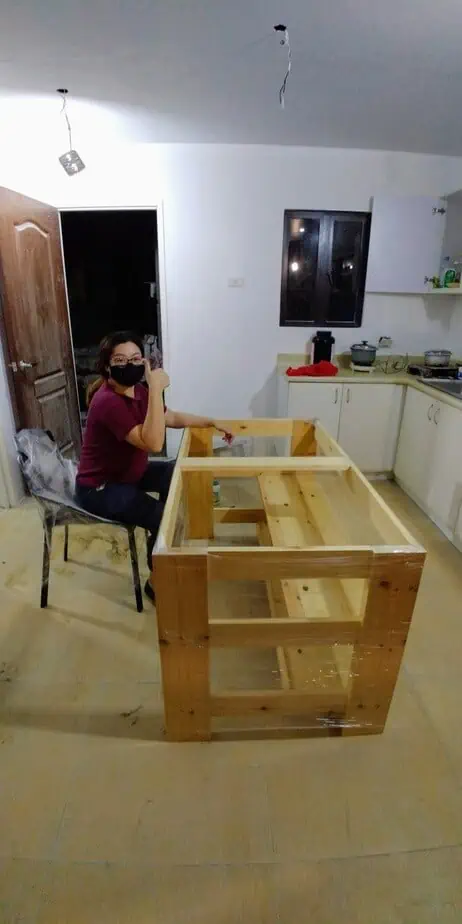
Unfinished Kitchen Table
How it started. Lalaine is checking the height of our kitchen table.
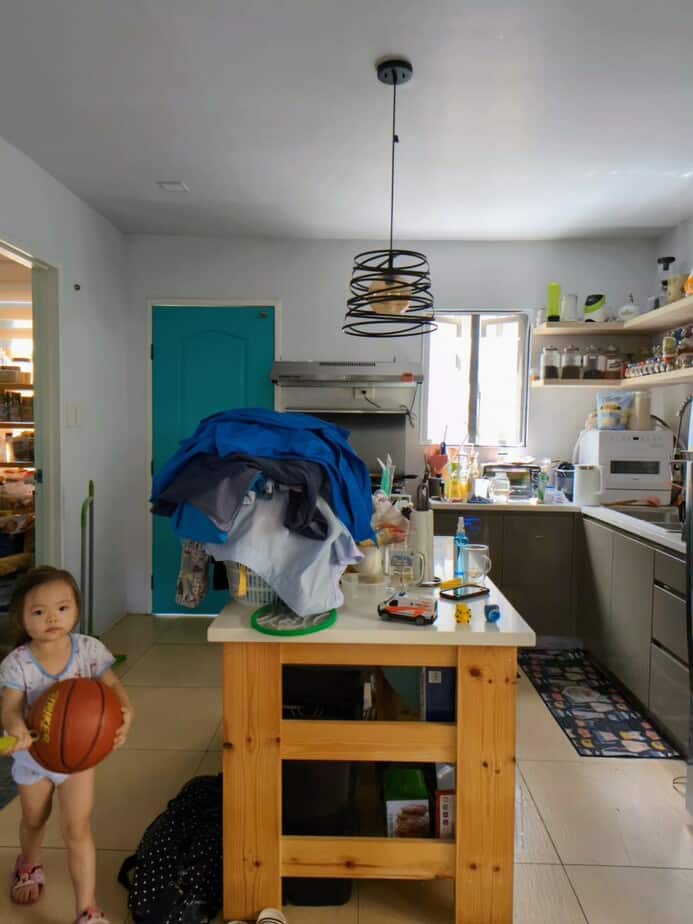
Messy Kitchen Table
How it is going… Our kitchen table now also serves as a multi-purpose table.

What is the most stressful part of moving?

Above all else, the most stressful part of moving out for me is breaking the news to my parents. I am the eldest son in our family. In our culture, I should be the one to take care of them in their old age. They must have felt betrayed when I told them about it. Leaving my parents was among the hardest decisions I made in my life. But this move is essential to the maturity of my own family. I am at peace because I know I am doing this for the right reasons.

If I am to give an honorable mention, it would be guilt. For sure, this move also rocked my parents mentally and emotionally. Like us, they will undergo serious adjustments. Amy Morin, a psychotherapist and the Editor-in-Chief of Verywell Mind, says: Feelings of loss, sadness, anxiety, grief, and fear are common among parents experiencing empty nest syndrome, and the condition affects both men and women.”

The signs and symptoms of empty-nester syndrome may include:

  • A loss of purpose
  • Frustration over lack of control
  • Emotional distress
  • Marital stress
  • Anxiety about their children

They may not tell us directly, but our parents surely get sad when we move out. My dad calls me every morning after we have left home. We would talk for an hour, and I could hear the sadness in his voice. My younger sister has to take them to the mall every afternoon to cheer them up. If my observation is correct, it took them about 3 months before they adapted to the new normal.

Family having hamburger for dinner.
Hamburger night. I wish that I could still have dinner with my parents every night. But there is also joy in sharing a meal with only your wife and kids.

Is moving hard for everyone?

Moving is hard. But not for everyone. When I asked my wife if she found it difficult to move out of her house after we married, she said it with a resounding “NO”! She said she’s been wanting to leave her home since college. She said she wanted to explore, grow, and challenge herself. Guess some people have no problem moving out of their parents’ house. The thirst for freedom far outweighs the financial, mental, emotional, and physical implications of leaving home.

More From The Learning Dad Blog

Recommended Reading

Sources


Follow the Journey

This journal is my way of making sense of the lessons from the journey. Get the next full entry delivered straight to your inbox.

Is It Important To Move Out Of Your Parents’ House?

I lived with my parents for thirty-four years before I moved out of their house with my wife and kids. I received quite a few criticisms for making this decision as this is a counter-culture move in where I live. As the eldest son, I am expected to stay with my parents forever. But as a father, I know detaching myself from them will help me become a better leader of my own family.

Moving out of your parents’ house is essential to your maturity. It fosters your capability to be independent and self-sufficient. This enables you to create the life that you want. Adults who rely on their parents for security and provision are still children. Adulthood starts when you learn to take care of yourself.

I am sure some people have successfully become adults while living with their parents. These are rare cases. You must be adept at setting healthy boundaries to succeed at being independent while cohabiting with mom and dad. But this is a much more complex setup than simply moving out. It has been three years since I left home. Read on if you want to know the answers to these questions:

Disclaimer: the content of this post is based on the author’s opinions.

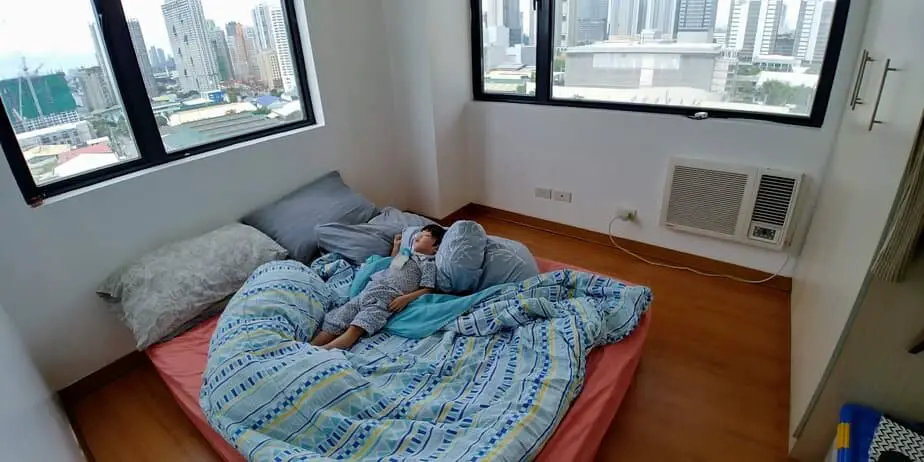
Boy sleeping alone in bed room.
Here’s our bedroom when we moved out for the first time. We rented a condo unit 15 minutes away from our parents.

Is It Okay To Leave your parents?

Are you considering moving out of your parents’ house? I’m sure there are tons of things happening inside your head right now. You may think leaving your parents is a form of rebellion or selfishness. But as long as you have the right reasons and your parents are fit to care for themselves, you are making a very mature decision.

Leaving our parents so we can stand on our own is a loving act. We depart to relieve them of their obligations toward us and let them enjoy their season as empty nesters. This will enable them to pursue dreams that have been side-tracked due to parenthood. Like you, they also gain freedom.

But be ready. This will be a painful process for both you and your parents. I cried day and night for about a week after I moved out. Here are some mental and emotional issues you guys might experience after you leave:

  • Separation Anxiety
  • Depression
  • Emotional Distress
  • Loss Of Purpose
  • Worry And Anxiety
  • Fear
  • Loneliness

For me, it took roughly three weeks before I was able to adjust. There sure will be times when you will miss your parents and wish you were still living with them. You might even be tempted to return home after a month of separation. Hang in there. One day you will see the impact of your decision on your life.

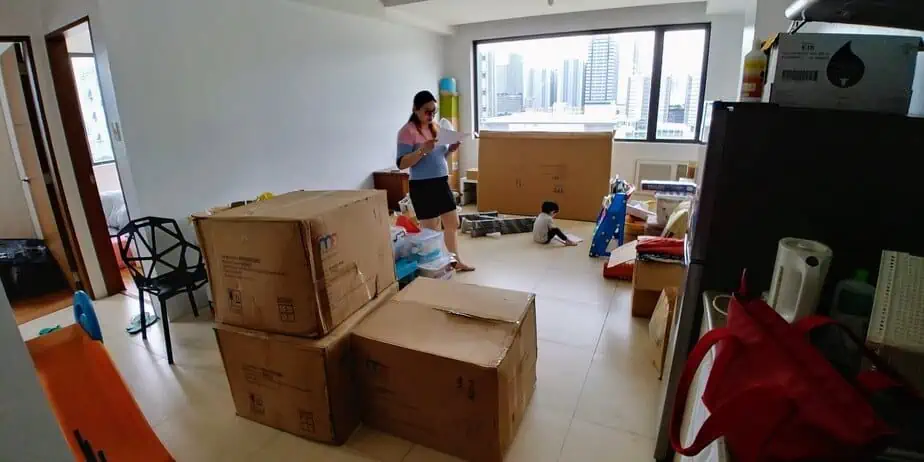
My wife is checking which box needs to be unpacked first. If you are moving out, make sure you have an inventory list. It will make it easier to find the important stuff.

What do you gain from moving out?

So far, moving out of my parents’ house has been the most excruciating transition I’ve been through. But it was also the most rewarding. Here are the fruits I enjoyed after I left home:

Identity

In his book Boundaries (which I highly recommend you to read), Dr. Henry Cloud says we cannot forge our own values, beliefs, and convictions if we do not leave home. We won’t know our true identity because chances are we’re only mimicking the ideas of our family. To discover who we really are, we must first uncover who we aren’t.

Michael Jackson became Michael Jackson when he left Jackson 5. Justin Timberlake became Justin Timberlake when he left N’Sync. I’m sorry for the illustration, but I cannot think of a better way to simplify the concept of detachment to find your identity.

Drafting our family’s mission statement was the first goal my wife and I had after we moved. It is a foundational project that would determine our family’s identity and direction. Follow these links to see our mission, vision, core values, and process:

Authority

We will never be kings and queens in our parents’ house. It may not be a big deal when you are single. But this plays a significant role in marriage, especially when you already have kids. The potency of our authority as parents gets diluted when we are not the ruler of the household. Children tend to be confused about who they should obey more, us or their grandparents.

As long as we live with our parents, there will be unending clashes in values, beliefs, and methods. Our parents will always be our parents, and they sure will have their comments on our marriage and parenting. They may even bypass the rules we already established with our kids, which affects our reputation as parents.

We observed this vividly with our children. Before we moved, we often heard the phrase “But grandma or grandpa says…” whenever we tell them no. Today when we say no, it’s “no.” No more buts. It’s now clear to them who are the authorities of the house.

Intimacy

I don’t know about you. But living with your parents makes it challenging to be intimate with your spouse. Men, I’m sure you know what I am talking about. We are restricted in expressing our love physically and verbally. We can’t simply hug and kiss our wives while making pancakes in the morning. Or say “I love you” during laundry. It’s awkward. We always consider our parents might see or hear us.

In another definition of intimacy, I also became closer to my parents. Our relationship has grown to another level. Perhaps due to the separation, we now value each other’s time and presence. I never experienced receiving a call from mom and dad to simply catch up with life. At the same time, I have also never been this excited to talk with them.

Funny, but I seem to know my parents better now than when I was still living with them. I learned more about their struggles, pains, and dreams. We never have had these deep conversations before.

Community

Being independent and self-sufficient doesn’t mean we live in a vacuum. We need a community to thrive. And that’s what we receive when we move out of our parents’ house. We can now invite over as many friends as we want to. Or visit them and go home according to our own time. There is no more curfew. Every month, we invite at least one family to our house. Wives prepare food, kids play together, and the husbands converse over coffee.

Moreover, transferring to another neighborhood will enable us to meet new people and be involved in their communities. We may have lost the comfort, security, and provision we receive from our parents, but we now become part of a larger network where we look after each other’s backs. Mom and dad can still be part of the network, but they are no longer the primary source. Detaching from our parents is like a branch being cut off from the trunk and planted directly on the soil. We get sustenance straight from Earth.

Testimony

Your story begins after you move out of your parents’ house. It’s the kind of story you can own. Before this, your testimony won’t be as potent since you live under the shadow of mom and dad. Once again, adults who do not stand on their own are still kids. People will always be suspicious about your achievements when they know you still depend on your parents. Your success will always be connected to them.

Two men got a new car. One worked hard and has been saving his money for the past five years. The other one received it as a gift from his parents. Who has a better testimony? For the second time, I’m sorry for the terrible example. But I hope you got the point. I have driven two cars in my life. Both were from my parents. I hope one day I can tell you the story of how I bought my first car.

We eventually moved to the suburbs after a year and a half. We’re now roughly 1 hour away from our parents’ house.

Can moving improve your life?

Moving out of your parents’ house per se will not improve your life. But it gives you the liberty to do so. How your life turns out after you leave home is your personal responsibility. You are given freedom. It’s up to you how you want to use that freedom. Improve your life or make it worse? It’s your call.

More From The Learning Dad Blog

Sources


Follow the Journey

This journal is my way of making sense of the lessons from the journey. Get the next full entry delivered straight to your inbox.