Why Is Financial Planning Good?

A third of relational conflicts among adults in a family are caused by money issues. Thus, financial management is an essential discipline in raising a successful family. But sound economic management hinges on how good your plan is.

Financial planning is critical for having healthy fiscal well-being and healthy family relationships. It gives a clear picture of how you should behave to achieve your goals. Having a financial plan will provide peace of mind that allows you to enjoy your money and relationships better.

What is financial planning? It is the practice of analyzing your financial situation and writing a series of steps to achieve your financial goals. This typically includes other financial topics like investing, saving, retirement, insurance, estate, and taxes. If you want to know more about financial planning, read on. Listed below are some of the benefits of planning your finances.

family in a coffee shop
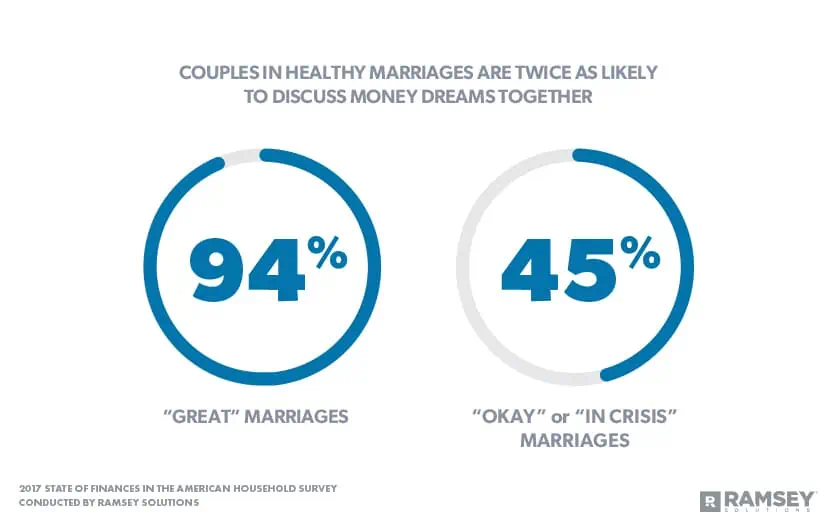
Research shows that 94% of couples who do financial planning together enjoy their marriages.

It Moves You Toward A Clear Goal.

The most prominent benefit of having a financial plan is it helps you determine a goal and move towards it. What is your financial goal? For us, it’s to pay off all our debts. This has been our goal for the past five years. Since my wife and I started to embark in this direction, we have settled 90% of our obligations – including paying off eight credit cards. With today’s economic state, I wish I could say when we will be able to finally reach our goal. But the plan is to continue to press towards it. You can read our credit card story here: How We Killed 8 Credit Cards.

It Helps You See The Big Picture.

I got into massive debt due to the absence of financial planning. To put it plainly, I winged financial management for most of my adulthood. I spent money here and there without considering the implications of those actions in my life. The change began when I sat down with a pen and paper because I became intensely sick of my financial situation. I folded the paper in half and wrote a plus sign on the left and a minus sign on the right. Under the plus sign, I listed all my assets – the source of my income. While under minus, my liabilities – the cause of my expenses.

Lo and behold, there was only one item under the plus and nine under the minus. No wonder I’m struggling financially! The outflow overpowers the inflow by a large margin. Seeing a bird’s eye view of my finances has allowed me to make the necessary changes to improve my financial situation. Read more about this here: Assets and Liabilities – Our Simple Plan To Financial Freedom.

It Removes Distractions.

Before the session I had with my pen and paper, I planned numerous things for my life. That was 2016. I am newly married and intend to enjoy the honeymoon stage with my wife. We thought of going to the Maldives. And after we come back, we will start a business together, then buy ourselves new smartphones. But we changed our plans after I conceded to the terrible financial position we are in.

Instead of sipping cocktails by the beach, we started clearing off our liabilities. Rather than getting the latest Android phone, we started building our assets. We still intend to make our honeymoon plan work someday. But for now, we are laser-focused on getting ourselves out of debt first.

Shout out to my wife for being supportive and understanding since day one.

You Can See The Right Opportunities.

The strategy is simple: build assets and minimize liabilities. We eat, breathe, and live with this plan in mind. Because of this, my wife and I can easily spot the right opportunities for us. We will definitely look at anything that will help us improve our cash flow and reduce our monthly expenses. This has been our discipline since we started our journey toward financial freedom. Here are some of the moves we made over the years:

  • We have set up a home office.
  • We transferred our physical stores to the internet.
  • We cut all but one credit card. We retained the one without an annual fee.
  • We paid off all debts with the highest interest first.
  • We unsubscribed to all unnecessary subscriptions like the NBA League Pass.
  • We studied the various businesses you can do online such as e-commerce and blogging.
  • We decided to homeschool our kids.
  • We invest 15% of our income in index funds.
  • We deposit 80% of our money in the money market fund or a high-interest savings account.
  • We host our unused spaces on Airbnb.

These decisions have either saved us money from rentals, utilities, fuel, payable interests, and wages; or allowed our money to passively earn 4 to 10 percent interest per annum.

You’ll Become More Patient With Yourself.

Once you have your plan, you will realize the voyage of becoming financially free takes longer than you thought. Whatever your goals are, the realistic time frame to achieve them is at least five years. Why such a long time? Well, there are lots of strings attached when it comes to money. But one of those is our attitude. The author of The Total Money Makeover says, “personal finance is 80% behavior and 20% knowledge.” If we want to see progress in our financial statements, we must first improve ourselves. And that’s what really takes time. Breaking bad money habits, mindsets, and beliefs is not easy. So be patient with yourself.

Here are a few of the most problematic money habits I have to break:

  • Saying yes all the time. (I was a people pleaser)
  • Not taking note of my expenses.
  • Impulse buying.
  • Purchasing stuff on credit.
  • Instant gratification. (I hate waiting)
  • Telling lies, overpromising, and not being transparent on business transactions. (I will do everything to close a sale)
  • Projecting a false image of me. (I want people to see me as someone who has already made it)
  • Delaying payments.
  • Living beyond my means.
  • Using debts as leverage.

It Provides Peace Of Mind.

One of the priceless things financial planning gives me is peace of mind. I sleep soundly at night despite how volatile the economy is today. I am a Christ follower, so this kind of peace has some Spiritual aspect to it. But on the practical side, I am confident we will be alright if we stick to our financial plan.

I lost my bus transportation business in 2020 and three rental properties in 2021 due to Covid-19. Today, thank God we are still doing alright financially. We have enough savings to weather the crisis. It allowed us to continuously invest, pay our debts, and live comfortably.

It Allows You To Enjoy Your Money.

Financial planning isn’t about deprivation. Managing your finances is a tough job. You will not go far if you withhold yourself from enjoying the process. Having fun should be an integral part of financial planning. To do this, we have set aside a budget called the “Fun Fund.” We use the money here for entertainment purposes like eating out, watching movies, traveling, and buying stuff we like. This is also the fund we use to celebrate every time we pay off a debt.

Incorporating fun activities into your financial planning will allow you to enjoy them a hundred times more because you know you are not overspending. It is guilt-free spending.

It Permits You To Become Generous.

In connection to the point above, this is also how we train ourselves to be generous. As Christ-followers, we know “it is more blessed to give than to receive.” Even more, giving should be a fun exercise since “God loves a cheerful giver.” For this reason, we have also set aside a budget called the “Giving Fund.” Like the fun fund, the giving fund enables us to be generous without compulsion because the money is already allocated for this purpose. This is where we get our cash when giving tips, donating to causes, or helping anyone in our community.

Your Marriage Will Be Better.
planning couples enjoy better marriages
Planning couples enjoy better marriages.

Planning your finances with your spouse helps your marriage. Based on a study by Ramsey Solutions, couples in healthy marriages are twice likely to talk about their financial dreams together. By God’s grace, I can confidently say Lalaine and I enjoy married life. And yes, keeping ourselves financially synchronized is a significant part of our relationship. Money is one of our favorite topics. We can spend the entire afternoon chatting about it – especially when it’s about looking back on how far we have come since our financial situation five years ago.

You Know When It Is Enough.

How much is enough? Without proper financial planning, you can be chasing money your whole life – and still don’t feel it is sufficient in the end. I know a couple who have always struggled with their finances. Little to no cash, always in debt, and unable to pay their bills in time. This has been their lifestyle for over 35 years, not because they are poor. It’s because they invested all their money in businesses and real estate. They didn’t set aside anything for themselves. Ten years ago, I asked them, “Why this kind of sacrifice?” They simply replied, “We want to multiply our money as many folds as possible.”

I got the chance to talk to them again the other day. They are now in their retirement age. They said they sold their house recently for more than $2,000,000. I was happy. They can finally enjoy a life without financial strain. Or so I thought. To my surprise, they are back in their usual financial position. They said they used half of the money to buy their new home, and the other half was invested in more real estate. When asked why, they again replied, “We want to multiply our money to as many folds as possible.”

I am not against investing. If you follow this blog, you know I actually advocate it. But why are you investing in the first place? What is your goal? How much is enough? Before you invest, be sure you have a plan to back it up. As for me, if I have $2,000,000, I will put it in a safe investment fund that yields at least 4% and live life off the interests.

More from The Learning Dad Blog

Sources


Follow the Journey

This journal is my way of making sense of the lessons from the journey. Get the next full entry delivered straight to your inbox.

Is Financial Planning A Good Career?

Browse your list of friends. It is highly likely there will be a great number of them who work as financial planners (or advisors). Why is this? Is a career in financial planning really that good? It seems like you are curious. Are you also considering going into this industry? If so, let me share with you some of my experiences as a financial advisor.

Overall, financial planning can be a great career if you commit to it long-term. You sure will love this job if you desire personal growth, recognition, independence, satisfying pay, and tons of incentives. Yet, they are not without costs. To be successful in this career requires a massive amount of time and hard work.

Spoiler alert: I no longer work as a financial advisor. Like everything in life, we always have to consider the positives and negatives of everything we get ourselves into. Being an advisor is something I did not enjoy considering the love I have for finance. To put it plainly, a financial planning career is not for everyone. Read on if you want to learn the pros and cons of being a financial advisor.

Family having photo op on stairs.
One of the pros of being a financial advisor is it can give you the freedom to work on your own time.

What I Love About Being A Financial Advisor? (Pros)

There is a lot to love about being a financial advisor. But perhaps what attracts people most is their huge earning potential and massive incentives. Close second, I would say, is the awards and recognition they can garner from exemplary performances. As for me, what I love most is the access to high levels of learning available in this profession. To indulge you with more details, listed below are the pros I observed from being a financial advisor:

Huge Earning Potential and Incentives

Financial advisors do not normally receive salaries. But the estimated commissions they earn from ten sales are generally enough to cover them for the entire year. This is, of course, dependent on what type of products were sold.

Typically, a financial advisor takes about 30% of the insurance premium for the first year; and about 15% in the second year. Closing ten insurance policies with a $1,200 annual premium give them an income of $3,600 in year one and $1,800 in year two. But despite the huge commissions, most financial advisors do not care. They are actually more concerned about the incentives.

Who wouldn’t? Hitting your targets will not only make you eligible for bigger cash bonuses. It also qualifies you for exclusive trips. We are talking about all expenses paid to luxurious hotels, cruises, restaurants, or tourist attractions. The financial industry is outrageously generous. They do not hold back in rewarding those who perform.

Work On Your Own Time

Tired of working eight to five jobs? A career in financial planning might be for you. Aside from weekly team huddles and client meetings, you do not necessarily have to work at a specified time. It is up to you to design what your day would look like. This, of course, can be a double edge sword. Not all people thrive with having this amount of freedom.

I also struggled with this work style initially. It is like trying to tame a horse. Yet there’s no other feeling when I finally got the hang of it. Since then, I no longer use an alarm clock to wake up in the morning. I enjoyed work more and my sleep has never been better.

High-level education

As mentioned earlier, this was what I appreciated most in my financial planning career. Financial advisors are being continuously trained by their companies. They will invest in your education. All you have to do is make time for the classes they set up. There may be times when you even get tickets to seminars by renowned speakers. I know this may not sound inviting to most of you. But learning never stops in the financial planning industry.

Small group discussion.
This picture is taken during one of our learning sessions where I shared some tips on recruiting.

Progressive career path

Another thing I love about being a financial planner is it is not a dead-end job. There are paths to choose from as you progress in your career.

The Personal Development Route

If you consider yourself a lone wolf, this path is for you. The focus is solely on yourself and your customers. Your aim is to be among the best in the financial planning industry. Your success is validated by becoming part of the Million Dollar Round Table (MDRT). MDRT is an association of life insurance agents who qualify by selling $1 million or more in one year.

Here is the usual roadmap for the personal development route:

  • Trainee
  • Financial planner
  • Executive financial planner
  • Senior financial planner
  • Premier financial planner
  • MDRT

The Agency Builder Route

This route is for people who want to be team leaders. Choosing this option will allow you to little by little turn your attention from selling to recruiting and training. Your ultimate goal as an agency builder is to put up and maintain your own branch one day.

The usual roadmap for the agency builder route:

  • Trainee
  • Financial planner
  • Assistant unit manager.
  • Unit manager.
  • Branch manager.
  • Senior branch manager.
graduation
I aimed for the agency builder route and finished my training on becoming an assistant unit manager. But if I can redo it again today, I will go for the personal development route. It’s much less headache for me.

Unceasing demand

Financial advisors come and go; thus, there is always a demand in the financial planning industry. Whether you are a fresh graduate, a housewife, or a person who recently lost a job, these insurance companies will welcome you with open arms. Actually, they even welcome those who have become inactive like me! This is big, especially for parents like us. It is reassuring to have something to go to, worse comes to worst.

What do I hate about being a financial advisor? (Cons)

I know what you are thinking. Good pay. Freedom. Prestige. Everything you want in a career is already in being a financial advisor. What’s not to like?! Well, as mentioned earlier, to enjoy all these you need to pay a high price. I don’t know what that exactly means for you. But on my end, these are what hindered me from excelling in my financial planning career:

It Is A Sales Job

You may be called a financial advisor, a wealth planner, or even a financial consultant. But no matter how we turn things upside down, what we are at the end of the day are insurance agents. We sell insurance. That is how we make money. We are generally not paid for “advising” or helping people “plan” their finances. We get paid when we “sell” them an insurance policy.

And since this is a sales job, there is a quota to be fulfilled. Not hitting the sales target may spell demotion or dismissal from your position as a “financial planner.”

Sales target
I cannot recall if the numbers in this picture are our sales target or the cases we already closed. Anyhow, our job as financial advisors is to sell as many insurance policies as we can.

Lack Of Transparency

In connection with the point above, lack of transparency is something I abhor in this career. Again, we sell insurance. It’s the way we earn our living. But no one really wants to talk about insurance because it is a morbid topic. You cannot discuss insurance without talking about death, disabilities, or critical illnesses. That is why we repackage it in such a way it will look like an “investment.”

Now we have an insurance product with an investment component. This is also known as VUL or Variable Universal Life Insurance. It sounds cutting edge, and it got people’s attention. Yet, if you look closely, what it is, in reality, is simply insurance. An overly expensive type of insurance. If you want to know more about this, you can follow this article: Insurance Vs Investment: How to know which one is right for me?

No Unique Selling Proposition

How many financial advisors like you work in one insurance company? Hundreds? Thousands? And all of you are selling the same products? And doing the same pitch? What now is the difference maker? What is so special about you that your friend in high school will get an insurance policy from you, and not from your other batchmate who is also in the same company?

Perhaps the answer is better service? Or more knowledgeable about the product? As a businessman, I do not see this as a sustainable opportunity. Every sale is going to be a bloody battle. Not only among colleagues but also with fellow financial advisors from other companies.

Stigma

Whether you like it or not, people will naturally be suspicious whenever you get in touch with them. This is not about being a financial advisor per se, but being a sales professional as a whole. And that is a problem.

Doctors do not need to call people asking if they are sick. Sick people will go find the doctor. That is the ideal influence we want to emanate as financial planners. We want individuals with financial troubles to come to us. But the truth is we do not work that way. Ironically, many financial advisors do not deal with broke people since they cannot afford insurance. Or they weren’t just equipped to handle complicated financial situations. It’s unfortunate, but we are mere pushy salesmen in the eyes of many people.

Takes A Long Time To Develop

The success rate in being a financial advisor is around 12%. Yes, twelve percent. It’s a difficult job. But regardless, it is also a product of a lack of patience. This career requires time. You won’t be effective in the financial planning industry if you are too young, have a small network, and do not have enough credibility. If you want to succeed in this career, you should find a way to stick to it at least for about five years. And those won’t be easy years. It is imperative to have a good support system while you let yourself “age” in this industry.

Community
Another pro I forgot to mention earlier is the tight community among financial advisors. We compete with one another, but we also have each other’s backs. This photo is taken when we are having our branch’s Christmas party. We are playing charades.

Why did I quit being a financial advisor?

I had a few, but they all have nothing to do with the financial planning industry as a whole. They are purely personal. The company and the managers I have worked with were nothing less than amazing. But perhaps the hardest part of being a financial advisor for me was building genuine relationships.

My work became a hindrance to many friendships. I struggled to draw a line between being a friend and being an insurance agent. Every time I meet with someone I always have this hidden agenda of selling them insurance. I tend to steer conversations so I can make an opening to my sales pitch. In turn, I have turned off many friends, and they became doubtful about my intentions – even at times when they’re truly genuine.

Today, I no longer sell insurance. But I can’t really say I have “quit” being a financial advisor. I still advise people about money through my writing and one-on-one counseling – and it’s free.

Summary

The financial planning industry can provide what most people are looking for in a good career. High income, prestige, and freedom. But achieving those is not a walk in the park. Most financial advisors fail because it takes a lot of time and dedication to make this career work. Yet, it is a job I would recommend even to fresh graduates because of its training. Even if you do not get paid, the level of education you will receive in this profession is already worth your stay.

See also

Sources


Follow the Journey

This journal is my way of making sense of the lessons from the journey. Get the next full entry delivered straight to your inbox.

What Is Good Financial Management?

There is financial management, and there is good financial management. If you have been following this blog, you know I have already written many articles about money. I am a strong believer that every father should learn how to manage their finances well if they want to find success in running their family and businesses. But with all the posts I have written, it seems I still haven’t described what good financial management looks like. Well, that’s what I am going to do today. Here are the four criteria for good financial management:

Disclaimer: The content of this post is based on personal experience and is intended for information purposes only. Please do not take this article as professional advice.

Having an accountability partner is one of the elements of good financial management.

1. There Is A Goal.

The basic element of good financial management is it should have a goal. Why are you managing your finances? What do you want to accomplish? Financial management is useless if it doesn’t take you anywhere. A goal does not need to be something outrageous. A simple one is more than enough. As for me and my family, our current aim is to be debt-free. If you still do not have a financial goal, check out the ideas listed below:

Personal

  • Pay off debts
  • Own a house
  • Self or children’s education
  • Wedding
  • Family vacation
  • Buy a car
  • Six months’ worth of emergency fund
  • Retirement fund
  • Childbirth

Business/Professional

  • Start a business
  • Business expansion
  • Stabilize operating expenses
  • Product development
  • Asset acquisition
  • Crisis management
  • Master’s degree
  • Improve cash flow
  • Attract investors

2. There Is A Plan.

Having a goal is great, but it is not enough. There should be a plan for reaching those goals. In this post, I shared how I found out the root cause of my financial troubles. My debts were basically a product of my expenses being greater than my income. I never realized this until it was too late. Now that I became aware of it, my plan is simple: do the reverse — minimize the outflow and increase the inflow.

Good financial management has a clear goal and a doable plan. It is in a way like going on a road trip. You must have a destination and a map. Who knows where you’ll end up when you start your journey without either one of them.

3. There Is A System In Place.

Having a system is another difference maker between mediocre and good financial management. What is a system? To put it plainly, it is a repeatable method of managing your finances. To help you grasp this idea better, here is a short version of my financial management system:

i. All income I receive is divided into these funds (in particular order):

10% goes to our home church.
10% goes to savings
50% goes to necessities
20% goes to debt payments
5% goes to charity
5% goes to entertainment

ii. I only spend what is available in the fund.
iii. No borrowing between funds, except in an emergency.


The rule applies no matter how big or small the amount I receive. This prevents me from managing my money based on mood and emotion. Follow this link if you want to see the long version. A working system is at the heart of every healthy financial life. So please allow me to spend a little more time on this point with more examples:

  • The envelope system — it is the process of distributing the cash in five to seven envelopes and labeling it to where it should be spent. The fund in those envelopes can’t be spent elsewhere except only in the category written on them.
  • The pay-yourself first method — is a simple approach where you determine how much money you want to keep before spending what is left.
  • The “no” approach — The idea is to simply say “no” to yourself when you do not have the money to spend. This method basically keeps you from getting into debt as it discourages you from using credits or loans.
  • The zero-based budget — this is the practice of spending your income on paper first before actually spending it in real life. The total, in the end, should be zero. This method allows you to think hard about where to spend the money you have currently on hand.

4. There Are Checks And Balances.

Typically, you can already have good financial management with those three points above as an individual. But operating a family or an organization needs another element. You should have someone double-check your records. For family, it should be your spouse. In business, it might be your partner or an entire department. Having people to be accountable to will not only promote better relationships but also ensure you are on track to achieving your goals.

My wife and I monitor our finances through Google Sheets and an app called BlueCoins. I act as our family’s main financial manager, but she can always review the numbers whenever she wants. But besides that, we are in constant communication about any changes made in our finances.

What are the benefits of good financial management?

Overall, good financial management has substance. It should have a vision and a mission. It also must be repeatable and measurable. But don’t get me wrong, managing your finances, in general, is already a win. You sure will reap many benefits even by doing small tasks such as keeping track of your expenses. But incorporating the aforementioned elements into your discipline will shift it to a higher gear. Here are a few benefits you can enjoy when practicing good financial management:

  • You become more patient in playing the long game.
  • You have something to look forward to.
  • You experience less financial stress.
  • You have healthier personal and business relationships.
  • You are less likely to get scammed.
  • You can easily spot and eliminate unnecessary expenses.
  • You will develop better self-control.
  • Your income will improve.
  • You will enjoy your money better.
  • You will reduce or remove debts completely.
  • You are prepared to secure the right opportunities.
  • You do not fear battling crisis situations.
  • You will open up more time for yourself and your family.
  • You will have a good retirement.
  • You become generous.
  • You appreciate and are content with the simple things in life.
  • Your kids learn good financial management.
  • You have a higher chance of owning your house.
  • More people and institutions would like to do business with you.
  • People trust you.

What are good financial management practices?

Dave Ramsey, the author of The Total Money Makeover, says that financial management is 20% head knowledge and 80% behavior. As someone who has battled debt, I couldn’t agree more. I dedicated most of my time studying money when I got broke. But what moved the needle for me was when I started to change the way I live. So don’t be surprised when you find the list below is less about the accounting stuff and more about healthy habits. Here are 30 good financial management practices you can apply in your life today:

  1. Keeping track of expenses.
  2. Delaying gratification.
  3. Paying off your debts.
  4. Saving 10% of your income for rainy days.
  5. Setting aside 15% of your income for investment purposes.
  6. Be honest and transparent with your dealings.
  7. Learning financial management.
  8. Getting term insurance.
  9. Living within your means.
  10. Not investing in things you do not understand.
  11. Being generous.
  12. Playing the long-term game.
  13. Reward yourself appropriately.
  14. Simplifying your life.
  15. Openly talk about money with your spouse and children.
  16. Saving for retirement.
  17. Working hard and smart.
  18. Don’t look for shortcuts. (There’s none.)
  19. Take care of your health — Rest, exercise, and eat healthily. (Medicines and hospital bills are expensive.)
  20. Developing and committing to a financial system.
  21. Having short-term and long-term goals.
  22. Make your plans realistic.
  23. Doing a regular audit of your progress.
  24. Enjoying the process.
  25. Being grateful.
  26. Being content.
  27. Seeking wise counsel.
  28. Surrounding yourself with good people.
  29. Staying humble.
  30. Not comparing yourself with others.

Summary

You will recognize good financial management when you see it has a clear goal, a doable plan, a repeatable system, and trustworthy people to be accountable to. We can generally manage our finances without them. But integrating these four components will take our money management to the next level.

See also

Sources

  • 5 Simple Budgeting Methods to Help You Live Your Best Life — Student Loan Hero

Follow the Journey

This journal is my way of making sense of the lessons from the journey. Get the next full entry delivered straight to your inbox.