The Mission and Vision Of Our Family (+ Core Values)

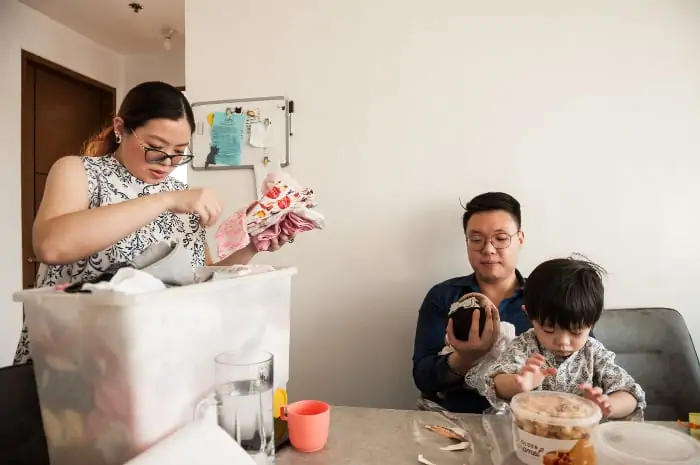
People find it weird to see these frames up on our dining wall. One even asked if we were running a school or something. I cannot blame them. Not everyone is aware of the importance of a mission and vision in a family.

Mission and vision statements will establish the identity, direction, and purpose of an organization. Even though all families may look the same on the outside, each unit has a unique impact on society.

What is good is that many parents have already started to recognize the point of having a family mission and vision. — Thanks to the numerous parenting books and seminars available today.

But the most common problem parents face when writing their statements is that they do not know where to begin. I could not relate more. It took us four years before we came up with a decent one. So I thought it might be helpful to share our mission and vision to serve as a guide. It is a bit uncomfortable, but I do not mind. The purpose of this post is to help you get off the ground.

“A family mission statement is a combined, unified expression from all family members of what your family is all about — what it is you really want to do and be — and the principles you choose to govern your family life.”

Stephen Covey

Mission: To Bloom Wherever We Are Planted

Heads up, it sounds corny. But this is what best describes the mission of our family: To bloom wherever we are planted.

A mission is something we aim to do every day. It is who we are and what we do.

In simple terms, our mission is to do our best wherever we are, whatever we do. We aim to do things with excellence and wisdom at all times.

Here is our supporting verse from scripture:

“You shall love the Lord your God with all your heart and with all your soul and with all your mind.”

Matthew 22:37 ESV

My wife and I are big on stewardship. It means careful management of everything entrusted to us. — Like time, money, talents, career, influence, and relationships. We see ourselves as managers who take care and make the most of these assets for the glory of God.

A plant needs to be in the appropriate condition and manage a suitable amount of nutrients to flower. Too much or less than what is necessary can be detrimental to the plant. It can neither be over-watered nor under-watered. The plant should have the right balance of elements to produce flowers.

Similarly, we trust that we are planted in the exact garden where God wanted us to be right now. We already have the perfect environment and all the necessary elements we need. The only assignment we have is to bloom.
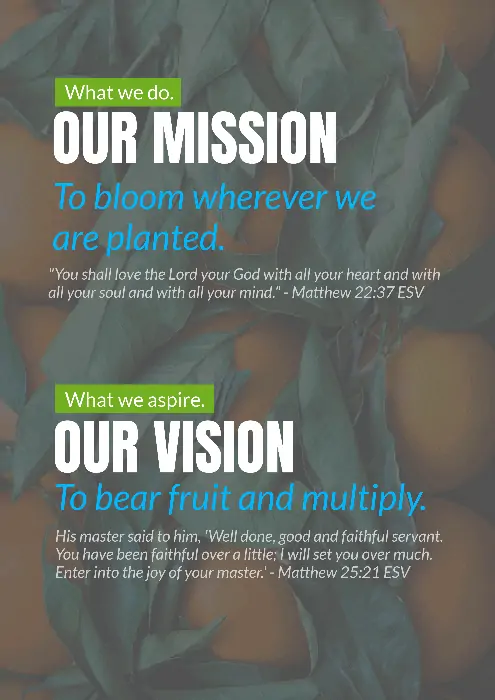
Vision: To Bear Fruit And Multiply

A vision is something we aim for.

The mission is to drive the car carefully, and the vision is to reach the destination we are aiming for. 

The vision and mission should, in a way, relate to one another. Since our mission is to bloom, our vision is to bear fruit and multiply. We hope that whatever we are managing will one day bring results.

Examples:

  • Money invested will yield good returns (bear fruit)
    — and those returns will make even more profits in the future (multiply).
  • Relationships built will bring love, joy, and camaraderie. 
    — and those relationships will encourage more relationships to do the same.
  • Our influence will lead our kids to become people with integrity. 
    — We hope someday our kids will also influence their future children to be good-hearted people.

mission is something we have control of, while a vision is something we do not.

Our supporting verse for our vision comes from Matthew 25:21 (ESV):

“His master said to him, ‘Well done, good and faithful servant. You have been faithful over a little; I will set you over much. Enter into the joy of your master.'”

In the end, a vision is faith-based. We do not know whether it will happen or not. But despite the results, we continue to execute our mission each day.

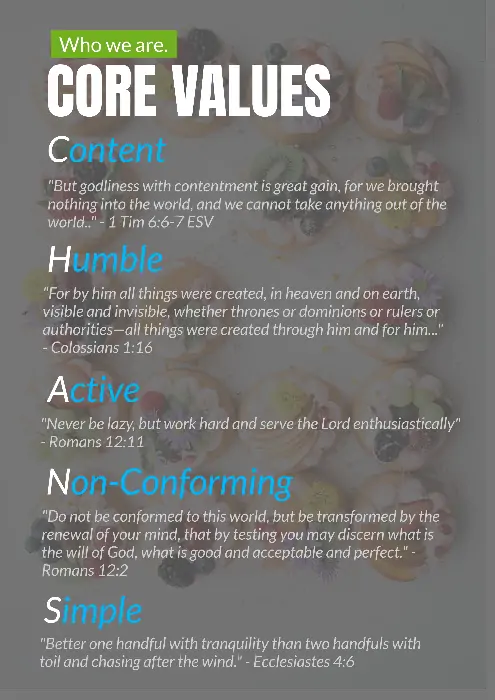
Core Values: C.H.A.N.S.

What are core values?

Core values are the guiding principles or the practices needed to achieve a specified goal.

The mission is to drive the car carefully. 

The vision is to reach a particular destination. 

The core values are your driving skills, license, maps, gasoline, spare tire, etc. It is everything you need to execute the mission and move towards the vision.

“A core value is something so central you would say, ‘Even if it’s harmful to us, we would still hold on to this value. Even if we had to pay penalties, even if we had to punish our children for violating it, even if we had to deny them something that would bring them pleasure, we would still hold to it.’”

Jim Collins

There are virtually unlimited values to choose from. It is tempting to hoard and dump everything on paper. You can do it at the beginning — but it is best if you can trim it down to five or seven core values.

You can use an acronym to make them easy to remember. For us, we used our surname, “Chan.” But we felt it was too short, so we added an “S” at the end: C.H.A.N.S.
Contentment

But godliness with contentment is great gain, for we brought nothing into the world, and we cannot take anything out of the world.

1 Timothy 6:6-7 ESV

Our number one core value is Contentment. We are not a family of hunters. We do not look for greener pastures nor kill for our next meal. What we do is grow our food and make wherever we are greener. You can consider us as a family of farmers or growers.

Without contentment, we will struggle to accomplish our mission. We should be content with whatever we have and wherever we are to be effective stewards. We cannot bloom WHEREVER we are planted if we are dissatisfied with our current situation.

Humility

For by him all things were created, in heaven and on earth, visible and invisible, whether thrones or dominions or rulers or authorities—all things were created through him and for him.

Colossians 1:16 ESV

There is a paradox in Humility that makes it a little tricky. Whenever you say you are humble, then you are technically not. But this humility is not about us. It is about the acknowledgement that whatever we have comes from the Lord — so there is nothing we can boast. Everything we see, touch, or experience, in general, is from God and for God.

Our possessions, lives, achievements, talents, and whatnot are only entrusted to us. What is nice about being humble is we tend to be more careful in using resources — because we know they are not ours.

We are only managers, not owners.

Active

Never be lazy, but work hard and serve the Lord enthusiastically.

Romans 12:11 NLT

Contentment may lead to complacency. Humility might result in apathy.

Our third core value intends to balance things out. We have to remind ourselves to be Active.

Though we are content, it does not mean we can sit all day and appreciate what we already have. We should continue to strive, learn, and improve. In humbleness, we will utilize our gifts to honor God and serve others. We shall use the wisdom and talents we have to set goals and execute plans.

Being active means we do not take opportunities for granted. We are assigned with all we have for a reason. The last thing we want is to become a fruitless tree.

Non-Conforming

Do not be conformed to this world, but be transformed by the renewal of your mind, that by testing you may discern what is the will of God, what is good and acceptable and perfect.

Romans 12:2 ESV

Not because everybody is doing it means we have to do it. Not because everybody is saying it means we should believe it. To be Non-conforming is about reflecting, studying, filtering, and testing conventional wisdom. We as a family practice critical thinking before we apply or even share any knowledge or “facts.”

The world today is already drowning with information. Being a good steward of knowledge will protect our family and everybody around us from false practices and fake news.

Being non-conforming is perhaps the most troublesome core value we have to maintain. The reason is, more often than not, people criticize us for not following customs or beliefs.

A brief side-story:

Our country has a common practice where parents mark the forehead of their children with red lipstick whenever they go out. They believed the mark would protect infants from evil spirits and other forces.

But Lalaine and I do not buy this idea. One day, we brought our then six-month-old child to a family gathering without the red dot on his forehead. Unfortunately, there are a number of our relatives who are big on these kinds of superstitions. They deemed us to be irresponsible parents for exposing our baby to those vile entities.

Simplicity

Better one handful with tranquility
than two handfuls with toil
and chasing after the wind.

Ecclesiastes 4:6

We are a family who likes to keep things simple. We strive to simplify our lives to give way to the more remarkable things in life.

Simple living allows us to:

  1. Save money.
  2. Lower our stress levels.
  3. Focus on what matters.
  4. Improve our relationships.
  5. Learn.
  6. Give.
  7. Enjoy a peaceful life.

But simple living is not in our D.N.A., Lalaine and I used to have a lavish lifestyle before we were married. We eat out a lot and buy stuff we do not need. She likes bags and shoes. I like electronics and athletic wear.

We learned the value of simple living when we got ourselves deep in debt in 2016. It was a tough season for us. But by downsizing our stuff and lifestyle, we paid off eight credit cards consequently. Simplifying our way of life also allowed me to give time and invest in learning finance. Today, we have already paid off 85% of our debts. Hopefully, we can wrap it up in a year or two.

Check out these posts if you wish to learn about our debt-free journey:

  1. How we killed eight credit cards.
  2. Assets and Liabilities Management: Our simple plan for financial freedom.

Closing Thoughts

That’s it! Those are the mission, vision, and core values of our family.

What do you think? Did it help you with yours in a way? I hope so!

If I could suggest, I would say stop overthinking the mission and vision statements of your family. Here is what I learned when my wife and I were doing this project:

A family mission and vision are more of a DISCOVERY than an INVENTION.

We are not scientists who go to our labs and create the family we want. We are better described as archeologists who go out and find clues to why our family exists. Ultimately, we believe God is the one who assembled our family for a purpose. It is our job to find out what that purpose is.

Why not start a journal and record the uniqueness of your family? Those are the building blocks for your mission and vision.

Here are some areas where you can get a lot of clues about your family:

  1. Bible
  2. Experiences
  3. Trials, challenges, struggles
  4. Strengths, gifts, talents
  5. Dreams, passion, interests
  6. Opportunities
  7. Circumstances
  8. Community

Writing the mission and vision statement of our family is an ongoing process. It is a journey for life. We will continuously update every time we find clues about why our family exists.

So please do not torture yourself. What you can do instead is set a weekly date with your spouse. Talk about your family and write down any insights. One day you will be able to connect the dots and reveal your family’s mission and vision.


Keep In Touch


Thank you for reading!

Follow the Journey

This journal is my way of making sense of the lessons from the journey. Get the next full entry delivered straight to your inbox.

7 Things To Do When You Hate Parenting

Do you hate parenting too? Welcome to the club!

Let us be honest. Parenting is an extreme job we have never prepared for. It is only natural if we find it distasteful. I also used to hate being a parent. It is something I shared in a separate blog post: Is It Okay To Hate Parenting? (Real talk).

Hate is generally okay as long as it does not result in violence or destructive behaviors. But that’s the problem with hatred — it grows. We cannot guarantee what will happen if we let it sit for too long.

A baby snake may look innocent. But who knows what danger it brings after a few weeks inside our house.

Here are 7 things to do when you hate being a parent.

1. Learn to parent

People turn to hate when they are powerless. What do you do with a bully stronger than you? An abusive parent? Or a demanding boss?

Most of the time, we do nothing, do you not agree? We know they have the upper hand, so all we do is harbor hate against them.

It is the same feeling we have about being a parent. We didn’t prepare for this excruciating task. No school ever taught us how to raise a child. We feel so powerless, especially when:

  • The baby cries. 
  • Bills start to pile up. 
  • We struggle to balance work and family life.

Parenting has brought us to our knees, and the only thing we can do is hate it.

But enough is enough. One of the first things I did to turn the tide around was to learn how to be a parent. I burn through a lot of books and attended seminars. I acknowledged my weakness and devoted time to making myself battle-ready.

Here are some parenting books I recommend (Links to Amazon Kindle):

  1. The World Needs A Father by Cassie Carstens — You can also sign up for the Two-hour FREE training in Udemy.
  2. The Five Love Languages of Children (and Teenagers) by Gary Chapman
  3. On Becoming Baby Wise by Gary Ezzo — a controversial book, but one of my mentors recommended this to me. I found some nuggets here.
  4. Be A Better Dad Today!: 10 Tools Every Father Needs by Gregory Slayton
  5. The Complete Book of Christian Parenting and Child Care by William and Martha Sears
  6. Boundaries by Dr. Henry Cloud & Dr. John Townsend

Bonus (I haven’t read this book yet but looks promising): Parenting: 14 Gospel Principles That Can Radically Change Your Family by Paul David Tripp

These books helped me understand my responsibilities as a father. It gave me tips on how to manage the house and approach my children better. Consequently, we were able to develop a structure that worked for our family.

2. Find a family counselor

It is difficult to process our emotions alone. We tend to have a biased perspective toward someone or something when we feel hate. We need someone to talk to who is on neutral ground. It could be a trusted friend or a family member. But it is best if we can seek professional help.

When our family was at its peak of messiness, my wife and I visited our family counselor every other month. It was a worthwhile investment. We both were able to process our emotions not only for parenting but for our marriage as well.

Praise God we no longer hate being parents as it used to be. There were days when we even enjoyed it. But we do not want to be complacent. We continue to schedule an appointment with our counselor once or twice a year.

Pro-tip: Be as honest and as transparent as possible when meeting with your counselor. They cannot help you when you withhold information from them. Tell them how you truly feel, no matter how uncomfortable it is.

3. Find productive ways to unleash the hate

On May 3, 1980, a hit-and-run killed a 13-year-old girl in Fair Oaks, California. The driver was drunk. By September 5, 1980, the mother of the child unleashed her hatred towards all drunk drivers. She organized a group called Mothers Against Drunk Driving. MADD for short.

MADD is a non-profit organization in the U.S., Canada, and Brazil. It seeks to stop drunk driving and support those who are affected by it. They moved to prevent underage drinking and strive for a stricter impaired driving policy. — whether it is by alcohol or any other drug.

As of March 30, 2020, MADD has saved around 350,000 lives and helped more than 850,000 victims. In essence, their organization has helped cut drunk driving victims in half.

We can only imagine how much anger and hate the mother has for the person who killed her daughter. But she released her emotions in such a productive fashion.

Our counselor also asked me to do the same. In one of our sessions, she gave me a notebook and told me to dump everything I felt there. Eventually, I decided to put up a blog instead.

4. Make it right with mom and dad

How is your relationship with mom and dad?

There are no perfect parents. Chances are, mom and dad may have hurt you at some point in your life. But since it is morally impossible to make them pay, we tend to redirect our hate for them to our children. — this is called a mother and father wound.

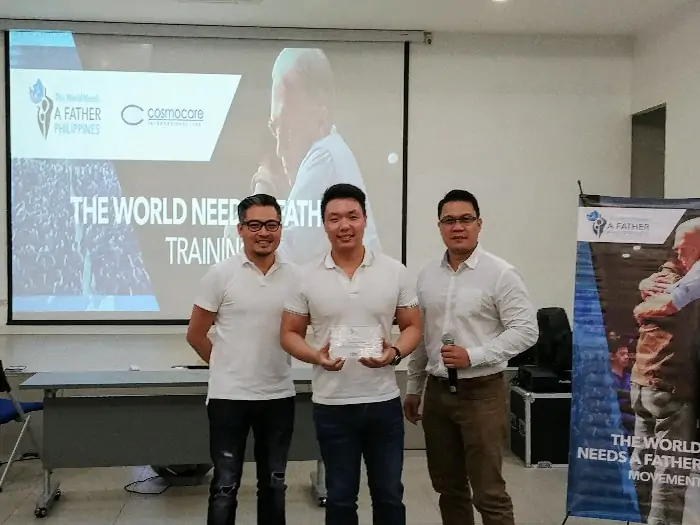
My dad was passive, and my mom hurt me a lot verbally and physically back then. But I was not aware of these wounds until I took an exam in The World Needs A Father training. I generally consider myself to have a good relationship with my parents. Yet, the hate I have for parenting is possibly a manifestation of my past hurts.

Hatred can be passed down. Our animosity about parenting could be less about our children and more about our parents. Having parental wounds exempts no one, even mom and dad.

5. Watch movies about being parents

Sometimes all we need is a good parenting movie to attach us to our new role as fathers. No seriously. Watch these films and tell me if they didn’t somehow tug your heartstrings.

  1. John Q — Denzel Washington
    John Q Archibald lives with his wife Denise and young son Michael. But when Michael needs an emergency heart transplant that John cannot afford, he vows to do anything to keep his son alive.
  2. The Pursuit of Happyness — Will Smith
    Tired of Chris’s professional failures, his wife decides to separate, leaving him financially broke with an unpaid internship in a brokerage firm and his son’s custody to deal with.
  3. Big Daddy — Adam Sandler
    Sonny, a lazy law school graduate, decides to take care of Julian, a five-year-old boy, to win his girlfriend back. However, things take a turn when the two start to genuinely bond.
  4. Miracle in Cell No. 7 — a Korean film
    Inmates at a Korean prison join forces to protect a comrade and his young daughter, who cannot bear to be separated for even a moment.
  5. Click — Adam Sandler
    An architect discovers a universal remote that permits him to fast-forward and rewind to certain portions of his life. Complexities emerge when the remote begins to override his preferences.

Check out some more high-rated parenting films at Ranker.

6. Treat yourself

Hate may sprout if we feel like we are on the losing side of the deal. We might say, “Being a parent is so hard! And what do I get in return?! It’s so unfair!”

So I decided to create a budget to treat myself sporadically. I named the budget “Fun fund.” It is my stash where I put in around $10 to $30 a month as my “salary” for becoming a parent. Money there will be solely spent on my enjoyment.

Thus far, I have already bought a Bluetooth speaker, Bluetooth headphones, and an e-reader using my fun fund. My most recent expense was my enrollment at Project 24 by Income School. It is an online course where it teaches me how to blog and build better websites.

Aside from the fun fund, I also opened another budget to treat my wife. We call it the “Date night fund.” We set aside money there for three weeks, then whatever amount we saved will be used for eating out. It is something we enjoy and look forward to each month.

7. Get Some Sleep

How’s your sleep lately? Do you get seven to nine hours of sleep every day?

If not, there is a good chance your irritability doesn’t come from parenting per se but the lack of sleep.

According to SleepFoundation.org, sleep deprivation directly affects how we think and feel.

Examples of these symptoms include:

  • Slowed thinking
  • Reduced attention span
  • Worsened memory
  • Poor or risky decision-making
  • Lack of energy
  • Mood changes — including feelings of stress, anxiety, or irritability

Top these off with a demanding baby, financial pressures, and a pile of things to do, and what do we get?

No wonder we feel so defeated as parents.

Yet, the choices we make are what drives us to sleep deprivation. We lack sleep because we choose to sleep less. We would instead work, do some chores, or even entertain ourselves than get our much-needed rest.

Why don’t we start a new habit today? Let us make sleep a priority.

Here are some tips from SleepFoundation.org:

  • Have a consistent sleep schedule
  • Set boundaries in your work and social life
  • Have a bedtime routine

Avoid things that can interfere with sleep:

  • Electronic devices
  • Alcohol
  • Caffeine
  • Naps

Bonus: Look at the big picture

What is the goal of parenting?

Train up a child in the way he should go; even when he is old, he will not depart from it.

Proverbs 22:6 ESV

The goal of parenting is to prepare our children for their journey. It is like we’re building a spaceship that should make it to space and survive.

We do not own our kids. They are more like long-term guests. One day, our children will move out and live their own lives.

I don’t know about you, but this was the clincher for me. It made me dread the future separation more than I dread being a parent. This truth taught me to appreciate and treasure the moments when I can still parent my kids.

Because I know one day I am going to miss this part of my life.

Closing Thoughts

“Expect less, appreciate more.”

I received this in-your-face advice from a colleague. She sensed my heart was filled with standards that blinded me from the blessings I already had.

Many married couples today are spending millions so they can become parents. My colleague and her husband had been trying for years but still fail to conceive. — And here I am ranting about parenting.

Being a parent is a privilege. We are entrusted with these children for a reason. We may despise parenting with passion, yet God still thinks we are the best people for the job.


Keep in Touch


Thank you for reading!


Follow the Journey

This journal is my way of making sense of the lessons from the journey. Get the next full entry delivered straight to your inbox.

Is It Okay to Hate Parenting? (Real talk)

Real talk. Being a parent is hard.

It is perfectly okay to hate parenting as it is a mentally and emotionally exhausting task. Hatred is a natural human emotion towards something or someone who has affected a person negatively. What is not okay is when hate has materialized into violence or any kind of destructive behavior.

Not because our blog is about fatherhood means we enjoy being parents. In truth, I used to hate parenting. Children have never been my cup of tea. I find them annoying and unstable. I thought my outlook would change when I became a dad, but it did not. As I reflect on it, it might have even gotten worse.

5 things I hate about Parenting

I know I am not the only parent who has felt this way. We were all enjoying life until these little monsters came into the picture. Here are the five things I hate most about parenting:

  1. Financial strain  it is expensive to raise a child.
  2. A crying child — it ticks me off, especially in the middle of the night.
  3. Constant interruption — it is a battle I have to fight every day.
  4. Mess — no amount of cleaning can make the house clean.
  5. Time-consuming — it is about the kids 90% of the time.

It is okay to hate parenting.

According to MedicineNet.com,

“Hate is a feeling of intense hostility and aversion usually deriving from fear, anger, or a sense of injury. It is extreme dislike or disgust. Hatred is an emotion.” 

What can we learn here?

First, hate is an emotion. And emotions are neither good nor bad. They are simply reactions to an event.

Second, hate has a root cause.

Why are you reading this post? Chances are, you also hate parenting in some way. The question is, why do you hate it?

As for me, aside from I innately do not like kids, I feel parenting has robbed me in so many ways. Time with my friends. Money to buy my wants. Peace of mind. A comfortable life. A business or a career I can be proud of. And the list goes on…

How about you?

Raising a child from infancy to adulthood is a demanding task. It is only natural for most parents to loathe it as it threatens the life they envisioned for themselves.

When hatred is not okay

Not because it is okay to hate parenting means we should not do anything about it.

The problem with hate is that it grows.

When hate translates to action

I remember when our daughter was less than a year old. She was crying like crazy the whole night for the entire week. My wife got up and told me, “Can you please take Jrue out for a walk?” It was 2 AM. “Because I am about to throw her out the window!” (We live on the twelfth floor).

Studies show hatred tends to last. Prolonged hate may one day lead us to act against what we consider as a threat.

When I asked my wife if she was serious about it, she said, “I am afraid so. I gave her everything she wanted, and she is still crying. It’s driving me crazy!”

Some people harbor hate but never act on it. But others have less self-control. They become energized by their emotions that they need to express their feelings through violent acts.

When hate develops from an individual to a group of people

Another effect of hatred is it can level up from one person to an entire group of people.

In 2009, there was a mass shooting known as L.A. Fitness Shooting in Pennsylvania. The cause? It was the gunman’s hate toward women. He was frustrated about the rejection he had received from them over the years. He writes, “Last time I slept all night with a girlfriend it was 1982. Girls and women don’t even give me a second look ANYWHERE”.

Hate is both dangerous and ugly when turned outward. It can cause crime and damaging behavior not only to an individual but to an entire group.

Our antipathy for parenting may have started with one child, but it can eventually develop into hating children overall.

When hate starts to harm us

There are two kinds of hate in general. We already talked about the first one. It is hate turned outward (explosion). In this section, we will talk about the other kind of hate, which is the one that turns inward (implosion).

One of my mentors is a cancer survivor. Every time people ask what cured him, his answer is always: Forgiveness. He said he was an angry man. He had a friend turned enemy whom he had hated so much for decades. Knowing he might not live long, he called this person to reconcile. Later, he learned that his frenemy also harbored hate towards him and was also in serious health condition.

To cut the story short, they mended their pasts, and both were cured of their illnesses consequently!

Have you heard about this quote?

“Hatred is like drinking poison and then waiting for it to kill your enemy.” I am unsure who said it first, but it seems like it is more than just a metaphor.

According to EverydayHealth.com,

“Poison isn’t always something you eat or drink –- it can be an emotion. And hate is one of them, eating you up inside and causing destruction.”

Hate is a potent emotion. It is venom in our mind, soul, and spirit. But furthermore, it is also poison in our bodies that makes us vulnerable to certain diseases.

Let me share another quote before I move on: Holding on to anger is like grasping a hot coal with the intent of throwing it at someone else; you are the one who gets burned.

Both outward and inward hate is destructive when left unchecked. It wreaks havoc with our physical health and emotional well-being. It affects the relationships we have around us. Like hot coal, the sooner we get rid of it, the less damage it can do to our lives.

Reflection: is it possible that our hate towards parenting is what makes it more exhausting than its actual duties and responsibilities?

When hate becomes a cycle

It is unclear where hatred begins. But it is said that it is a learned emotion.

Have you become an object of hate?

People who experienced abuse, mistreatment, or bullying may grow to hate the person who harmed them. They might feel the need to exact revenge. When they couldn’t, they may redirect their hatred toward other people or even to themselves.

Our hate for parenting could be less about our children and more about our relationship with our parents. — It is called the parental wound.

We might have a tarnished relationship with either mom or dad. Each parent can inflict different wounds. Since it is not morally possible to make our parents pay, we now redirect the hate to our children.

What do you think will happen when it is time for our kids to become parents?

Hatred can be passed down. That is why, when I learned about the parental wound, I made an effort to make it right with my parents. — I wrote about it in a separate blog post: Do this if you want your kids to treat you well.

Closing Thoughts

Hatred is an emotion. But it does not mean we cannot do anything about it. We have the power of choice. No matter how we feel, we are still in control. We can hate parenting all we want yet continue to love our kids dearly. An emotion is only an emotion until it translates into action.

One day, our kids will leave home to lead their own lives. We may not see them like we used to see them today. Hopefully, they will also raise their own families.

When the day comes, my prayer is that they will spread love. Not hate.

Check out these 7 things you can do when you hate parenting.

 Do not be overcome by evil, but overcome evil with good.

Romans 12:21 ESV

Keep In Touch


Thank you for reading!


Follow the Journey

This journal is my way of making sense of the lessons from the journey. Get the next full entry delivered straight to your inbox.