What are some of the most common problems we have to watch out for as stay-at-home dads? Here are the ones I have experienced and is currently experiencing since 2017:
1. Worrying About Finances
I will start with the obvious one. It seems we all have a never-ending battle with worry — especially when it comes to our finances. But financial distress for stay-at-home dads (SAHD) is a level higher. It’s because we have an extra limited time, opportunity, and energy to engage in a business or job.
We should already be happy if we can get 4 hours of uninterrupted work time daily.
Unsolicited advice: Lean toward jobs that will pay you based on results and not with time. — The best if you can find ways to make money passively. On the other hand, prune out unnecessary expenses and simplify your living.
I wrote two articles you might find beneficial:
How much do stay-at-home dads make? — My actual numbers. It is an essay on more or less how much a SAHD can make in a year. It also includes a list of work we can do to earn money at home.
Burnout is a state of emotional, physical, and mental exhaustion caused by excessive and prolonged stress.
Not because we are at home means we are more relaxed. It is the opposite. When you work outside, there is a clear line between the office as a place to work and home as a place to rest. That is why the mere thought of going home excites us after we finished our shift. But when you became a stay-at-home parent, those lines get blurred out.
When do you work? And when do you shut off? Being a stay-at-home dad is a 24/7 job.
Unsolicited advice: You have to establish a healthy schedule for you and your family.
Did we work our way through college for this? Didn’t we burn the midnight oil, so we can build our careers and achieve our dreams? What happened? Why am I holding a broom now instead of pen signing contracts? Why am I in the bathroom brushing the toilet and not in a conference room conducting a meeting?
I never understood the power of hope until I got into the pit of hopelessness. Life is exciting when we are in our twenties. There is so much to anticipate:
Who is going to be my wife? Will my baby look like me? What career will I have?
But now the cards are opened, and you will find yourself asking: now what?
Hopelessness is a terrible feeling. It is a fight for meaning and purpose in life. It is a struggle to find something that will get us excited. With God’s grace, I am glad I am over with that phase. It was a period I never want to experience again.
Unsolicited advice: More than prayer, creating a visual dream board will help you a lot. Pin all the places you want to go, things you want to buy, and achievements you want to accomplish. Also include verses in the Bible that gives you hope.
Pro-tip: Put in your calendar where you want to go two years from now. For me and Lalaine, it is Disneyland and Universal Studios, Japan — September 4 to 11, 2023.
4. Boredom
Yes, we do a lot of things, but over time, it becomes too repetitive. It is like watching the same movie or listening to the same music over and over again. You cannot help but to get sick and tired of it one day.
Activity does not mean we are not susceptible to boredom. As described by WebMD,
Boredom is an emotion or signal that lets you know that you are doing something that doesn’t give you satisfaction.
What the statement mean is we can be busy and bored at the same time.
What are the signs of boredom?
There is a lack or no interest in any activities.
Unable to remain interested for long periods.
We could not rest or relax.
There is no feeling of excitement.
It is difficult for us to stay motivated.
Yet, boredom is not the problem per se. The danger is where it can lead us to.
Unsolicited advice: Get yourself engage in a hobby. And then find a group of people with similar interests to keep you motivated.
I love writing in general, but my current hobby is blogging. I enrolled in an online class called Project 24 by Income School to help me build a successful website. But more than that, it kept me engaged and excited to accomplish every task they have in their roadmap.
5. Stressing about What Others Think About You
One of the earliest struggles I had when I became a stay-at-home dad was how to answer the question, “What do you do?” Nowadays, it is usual for old friends to ask one another what they do for a living.
I could simply answer, “I am a stay-at-home dad.” But no, my answer is usually, “I am a stay-at-home dad with some online businesses and properties for rent. I had two other businesses before, but sadly it didn’t work. Yada yada yada…”
Why do I have to explain myself? How come I find it hard to answer such a simple question?
I know I am not the only one. Some of my friends could relate when I opened up about this topic with them.
Is it because we worry about what people would think of us? Or maybe because we do not want to feel defeated? — This type of cross-examination often becomes an arena where you size up each other.
Or lastly, is it possible that we could be struggling with identity crisis?
I do not know.
Professionals and business owners often do not have problems with this question. Doctors, lawyers, architects, and such can answer it without a sweat. But for us SAHD, the “What do you do?” question will always make us feel a little uncomfortable.
Unsolicited advice: We should embrace our role as stay-at-home fathers. Do not mind what others think. We could be the most successful person in the universe, and people will still find something to say about us.
6. Lack Of Resources and People To Talk To
The thing about being a stay-at-home dad is you have to learn it on the fly. There are not many resources to teach you and not many people who can relate to you.
I became a stay-at-home dad pre-pandemic. The mental struggle of being at home is not something people can easily relate to during that time. Even my wife could not do anything but pray for me whenever I am in the middle of a panic attack.
I went to several counselors many times. But I never found a single dad who says he understands what I am going through. I have to learn how to navigate on my own with God’s guidance.
The good news is when the pandemic strikes, I am already equipped. In a way, I can empathize and encourage people who are mentally affected by the lockdowns.
Unsolicited advice: Pour out everything to your wife even it may seem to be senseless. Pray for wisdom. Be open to seek and receive help whenever available.
I am unsure if it will benefit your resume if you put stay-at-home dad as one of your job experiences.
It is a concern not particularly applicable to me since I have no plans of working outside. My wife and I have already talked about it. We both agreed to go all-in in our online businesses and investment portfolio. But for SAHDs who have plans to apply for work in the future, this can be problematic.
Education, experiences, and age are significant factors to secure a decent position. You may lose years of credential-building opportunities when you tie yourself at home.
Unsolicited advice: You have to take the extra mile to find ways to build your credentials at home. Look for 100% remote work or enroll in professional courses with certificates.
The Learning Dad Blog is an affiliate of Coursera. It offers unlimited access to 3,000+ courses, Specializations, and Professional Certificates. Follow this link to see the offer: Coursera Plus.
Bonus: Finding Focus at Work
It is awkward to say there is a bonus problem. But I have already hit published and told myself how come I had forgotten the battle I have to face each day.
It is not easy for stay-at-home dads to find their focus for work. People will misinterpret our visibility as availability. Since they see us each day, most people will think we aren’t doing anything with our lives. Our children will always want us to play with them. Our wives may need help with this or that. Friends or family may see us as their first option whenever they need favors.
We have to face the reality that only a handful of people will understand us. Most of them will think we are only watching Netflix or ESPN all day.
Unsolicited Advice: Be transparent with your time. Set a boundary by telling your children and wife when it is your time for undisturbed work. It is best if you have a space in the house where you can lock the door.
As for friends and family, we have to learn how to say “No.” — And how to say it nicely.
Closing Thoughts:
I hope this post does not deter you from becoming a stay-at-home dad.
Consider the list above as a heads-up to help you make better decisions for your family. I will not encourage nor discourage anyone from being a stay-at-home parent. Each family has its unique needs.
But despite the hardships, either way, let us be the best dads for our family.
Follow the Journey
This journal is my way of making sense of the lessons from the journey. Get the next full entry delivered straight to your inbox.
I have been a stay-at-home dad since 2017. Over the years, I was able to refine a schedule that works for me and my family.
Daily schedule
Morning
6:30 to 7:00
Wake-up
7:00 to 8:30
“Me” time
8:30 to 9:00
Morning snack and workout
9:00 to 9:30
Breakfast
9:30 to 11:30
Work
11:30 to 12:00
Do household chores
Noon
12:00 to 1:00
Have lunch and clean-up
1:00 to 4:00
Work
4:00 to 4:30
Snack
4:30 to 5:00
Garden work
5:00 to 6:00
Work
6:00 to 6:30
Workout
6:30 to 7:00
Do household chores
Night
7:00 to 8:00
Have dinner and clean-up
8:00 to 9:00
Take a bath
9:00 to 10:00
Light work / Online class / Social activities
10:00 to 11:00
Family time
11:00
Sleep
6:30 to 7 AM: Wake-up
One of the precious gems I found as a stay-at-home dad is you get to wake up naturally. I cannot remember the last time I got roused by an alarm clock.
Every day I get up around this time, then go straight to the bathroom to brush my teeth and wash my face.
(This, of course, was not the case when we had a newborn.)
7 to 8:30 AM: “Me” Time
I savor the morning with some me-time at the dining area. I prefer to spend a moment with myself and the Lord while my wife and kids are still asleep. It is the only time of the day when I can have absolute peace.
My alone time consists of devotion, prayer, journaling, and book reading. After that, I will scroll around social media and watch a clip or two on YouTube.
8:30 to 9 AM: Morning Snack & Workout
A probiotic drink plus moderate-intensity exercises jump-start my body for the day. I look for short, fun workout plans from Darebee.com to keep myself motivated.
9 to 9:30 AM: Breakfast
Breakfast was not a part of my schedule a year ago. I tried intermittent fasting, so I only eat at lunch and dinner. But several health issues made me reconsider, and I now am back at eating breakfast again.
I do not overthink what I should eat. I always go for something quick and easy to prepare. My go-to’s are oatmeal, smoothie, or an egg sandwich. If we have leftovers, I grab those out of the refrigerator and dump them in the oven.
9:30 to 11:30 AM: Work
Do you mean stay-at-home dads have work?
You got that right. And the truth is, we are pretty busy!
I run a blog, an e-commerce site and manage properties for rent. I am also currently working on the soon-to-open online store for my wife’s jewelry business.
All in all, I work for about six hours a day. — Not considering breaks and the interruptions from kids.
11:30 to 12 NN: Do household chores
I do my household chores 30-minutes before mealtime.
My daily tasks:
Vacuum the floor.
Prepare the table and kids for lunch.
12 to 1 PM: Lunch & clean-up
Mealtime is always the messiest part of the day. It is because we let our kids eat on their own. Expect food scraps and sauces will be all over the place after they eat. We no longer mind because we are already used to it.
After the mayhem, Lalaine will take the two youngsters upstairs and dunk them in the bathtub. I, on the other hand, will stay behind and deal with the aftermath.
1 to 4 PM: Work
I consider this as my second “me” time. It is in this period when I am most productive. I get three hours of distraction-free work since my wife and the kids are upstairs for homeschool.
Yet, this is also the time when I need to be more mindful about my pace. I tend to forget to take breaks, which mostly leads to exhaustion.
I would set the alarm every hour to remind myself that I need to get up from my chair and walk around for 10 minutes.
4 to 4:30 PM: Snack
It is time for a quick snack!
My wife often buys something to eat within our village to show support to the community. Some of our options are sweet corn, takoyaki, and stir-fried noodles. But regardless of whether she got us a snack or not, I am good with peanut butter and bread.
4:30 to 5 PM: Garden work
The sun is about to set. It is the ideal time to water the plants and do other gardening tasks. It is also an opportunity to take my mind off work.
We hope to make our backyard productive by growing some fruits and vegetables.
5 to 6 PM: Work
Another hour of work.
6 to 6:30 PM: Workout
I will do another circuit similar to my AM workout but with higher intensity.
Oftentimes, the kids will join me in this session.
6:30 to 7 PM: Do household chores
It is the same routine as we do before lunch: Prepare the table and the kids for mealtime.
7 to 8 PM: Dinner & Clean-up
Another round of havoc at dinner. Again, same routine as what transpired at lunch. But I have an additional task of food scraps disposal.
8 to 9 PM: Take A Bath
Does this guy take a bath?!
Of course, I do! But I have moved my bath time at night (unless we are going somewhere).
I found myself taking a bath twice if I bathe in the morning. There are so many activities throughout the day that makes me feel filthy by evening. To save time, I decided to do it at night.
9 to 10 PM: Light work / Online Class / Social Activities
This hour is somewhat optional. I use this time as my “extra mile.” It is when I tie the loose ends from work, attend online classes, or socialize.
But if my wife wants me to watch Netflix with her, this is the hour when we stream those Korean series together.
10 to 11 PM: Family time
It is a time when we can be together as a family and prepare to sleep.
11 PM: Sleep
ZzZzZzzz…
My day goes something like this 70% of the time. But as a stay-at-home dad, I make sure I continually tinker with my schedule to fit my family’s needs.
Weekly schedule
Day
AM
PM
Monday
Clean house
Online church service
Tuesday
Planning and accounting
Online class
Wednesday
Meetings, deliveries, etc.
Light work
Thursday
Content writing
Small group
Friday
Social media
Free time
Saturday
Ministry work
Small group / Free time
Sunday
Rest
Family movie night
Monday: Clean House & Online Church Service
You can never expect a squeaky clean abode when you have two kids. No matter how many hours you sweep, it will revert to its filthy condition within ten minutes.
It took us some time to master a technique to keep our sanity: Learn how to embrace the mess. It was then we agreed to a genius plan of cleaning our house once a week.
Monday is also the day when we attend our online church service. We listen to a pre-recorded message at dinner while we harness the kids to their chairs. This way, we all can listen to the sermon without too many distractions.
Tuesday: Planning and Accounting & Online class
Tuesday is the most important and busiest day of the week.
It is the day when we:
Plan and set the tone for the workweek.
Do our weekly accounting.
Organize and prepare our garbage for pick-up.
I also regularly attend my online classes on Tuesday nights. I am currently in Chris Voss’ Negotiation MasterClass and Income School’s Project 24.
Wednesday: Meetings, Deliveries, Etc. & Light work
I schedule all offsite work on Wednesdays. Meet-ups, deliveries, groceries, and whatnots are all done on this day (as much as possible).
As for the kids, we will drop them off at our parents’ house while we do our errands. It is an excellent opportunity for them to interact with other family members.
And since I was out all day, I will take a night shift of light work to catch up on some of the vital tasks I missed.
Thursday: Content Writing & Small Group
Thursday is when I double down on content creation. It is the day when all I do is write blog posts, product posts, and newsletters.
At night, my wife and I will join a small group for married couples.
Friday: Social Media & Free Time
Friday is social media day. It is the day when I create, curate, and schedule posts for next week. I use a social media manager to do this. It helps me save a ton of time.
As for nighttime activities, there is none — and it is intentional. I do not want to fill my bucket up to the brim, so I will have room in case something comes up. I keep my Friday night schedule open to accommodate any sudden engagements.
Saturday: Ministry Work
Saturday is the day when I give back. Whenever I have ministry work, I do it on this day.
Every other week I facilitate a small group for young professionals.
We are now in our third year. Praise the Lord!
Sunday: Rest & Family Movie Night
Sunday is a day of rest. We will have a delightful breakfast in the morning while the kids are in their virtual Sunday school. Then in the afternoon, we will have a siesta and appreciate the slowness of the day.
We will cap it off with a family movie night over buttered and cheesy popcorn.
Monthly Schedule
Every 3 weeks
Date night with wife.
Once a month
Spend 4 days and 3 nights at parents’ house.
First and last Wednesdays of the month
Pay bills
Every three weeks: Date night with wife
Every three weeks, my wife and I go on a date. We drop the kids off at my parents’ house, and we will take off to eat Korean BBQ or something. It is a date we look forward to each month.
Why every three weeks?
It is because we want to make the most of our budget. We prefer to have an occasional nice dinner than a frequent one on a tight budget. In a sense, we give ourselves three weeks to save up for a fancier date night.
Once a month: Spend 4 days and 3 nights at parents’ house.
We used to visit our parents every Sunday.
But two things happened:
Covid-19
We moved to the suburbs — which is about an hour away from them.
For these reasons, we think it is no longer practical to visit them each week. So what we both agreed to do is consolidate those Sundays into one ultimate weekend each month.
First and last Wednesdays: Pay bills.
It is expensive to get penalized by your billers. You are technically paying for nothing. It is the reason why I am vigilant about payment schedules.
We do not wait for due dates. We settle all regular bills every first Wednesday — even if we have not received their statements yet. These are the bills which, more or less, have the same amount each month.
As for the metered bills, we pay them on the last Wednesday of the month.
Paying in advance does not only save you money. It also saves you time and a lot of headaches.
Yearly Schedule
Once a year
Physical check-up
First week of September
Renew vehicle registration
Third week of December
Settle property taxes and association dues
Once a year: Physical Check-up.
My wife’s retina got detached five years ago and was fix surgically. She also has high cholesterol levels — which is something she inherited from her family.
As for me, I need to watch out for uric acid and bad cholesterol as well.
We are not getting any younger. Blood exams and physical check-ups are something we do annually.
On top of this, we also visit our dentist and dermatologist twice a year.
First week of September: Renew Vehicle Registration.
I am not sure why I included this one. Guess I wish to be transparent with all my schedule as much as possible. So yeah, I also take care of the yearly registrations our household needs.
Third week of December: Settle Property Taxes and Association Dues.
I settle all our realty taxes and association dues during this period to save costs and, not to mention, time.
If I pay for the entire year in advance, I would get a 10% to 15% discount on my taxes and dues. — And that already is a big win for next year.
Closing Thoughts: Are stay-at-home dads lazy and pathetic?
There has been a notion circulating the web that looks down upon stay-at-home dads.
Many people think we stay home because:
We lost our job.
We are lazy.
We are waiting for the right opportunity.
Our wife has a better career.
These are just some of the common misconceptions about dads who chose to stay home.
Being a stay-at-home dad is a noble career. Like any other profession, it requires hard work and dedication to be effective. Fathers who work at home do not only provide financial support to their kids. They can also give them physical, emotional, social, and spiritual assistance.
I hope the real-life schedule of a stay-at-home dad presented above will clear some smoke surrounding this matter.
We are not jobless.
Being a stay-at-home dad has a lot of benefits.
It is cost-efficient.
It is also time-efficient.
You are always available for your family.
You witness and experience precious moments with your children.
Believe it or not: It opens better opportunities to make money.
I can go on and on with this list.
But I know the feeling. Not many people would understand. I also get the “Don’t you have any job?” look. I cannot blame them, especially when they see me playing with the kids in my tank top and shorts in the middle of the day. Some, out of their good heart, even offered us financial support!
Thank you, I would be more than willing to accept the love gift. But the Lord has blessed us immensely. I would never afford and enjoy my life at home without Him.
I got an offer for a managerial position in a hotel a couple of years ago. It was not a hard decision even though the pay was tempting. I told them I appreciate the offer, but I am happy with my current job.
Every day I thank the Lord for allowing me to become a stay-at-home dad. It is something I treasure and would not trade for any other profession any time soon.
Follow the Journey
This journal is my way of making sense of the lessons from the journey. Get the next full entry delivered straight to your inbox.
Not an easy task, I know. But it’s worth the effort.
Having the proper knowledge is the most crucial step towards financial stability. With the correct information, money management gets a lot easier.
A quick search for the “best financial management books” on Google will show plenty of titles to read. And that’s a problem.
One, it will be a challenge to decide which ones are worthy of our time.
And two, most of them do not give sound advice.
These stirred me to compile a list of sound books about money management to share with you. I’ve read every finance book and ebook I can get my hands on since 2009. I pretty much have filtered the good ones from the ones that can get you in trouble.
Yes, wrong information will not only waste your time and money. It can also result in something detrimental.
How to find good financial management books?
I was more cautious in the books and ebooks I read ever since I buried myself in debt last 2016. I do take 100% responsibility for the mess. Yet, I can’t simply let those “best financial management books” off the hook. No doubt they contributed to my money woes one way or another.
Please allow me to give you some pointers on how to screen for good books first. It will help you make better decisions for yourself.
What’s good to me might not be suitable to you, and vice-versa. Hence, it will be an advantage for you to develop the nose to smell whether the book is full of crap or not.
1. Check out the classics
What are the classics?
The classics are books that have been read and re-read for generations. Some people call them the “must-reads.” If these books stood the test of time, there’s a great possibility it’s worth the read.
2. Stay away from books that ask you to buy their products
More often than not, I would stay away from money management books that ask me to buy their products. Or sign-up for a course. To be blunt, these are potential scams.
3. Get recommendations from the last good book you read
Good books, in general, get inspiration from other good books. What authors do is get ideas here and there, then compile them with their own words. So if you find the last book you read was sound, check its appendix section at the back. You will see titles you might also enjoy.
4. Get recommendations from trustworthy people
Book reviews are good, but I’m beginning to question their authenticity. It’s so easy to manipulate the ratings these days. What I do is get recommendations from people I trust. I would rather pick up a low-rated book recommended by a person I trust than a “bestseller” he/she tells me to skip.
BONUS: Consider Books with Biblical Sense
The Holy Bible is the best-selling book of all time. While you may not believe it as the Word of God, you will agree that it contains invaluable wisdom and life lessons. A book written on a solid Biblical foundation has excellent potential to be a good one.
I hope you will consider ebooks more than paper books once you zeroed in on a title you wish to read. Paper books are fantastic. But the apparent reason I advocate for ebooks is their environmental friendliness.
One tree can more or less produce 62.5 books. What this means is whenever we download an ebook 62.5 times, we preserve one tree.
Yet, there are still other benefits ebooks have over paper books:
1. They take up less space.
2. They will never get lost or destroyed.
3. You can access your ebook anytime with your smartphone, laptop, or e-reader.
4. Ebooks get updates.
5. Ebooks are searchable.
6. You can highlight passages, take notes, and share them on social media with ease.
7. It allows you to read even in low-light areas.
8. You can customize the text size and background color.
9. You can organize your books in a snap.
10. Ebooks are less expensive.
9 Good Financial Management bookS and Their Key Lesson
I want to honor your time with me. Besides the titles, I’ll also throw in one key lesson from each financial management ebook on the list. I intend to not only help you find your next read. But for you to already become a little better with money by the end of this post.
1. The Total Money Makeover — Dave Ramsey
Key learning: Every Peso Should Have A Destination
“Where should my money go?” is a better question than “Where did my money go?” Money is active. It will flow whether we like it or not.
Most people struggle because they do not know where to spend their money. It’s the reason why they end up buying things they don’t actually need. It may not be a big deal at first. But these minor leaks will sink their financial boat one day if they don’t do something about it.
Zero-based Budgeting
How about you? Where is your money headed?
If you’re unsure, then you can start with a list of 5 to 10 priorities.
Distribute your money afterward to those priorities until you have zero cash on hand. It’s what Dave Ramsey calls zero-based budgeting. Every peso/dollar should have a purpose.
You can use an app, a spreadsheet, or the good old envelope system to keep track of these funds. We used the same approach to pay off eight credit cards.
Contrary to popular belief, wealth building isn’t more about how we save money. Instead, it’s more about how we spend it.
We shouldn’t save for the sake of saving. The reason we stash money is so we can have enough to spend on things that matter. And for the context of wealth building, what matters is our Asset.
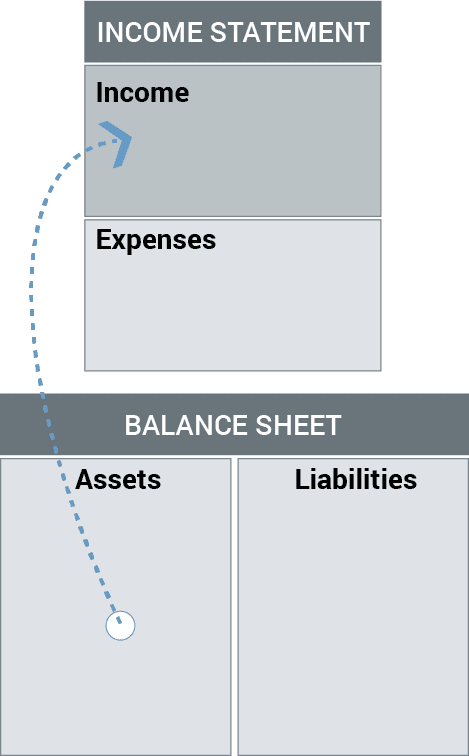
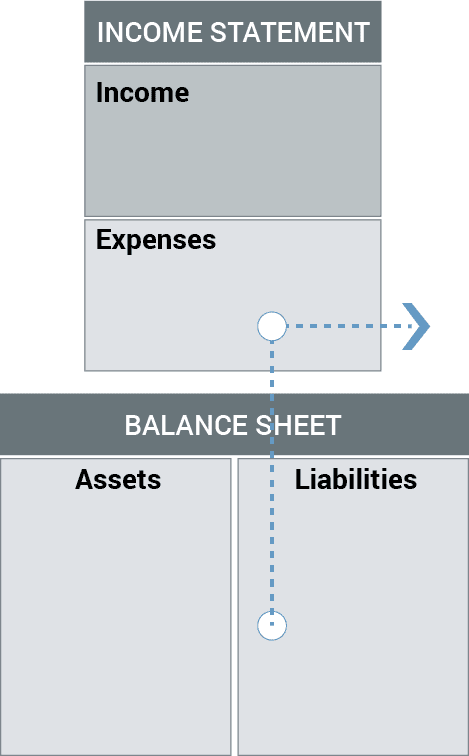
The word “assets and liabilities” may sound intimidating. I like how the book simplified it:
Assets are anything that puts money in our pockets. In contrast, liabilities are anything that takes out.
c/o RichDad.com
Sample of Assets
1. Real estate
2. Stocks
3. Business
4. Precious metal/stone
5. Currencies
Sample of Liabilities
1. High-interest debt
2. Wages
3. Car maintenance
4. Subscription services
5. Taxes
In essence, the big goal of wealth building is to get assets and cut liabilities. The more we improve on these two areas, the better our financial health will be.
I wrote an entire article on how my wife and I applied the concept of assets and liabilities early in our marriage. You might want to check it out if you wish to dive deeper into this topic:
I was hesitant to include Rich Dad Poor Dad on my list of good financial management ebook. The reason? It’s because Kiyosaki advocates the use of other people’s money as leverage, a.k.a getting into debt. He believes there’s such thing as good debt and bad debt.
But the easy-to-understand financial concepts outweigh that controversial part of the book. Please read with caution in case you chose to pick this up.
How do we save? Don’t we spend our money first, then save what’s left?
To be honest, have we indeed kept anything in the end?
The more effective way is to do the opposite: Save first, then spend the rest.
The Richest Man In Babylon advised us to do 90/10. It means we save 10% and spend the remaining 90%. Sounds scary? I can relate. I also didn’t think 90% would be enough since I’m already struggling to get by with 100%. But it’s amazing what tiny disciplines and lifestyle change can do. Today my allocation has leveled up to 70/30.
The Purpose of Savings
Now, of course, we don’t want to save and then waste our money on random stuff. Here are the two uses of our savings:
Emergency
We never know when the unexpected can happen. A medical emergency or a car breakdown may get us into a tight spot. But with enough saved, we can continue to have a peaceful sleep at night. Our savings will serve as a buffer or a safety net to take care of these unforeseen situations when they arise.
This type of savings is often called an emergency fund or a rainy day fund. It’s about 3 to 6 months’ worth of our living expenses, as most financial management books suggest. This amount will typically be enough to cover those sudden expenditures.
Investment
Another beauty of saving is it allows us to invest. To make our money make more money. With our rainy day fund set, we can take risks for potential returns.
4. The Millionaire Next Door — Thomas J. Stanley and William D. Danko
Key learning: Frugality
What is frugality? It’s the careful management of resources. The manner of being prudent. Not wasteful.
Thomas Stanley spent his life studying millionaires. What he found out about these rare species is different from what we see in movies.
We all grew up with these notions about the rich:
1. They have high income.
2. They live in expensive homes.
3. They drive luxurious cars.
4. They have a lavish lifestyle.
But nothing can be far from the truth.
“It matters LESS how much more you make than what you do with what you already have.” — This is what Thomas Stanley wrote after he interviewed over 1,000 millionaires.
Genuine wealthy people are frugal. They play better defense than offense. They are careful with the money they already have.
After reading this book, it will be easier to spot the difference: Ordinary people focus on income. Rich people focus on net worth.
Key learning: The Importance Of A Supportive Spouse
Who we choose to marry will make or break our financial success. It’s not something we expect to read about in a financial management ebook. Yet, this information is vital in our journey to wealth.
9 out of 10 married millionaires in this book said that their supportive spouse is their key to success.
In fact, based on a survey, having a supportive spouse lands as one of the top attributes of the wealthy. It’s only behind integrity, discipline, and social skills.
The Top 5 Characteristics of The Wealthy according to The Millionaire Mind’s Survey:
6. The Only Investment Guide You’ll Ever Need — Andrew Tobias
Key learning: Stick To The Basics
“The basics of personal finance haven’t changed—they never do.”
There are so many financial gimmicks nowadays, I don’t even know where to start. Yet, no matter what these “experts” say, the key to financial freedom is still this:
Spend less than what you have. Invest the difference. Watch it grow.
Sure, we can always load our rifles and hunt for the bigger game. Or chase the fancy stuff.
But what we’d realize after the dust settles is we may not be that far ahead. Even worse, we may find ourselves behind those who have been faithful with the small things
Essentially, if we want to prosper, what we need is patience.
“…the surest way to become rich is to save all you can and invest it for long-term growth.”
7. Your Money or Your Life — VICKI ROBIN, Joseph R. Dominguez, And Monique Tilford
Key learning: We Cannot Earn Money Back
“We can earn more money, but we can’t earn more time.” — It is the phrase we often use to justify our expenditures. But is this true? The possibility is 99.9% of us would say yes. The reason is we always go to work without knowing what money truly is.
What is money anyway? Is it the numbers in our bank accounts? Is it the loose papers in our wallets? How come other financial management books didn’t clarify the true nature of money?
Now let’s settle this matter once and for all: Money is Time. The book calls it explicitly “Life Energy” – The hours of being alive.
Money as Life Energy
Money is something we trade our life energy for. Think about it. When we work, we pinch away hours from our life in exchange for money. The same thing happens when we buy.
If you make P200/hour and buy P5,000 sneakers, then you’ve traded 25 hours of your life for the sneakers. Makes sense?
Money is only a representation of the life energy we traded it for. In essence, we don’t spend money. We spend time.
“Looking around at your accumulation of stuff you can ask, ‘How many hours of my life did I invest to have this . . . chair . . . car . . . matched set of cookware . . . diploma on the wall?’ See what this does to your next purchase.”
8. 7 Strategies For Wealth and Happiness — Jim Rohn
Key learning: Value Over Price
“Before I met Mr. Shoaff, I used to ask, ‘How much does it cost?’ But he taught me to ask, ‘What is it worth?’ When I started to base my life on value instead of price, all kinds of things began to happen.”
Which of the following statement do you believe more?
1. “The cheaper the better.”
2. “Quality over quantity.”
We often collide about this topic early in our marriage. My wife is more of the cheaper, the better person, and I am more of the quality over quantity type.
Lalaine gets this rush of satisfaction every time she got something at its lowest price. She doesn’t mind even if what she bought lasted only for a couple of months, or even weeks. Her philosophy is: “It’s cheap, I can buy it again if I want to.”
But for me, low-quality products are a complete waste of money. Even if it costs more, I will choose the higher grade any day. I don’t mind having fewer possessions as long as they are dependable.
Is it worth it?
How about you? Which do you think is the better approach?
I always thought mine was the better way. But what we learned from this financial management ebook is neither is better than the other.
It all boils to this question: Is it worth it?
Here’s an example:
Let’s say you wish to get a pair of shoes for your six-month-old child. Which one will you buy: P150 generic shoes? Or a branded one worth P1,500?
At face value, I’d go for the branded shoes. It looks nicer, has better quality, and has more features.
But is it worth it?
Things to consider:
1. The child is still not walking.
2. Babies grow up fast. The shoes may not fit him anymore next week or next month.
In this case, generic shoes might be the wiser option.
But what if you are shopping for strollers and car seats? These are the products where you’d like to go for dependability, even if it costs more. It’s because you will not only use them for a long time, but it also involves the safety of your child.
Always consider the VALUE more than the PRICE.
“This same concept also applies to money. Don’t spend major money on minor things, and, conversely, don’t spend minor money on major things. Some people spend a fortune on food for their bodies and very little on food for their minds. If you spend more on candy than on inspirational books and tapes, that would be foolish, right?”
Key learning: Invest in things that will outlast life
“Christ’s primary argument against amassing material wealth isn’t that it’s morally wrong, but simply that it’s a poor investment. Material things just won’t stand the test of time.”
Have you ever asked yourself what’s the point in all of these? We invest, we hustle, then one day we pack up and go — leaving everything we ever worked for.
I saw this short documentary about a plane that offers hotel-like accommodation. Passengers can enjoy luxury rooms, food, and drinks while they travel on air. They even have exclusive office spaces and spa-like bathrooms. Of course, these grandeurs come with a price. A ticket for this airplane costs somewhere P800,000 to P1.5M.
Will you take this flight?
I sure want to!
But is it a wise investment?
The reality of death
“If life’s greatest certainty is death, wouldn’t it be foolish not to prepare for what lies beyond this life?”
In a few hours, the plane will land, and you will leave everything you have paid for. Wouldn’t it be wiser to choose a more economical flight and then splurge when you get to your destination?
If I had the money, I’d rather spend P100,000 on the plane ride and P1.4M on my intended place of stay. I don’t mind riding the economy class, for I know I can enjoy better food and facilities when I get to an actual hotel.
You know where I am getting at.
Our beliefs about the afterlife may differ, but we can both agree on the reality of death. Time will come when money will be useless to us. But now, while it is still useful, how are you preparing for the endgame?
“If you read history you will find that the Christians who did most for the present world were just those who thought most of the next.” — C.S. Lewis
“Americans are getting stronger. Twenty years ago, it took two people to carry ten dollars’ worth of groceries. Today, a five-year-old can do it.” —Henny Youngman
What is inflation? In simple terms, it’s the invisible expense that eats our wealth away each year.
We cannot avoid inflation. Like gravity, it affects us all whether we like it or not.
Our country’s inflation rate is at 4.5% as of this writing. It means our money will lose its value at 4.5% a year due to the increased prices of goods. It will go up or down eventually. But the hard truth is, either way, we will lose money.
So what should we do?
How to deal with inflation
Ice cream melts little by little when exposed to heat. To prevent this, we need to put it inside a freezer.
Similarly, our money (ice cream) is losing its value due to inflation (heat). Thus, the best solution is to put our money in places where it will keep, or even increase, its value (freezer).
To beat inflation, we should deposit our money where it could earn interest at par with the inflation rate. In this case, it’s 4.5%.
The act of putting our money in these “freezers” is called investing.
Investment vehicles
Where can I invest my money?
There’s a lot. Some examples are stocks, bonds, mutual funds, money market, and high-interest savings account. Most of them are safe investment vehicles except for stocks. Still, I propose you get proper financial education before you jump in. Investing can be risky, especially if you don’t know what you are doing.
“For this reason, it’s vital to point out that, unlike the speculator, the intelligent investor isn’t investing for quick wins. The only way to reach long-term investment goals is to make sustainable and reliable decisions that are not subject to the whims of the often volatile stock market.”
Closing Thoughts on the 9 Good Financial Management Ebook
Photo by cottonbro from Pexels
What do you think about this list? Have you already read any of them before?
I highly recommend these financial management books. I can vouch for these titles as they are the ones that helped me stabilize my family financially.
I hope I did not overwhelm you. There are still books out there I couldn’t enumerate since this post might have gone too long already. You are welcome to comment below or reach us via Messenger if you want further suggestions.
Financial education is a lot of work. It will take time, money, and effort. But don’t worry, the payoff is worth it in the long run.
Follow the Journey
This journal is my way of making sense of the lessons from the journey. Get the next full entry delivered straight to your inbox.