How To Start A Business With No Idea (A 4-Step Guide)

I love business. It is one of my greatest passions in life besides writing. Ever since I was a kid, I have already been exposed to different kinds of businesses because of my dad. I have experienced the excitement of starting a company as well as the heartbreak of closing them down many times.

Over the years, I have been continuously learning and trying to hone myself to become a better businessman. I still cannot see the day when I’ll stop. Writing and doing business is something I want to do for the rest of my life.

But enough with the intros. This post is not about me. It’s about you. I know you are here because you want to start your own business. But the problem is, you don’t have any idea on how and what kind of business you should put up.

Do not worry. I am here to help. Today I will teach you the four-step process my wife and I take whenever we try to start a business. It is something we learned from our mentors and has developed over time.

Start a business with no idea (a 4-step guide):

  1. Ideation (Check what is in your hand.)
  2. Application (Use what is available.)
  3. Evaluation (See what is working.)
  4. Concentration (Focus on what brings good results.)

Planning for the Cebu Auto Show. Circa 2012.

Step 1: Ideation (Check What Is In Your Hand.)

In 2016, one of my mentors told me, “Jed, if you want to know what kind of trees to plant, you have to look at what kind of seeds you have in your hands.” He is a farmer, so his usual illustrations are about farming.

I kind of lost my way that year. My sportswear business failed and has left me with a huge pile of debt. I was broke and didn’t know where to go. What he is basically telling me is to start over again with what I currently have.

If you want to know how I ‘un-broke’ myself, read the story here: Our simple plan for financial freedom.

Here are the five guide questions I used to take inventory of my “seeds”:

What do I own?Refers to your tangible assets like properties, available cash, cars, electronic devices, investments, and such.
What can I do?Refers to your abilities, skills, and talents.
Who can help me?Relates to your friends, family, and colleagues.
Where can I serve?Talks about your community, city, and country.
What have I Googled to death recently?Shows your interests and passions.

Don’t focus on what you do not have.

“Most people cannot start because they are so entitled.” My mentor added. “They insist on having avocado trees when all they have in their hands are papaya seeds.”

“They will be far better off planting those papaya seeds now, than wasting their time looking for avocado seeds.” And then my mentor closed his statement with, “Don’t focus on what you do not have.”

Are you reading the Bible? I am not sure if you are familiar with the story of Moses in Exodus chapter four. But it has a similar ring to it.

To put it briefly, God asked Moses to start a project of taking the Israelites out of Egypt. Yet, Moses was unsure if he was the right person to do it. He enumerated all the reasons why he is not the guy for the task:

  • I do not have credibility.
    “Who am I to appear before Pharaoh? Who am I to lead the people of Israel out of Egypt?”
  • I do not have connections.
    “They will ask me, ‘What is his name?’ Then what should I tell them?”
  • I do not have the confidence to succeed.
    “What if they won’t believe me or listen to me?”

Sounds familiar?

While the story was not about going into business per se, it was about starting something. Oftentimes, we fail to start a business because, like Moses, we focus too much on the things we do not have:

  • “I do not have the money.”
  • “I do not have any ideas.”
  • “I do not have a business degree.”
  • Etc.

Focusing on what we do not have will only waste our time and cripple our confidence.

We know Moses eventually overcame his insecurities, performed miracles, and successfully freed the Israelites from Egypt. But it all started when he began to acknowledge what he had.

Then the Lord said to him, “What is that in your hand?”

“A staff,” replied.

Exodus 4:2

Here is how our current businesses started:

BusinessOrigin StoryGuide Question/s
Property RentalsOur family has a couple of unused condo units and a parking space.What do I own? + Who can help me?
Lustro DiamondsMy wife has a knack for designing wedding rings.What can I do?
Chromebook Store PHI was looking for a laptop and got interested in Chromebooks.What have I Googled to death?
(NEW) Ribbon Lab PH My wife was looking for a reasonably priced supplier of personalized ribbons for her jewelry business. But she stumbled upon someone who’s selling the machine instead.What have I Googled to death? + Who can help me?
The Learning Dad BlogI love to write and I have a story to tell.What can I do?

If you want to get an idea of what business you should start, check what is in your hand. It will give you lots of clues.

Our booth at a triathlon event in Pampanga. Circa 2015

Step 2: Application (Work With What Is Available.)

Let’s continue with the farming illustration. Once you are aware of your seeds, what you need to do next is simply plant them. Work with whatever is available. You will never know what seeds will sprout unless you put them in the ground.

So how do we “plant seeds” in a business context?

Simple. Make it public.

All of my business ideas started as one of these:

  • A social media post.
  • A listing in a marketplace.
  • An advertisement.

There are many “grounds” where you can plant your seeds today. Here are the most popular ones:

Social mediaMarketplaceOthers
Facebook (Personal)Facebook (Marketplace)Word of mouth
InstagramCarousellSMS blast
TwittereBayFacebook (Ads)
Facebook (Groups & Page)LazadaGoogle (Ads)
LinkedInShopeeMessengers
YouTubeEtsyCoupon sites
PinterestAmazonEx-deals
TikTokZaloraDirect selling

But planting our seeds in the ground is not the end of step two. Always remember why we are doing this in the first place: To make them sprout.

Our ultimate goal is to make at least one sale. It is the only way we’ll know what seeds we have planted are viable.

Seeds can only germinate if they are given the proper air, water, light, and temperature. It is the same with our start-up. It is not enough to simply make them public. We have to give our business ideas the support they need to make a sale.

These are the two essential elements to make a sale:

  1. Trustworthiness
  2. A sales process

Trustworthiness

Trust is the name of the game in business, and perhaps everything in life. People will not buy from you no matter how good your product is when they do not trust you.

Here are a few things to do to improve your business’ trustworthiness:

  • Create a public profile

You should put yourself out there if you want people to do business with you. You have to make yourself visible and accountable to your customers. Do not hide behind a private profile or an avatar. Use your real picture and give them a variety of ways to contact you. It is the least you can do to gain their trust.

Suggestion: Make your Facebook or Instagram profile public. If you are not comfortable with it, you can create a separate profile using Carrd.co or About.me. Here is an example of mine: about.me/jedchan

  • Open a bank account with your name

Open a bank or PayPal account where people can transfer their payments. Make sure it is consistent with your name on your public profile. Do not think about making a business account yet. We will get into it later.

  • Be active (or at least up-to-date)

Being active online or wherever your business arena is will give people the impression that you are a real person. Try to be helpful as much as possible. No need to do it 24/7, being up-to-date is enough.

  • Optional: Create a logo

This is optional. But for some reason, a business will instantly look trustworthy when it has a nice logo in place. You can design your own logo using Canva. Or hire a professional at Fiverr — starts at $10 per logo.

Sales process

A sales process is a system or a series of steps a customer must undertake to make a purchase from a business. It is also known as the buyer’s journey or a sales funnel.

You must develop a short and easy-to-understand buying process for your customers. It should answer the questions:

  • What is the buying procedure?
  • What are the terms of payment?
  • What is the shipping process?
  • What is the warranty policy?

This is my usual sales process when starting up:

Stage 1: We encourage people to transact with us via messengers. Our call to action is always “chat with us.” This is the step when customers ask questions and talk about the warranty policy (if applicable).

Stage 2: When customers are ready to buy, we will ask them to fill up a purchase order. See the sample below:

Name:
Address:
Email:
Contact number:
Product to purchase:
Terms and conditions:— 50% down payment; 50% upon delivery
— Delivery fee is not included in the price.
— We may open the box for quality check, and/or compliance with government inspection protocols.
— Kindly send the down payment to any of these bank accounts:
Bank name:
Account number:

Stage 3: Once the down payment is made, we will request them to upload the payment slip in the chat for verification. After it has been verified, we will now orient them about the shipping process. We’ll ask for the nearest landmarks and send a screenshot of the map to confirm the address. We then send the delivery rate and pictures of the items being packed for their peace of mind.
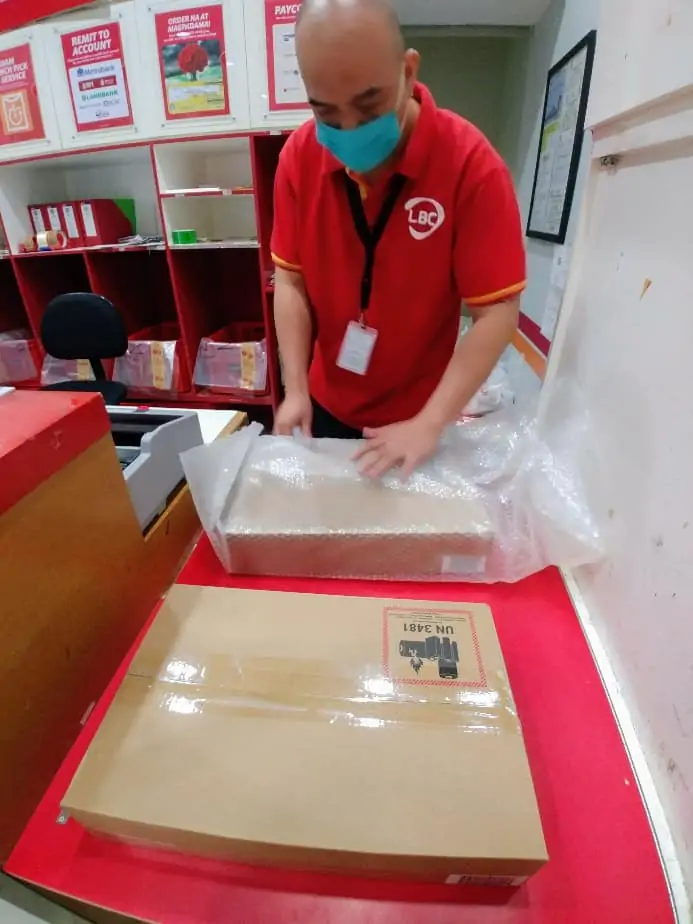
Stage 4: After the item has been shipped, we will send the tracking number (if applicable). Then we end our sales process with a “Thank You” and a request for referrals, review, share posts, etc.

Rinse and repeat.

There is a good mantra to follow when developing a sales process:

“When you confuse, you lose.”

CTTO

Always make things clear and easy to understand.

At a sportswear fair in China. Circa 2014.

Step 3: Evaluation (See What Is Working.)

Let us review our farming illustration. Here is what we have done so far:

  1. We have checked what seeds we have in our hands.
  2. We planted those seeds in the ground.

Now we will evaluate what seeds have actually germinated. In a business context, which of them made a sale?

For those without a sale, ask yourself:

  • What went wrong?
  • What is it lacking?
  • Is it about the competition?
  • Is my market too small?
  • Are my products and processes clear enough for my customers?
  • Am I willing to continue with this project?

More often than not, the problem lies in the 4 Ps.

Was it about the:

  • Price?
  • Product?
  • Promotion?
  • Place?

Then tweak accordingly.

For those with a sale, ask yourself:

  • Is this scalable?
  • Is this repeatable?
  • Is this sustainable?
  • What is the ceiling of this project?
  • Is this a fad?
  • Does this rely too much on a single source?
  • Is the profit worthy of my time?
  • Is this the business I want to do long-term?

These are the businesses Lalaine and I started that did not fly:

Failed businessesDue to
Educational tour servicesNot scalable.
Milktea shopCompetition.
Car washNot scalable.
Packed-mealsProfit is not worthy of my time + rely too much on a single source.
AmwayNot willing to do long-term.
Insurance agencyNot willing to do long-term.
SportswearNot sustainable + competition + rely too much on a single source.
Bus rental servicesCovid-19.

Just keep planting

Congratulations on making it to step three!

The majority of people do not get past step two because they wait for the “perfect” idea before they launch. I can relate. I have been there. But we will be doing ourselves a disservice if we focus too much on a single idea and try to make it perfect.

According to a study, two out of ten businesses will fail in their first year. Another three will close down after five years. Eventually, only three companies will make it through the ten-year mark.

What this means is that it is better to plant more seeds and evaluate them one by one, than to wait for the perfect seed to show up. If we are to consider the statistics above, we can be assured that for every ten ideas we pursue, three of them will succeed.

So keep planting.

A rising basketball star visited our store. Circa 2014.

Step 4: Concentration (Focus On What Brings Good Results.)

We are now in the last step.

Step four is all about formalizing and focusing on your businesses that have brought profitable results.

Once you have found THE business concept you want to pursue, the final step is to make it a legal entity. Being a legitimate company will give you the edge to scale and close bigger deals.

I will not dwell too much on how to register your business because the process varies from city to city. I am sure you will get a good deal of information when you Google: “How to register a business in (your city).”

What I want to talk about more in this step is about establishing your brand. You cannot rely on social media and the marketplace forever. You need to raise your flag by creating your own stand-alone stores or sites.

If you have the time and money, then go ahead, build the traditional brick-and-mortar stores. It is still the best if your customers can see, touch, smell, hear, and taste your brand. But I have reservations about establishing physical stores since it can be too risky for the majority of start-ups.

What I recommend instead is to put up websites or e-commerce stores. Here are the most popular options:

WebsiteE-commerce
Recommended: WordPress (Self-hosted)Recommended: SpreadSimple
WixWix eCommerce
SquareSpaceShopify
WeeblyEcwid

I use WordPress for this blog and SpreadSimple for our Chromebook store. If you want to see what our store looks like, you can check it out here: Chromebook Store PH.

Having your own stand-alone stores or sites does not mean you must stop using social media or be part of a marketplace. They should not be competing with one another. Use them instead as supplements to get more sales and direct traffic to your website.

After you made your business legal and have secured a piece of real estate online or offline, you are now officially a business owner. The seeds you planted have now grown into trees. All that’s left to do is concentrate your energy on making them fruitful.

Enjoy while it lasts.

Closing Thoughts

I hate to break it to you, but starting a successful business without an idea is more than just reading a blog post.

You must commit.

You must learn.

You must keep trying and never give up.

Success is not entitled to anyone.


Follow the Journey

This journal is my way of making sense of the lessons from the journey. Get the next full entry delivered straight to your inbox.

What To Do With My Child’s Money? Here Are 5 Ideas

I applaud you for swinging by. Based on a survey, almost 50% of parents admit to spending their children’s money and most of them do not even feel guilty about it. They think whatever money their children receive is theirs.

I presume you are part of the other half who thinks otherwise?

To be fair, there is nothing illegal or morally wrong with spending our children’s money. Even so, it is not a habit we want to practice as parents since it may eventually lead to relational and trust issues.

But what should we do when they are still too young to handle their money?

Here are five suggestions on what to do with your children’s money:

  1. Invest in long-term growth.
  2. Build a nest egg.
  3. Create a side project with your kids.
  4. Do random acts of kindness.
  5. Make a contribution to household expenses.

1. Invest In Long-Term Growth

Long-term investment means investing for five years and beyond. The intention behind this is to give your child a good sum of money by the time he or she becomes an adult. With proper management, ideally, an amount invested for fifteen years or more can help our kids start a business or even a family. It is the best route if you want to make an impact financially.

But there are a couple of cons when it comes to investing in long-term growth:

  1. You will be exposing your child’s money to certain risks.

Risks will always be a part of investing. But the good news is, due to the length of time, we are minimizing them significantly.

  1. There is a learning curve.

Investing requires knowledge. You have to at least learn the basics to know which investment vehicle is right for you.

There are many ways to invest for the long haul. But if you do not want a headache, my suggestion is to put it in an index fund. Simply open an account with an investment company, and throw in every sum of money your child receives there. Do this for the next fifteen to twenty years, and you will be fine.

What is an index fund?

It would be a bit technical to explain what an index fund is.

But to put it simply, an index fund is an investment vehicle where you can buy shares in many top companies with a low minimum requirement. It is somewhat similar to a mutual fund. The difference between the two is that index funds have lower fees because they do not have a fund manager who actively trades and tries to “beat the market.”

Index funds simply follow the actual performance of the companies you have invested in.

The process of investing in an index fund is similar to a money market fund. You can get my short guide by signing up below:

.

You can also invest in the index fund through GInvest. Follow this link to learn: How do you earn in GInvest? (Simplified, tips, stats)

2. Build a Nest Egg

Building a nest egg means saving for a particular purpose.

Examples are:

  • College
  • Travel
  • A special toy
  • A kiddie business

Saving for a nest egg may sound a lot like investing in long-term growth, but they are actually different.

  1. Building a nest egg has a clear goal.

Nest egg building has a target. You have a clear goal of what you want to accomplish for your child.

While investing for growth is simply making their money as big as possible.

  1. Building a nest egg is generally short-term.

If investing for growth takes five years or more; saving for a nest egg is ideally less. Maybe three to four years.

  1. Building a nest egg is choosing the safer option.

We can go for aggressive investment vehicles like the index fund for long-term investment because of the time horizon. But this cannot be said for nest egg building. For short-term saving, we have to go for the safer options like:

  • High-interest savings accounts
  • Time Deposit
  • Money market fund

These are the accounts that are low risk but also give lower returns.

High-interest savings accounts

BankInterest rate (per annum)
CIMB (GSave via GCash)2.6%
CIMB (UpSave)2.5%
ING2.5%
Tonik (Stash)4%

To open a high-interest savings account, all you have to do is download and register using their apps. Here are a couple of useful articles you can follow:

Time deposit accounts

BankTermMinimum InvestmentInterest Rate
Tonik6 monthsPhp 5,0006.000%
BDO6 monthsPhp 1,0000.1250%
BPI6 monthsPhp 50,0000.1250%
Security Bank6 monthsPhp 100,0000.5000%
Union Bank6 monthsPhp 50,0000.3250%
Land Bank6 monthsPhp 1,0000.2750%
Eastwest Bank6 monthsPhp 10,0000.1250%
PNB6 monthsPhp 10,0000.1500%
UCPB6 monthsPhp 10,0000.1250%
Metro Bank6 monthsPhp 10,0000.8750%

Money market fund

Fund NameMin. Initial investmentMin. Subsequent ContributionManagement Fee (per annum)
ALFM Money Market FundPhp 5,000Php 1,0000.5%
Sunlife Prosperity MMFPhp 100Php 1000.4%
First Metro Save and Learn MMFPhp 5,000Php 1,0000.5%
ATRAM Peso MMFPhp 1,000Php 1,0000.5%

Download the e-book mentioned earlier to learn how to invest in a money market fund.

3. Create A Side Project With Your Kids

The objective of creating a side project with your kids is to cultivate their passions, skills, and build a stronger bond together.

Here are some side project ideas you can do with your kids:

A YouTube Channel

Heard about Ryan’s World? It is a channel that has started as a mother and son project. Now they have over 30 million subscribers on YouTube!

But gaining followers is only the cherry on top. What we want to achieve with this project is to develop the confidence and social skills of our children.

Estimated start-up cost: Php 12,500 ~ Php 50,000

It is completely free to create a channel on YouTube. But depending on the quality of videos you intend to produce, you will need to invest in some equipment and a video editor.

You can hire a video editor on Fiverr for $10 to $700 per project.

A Toy Collection

Toy collecting may sound like a useless project, but it can help develop your kids in many ways. Here are a few of them:

  • Encourages self-discovery.
  • Builds focus and self-discipline.
  • Develops patience and commitment.
  • Teaches how to take care and organize possessions.
  • Expands creativity and imagination.
  • Promotes connections with people who have similar interest.
  • Builds familiarity with saving and budgeting.

Rules for toy collecting

We have to set some guidelines to make toy collecting beneficial for our kids. If we allow them to buy anything they want with all the money available, we will be defeating the purpose of the project.

Here are some suggestions:

  1. Pick a theme and commit to it. (e.g. Avengers, Transformers, Barbie, My Little Pony, Etc.)
  2. Set a weekly or monthly budget. (e.g. Php 200 per week) — They can choose to skip a week to save up for a bigger one.
  3. They are responsible for keeping their toys clean and organized.
  4. (And then think of a consequence when they break the rules.)

Estimated cost: Php 200 ~ Php 500 per week

A Building Project

The goal of a building project is to encourage our kids to:

  • Create with their own hands.
  • Materialize their ideas.
  • Follow instructions.
  • Learn to use various tools.

The easiest and most expensive way to go is, of course, LEGO®. But if you want to be a little creative, you may want to consider these ideas:

Estimated cost: Php 2,000 ~ Php 5,000

A Weekend Kiddie Shop

A weekend lemonade or cookie stand will introduce our children to entrepreneurship and hard work. Plus, they will also learn:

  • How money is earned; and does not simply come out of ATMs.
  • To interact with people.
  • To work as a team.
  • To serve others.
  • To appreciate the value of money.
  • Why do mom and dad work?

Of all these ideas about starting a side project, having a weekend kiddie shop is what excites me most. Here are several product suggestions you can sell with your kids:

  • Juices
  • Barbecue
  • Pastries
  • Shoe laces
  • Toys
  • Books
  • Pillows
  • Mugs
  • T-shirts

Do not overthink this project. You don’t need an outrageous business plan to do it. While it is good to break even or earn a few bucks, the experience and lessons our children get are already praiseworthy ROIs — return on investments.

Estimated cost: Php 3,000 ~ P6,000

4. Do Random Acts Of Kindness

One of my mentors changed the definition of financial freedom for me.

He said, “Financial freedom is not about owning a lot of money. It is about not being owned by them.” So, contrary to popular belief, financial freedom is not achieved by our ability to make money, but by our capacity to give it away.

Giving will teach our children to:

  • Treat money as a tool. Not as a destination.
  • Be self-less.
  • Be generous.
  • Experience the joy of giving.
  • Empathize with other people.
  • Be grateful and content.
  • Be socially responsible.
  • Be “financially free.”

Check out these twenty random acts of kindness you can try with your kids today:

  1. Pay for someone’s food.
  2. Send tithe to a church.
  3. Make a donation to a charity.
  4. Help a sick person.
  5. Buy coffee for the person in line behind you.
  6. Support a missionary.
  7. Send groceries to a loved one.
  8. Bake a cake for a friend’s birthday.
  9. Give a dog an ice cream.
  10. Buy a toy for a lonely child.
  1. Send out movie tickets for the upcoming blockbuster film.
  2. Leave a huge restaurant tip.
  3. Double down on the prize of a contest.
  4. Pay the parking fee for the car behind you.
  5. Buy flowers for Grandma.
  6. Donate books to the local libraries.
  7. Give friends 30-day access to Netflix, Disney+, Amazon Prime, etc.
  8. Buy something from the store of a friend.
  9. Finance a playground project.
  10. Send someone a box of pizza.

Other than our children, I think it is we, adults, who are going to learn more from doing these acts of kindness.

5. Make A Contribution To Household Expenses

Okay, I have to tell you something. I spend my children’s money.

There, I said it.

I use them to cover some of our household expenses.

But it was not because we are short on budget, nor do I intend to take advantage of their naivety.

The reason I do this is to teach them two realities in life:

  1. Tax.
  2. Living is not free.

I take a ten to fifteen percent “tax” of whatever amount my kids receive and credit them to the household budget.

But to me, our children’s money is our children’s money. I would find it uncomfortable to spend it on something that will not benefit them directly. This is why I only credit their contributions to a category in our budget called the children’s fund. It is an allocation dedicated only to children-related expenses like education, birthdays, and general needs.

How I Manage My Children’s Money

My children are four and two as of this writing. They are still too young to handle their own finances. Here is how I manage their money for now:

10% goes to them. They can buy anything they want.

Joab usually spends it on Transformers, while Jrue loves plush toys.

10% goes to the children’s fund. A fund where we spend on any child-related expenses.

20% goes to nest eggs. Here’s where we save up for their tuition fee, birthday parties, and travel.

We are planning to go to Tokyo Disneyland in 2023. God-willing.

60% goes to long-term investment. I have invested their money in an index fund.

Closing Thoughts: What About Insurance?

Ah yes, most people will tell you to use your children’s money to buy them insurance.

In most cases, kids do not need insurance — unless their family has a history of pediatric diseases. Children are generally healthy and do not have any dependents. It is better to invest their money for future growth or spend it on things that will teach them good values.

I am not sure if you will agree with me. But the ones who you want to get insured normally are the breadwinners, a.k.a. their parents.


Keep In Touch


Thank you for reading!


Follow the Journey

This journal is my way of making sense of the lessons from the journey. Get the next full entry delivered straight to your inbox.

What First Time Dads Need (They Thought They Didn’t Need)

And so it begins. Being a father starts at conception. It can be both thrilling and horrifying at the same time. But for new dads, perhaps the better word for fatherhood is overwhelming, or even confusing.

Do expect to receive a blitz of information after you make the news public. You will suddenly be bombarded with tips, shopping lists, and countless things you must do to prepare for the arrival of your child.

What you will commonly read are baby clothes, infant car seats, baby carriers, or even an espresso machine to keep you awake.

While these are all good suggestions, are these what you really need as a first-time father?

We are here to help you cut through the noise.

Here are eight things first time dads need that they thought they didn’t need:

  1. Books
  2. Game plan
  3. Budget
  4. Backup fund
  5. Support group
  6. Business or investment
  7. Cloud space
  8. Mini Bluetooth speaker

1. Books

Do you think once your baby comes out, instinct will kick in, and you will suddenly know how to become a dad?

No, sir.

You have to do the work. Equipping yourself mentally is the utmost priority as a first-time dad. You should be at the bookstore buying parenting books when all the other new dads are shopping for baby stuff. You should study while your friends are painting their nurseries or installing new baby furniture.

Learning impacts your parenting journey the most. It will help you start off on the right foot and make you a more confident father once the baby is born.

Here are a few titles I recommend:

  1. The World Needs A Father by Cassie Carstens — You can also sign up for the two-hour FREE training in Udemy.
  2. The Five Love Languages of Children (and Teenagers) by Gary Chapman
  3. On Becoming Baby Wise by Gary Ezzo — a controversial book, but one of my mentors recommended this to me. I found some nuggets here.
  4. Be A Better Dad Today! — 10 Tools Every Father Needs by Gregory Slayton
  5. The Complete Book of Christian Parenting and Child Care by William and Martha Sears
  6. Boundaries by Dr. Henry Cloud & Dr. John Townsend
first-time dad
Our first family picture

2. Game Plan

What is your game plan when the baby arrives? The usual response I get is “What game plan?”

Most fathers do not even consider having a strategy or an approach for their newborn. They think, “As long as I can pay for the hospital bills, I’m good.”

But good parenting is more than paying the bills. It requires careful planning and teamwork. You and your spouse should talk and come up with a battle plan for raising your child that would work for both of you.

Here are some of the things you guys need to talk about:

  • Bottle feeding or direct latching?
  • Demand feeding or hyper scheduling?
  • Co-sleeping or crib-sleeping?
  • Who takes the morning shift, and who takes the night shift?
  • Hiring a babysitter: yes or no?
  • Division of tasks?

In our case:

Bottle feeding or direct latching?
Joab: Bottle
Jrue: Direct latch

Demand feeding or hyper scheduling?
Joab: Hyper schedule
Jrue: Demand feeding

Co-sleeping or crib-sleeping?
Co-sleep

Morning and night shift?
Jed: Morning
Lalaine: Night

Babysitter?
No.

My tasks:

  • Morning sunbath.
  • Burping.
  • Taking care of the bills.
  • Diaper changing.

WARNING: You will encounter people who will have strong opinions about your parenting style. But do not fret. Consider them as allies and hear what they have to say. Even so, in the end, no one knows what is best for you and your child except you. As long as you have done your homework, go with your gut.

Joab — Minutes after he was born.

3. Budget

First-time parents are prone to suffering financial setbacks. You may end up overspending or even get into debt due to the waves of emotions you may experience. It is buying season and many marketers will surely take advantage of your vulnerability.

Putting a budget in place will protect you from unnecessary expenditures. It will allow you to look at the bigger picture and help you decide logically.

A simple way to budget

Here is how I budgeted for my firstborn four years ago.

Out of 100% of my income, I broke it down into percentages:

  • 10% goes to tithing.
  • 20% goes to saving.
  • 40% goes to living expenses.
  • 30% goes to baby expenses.

Let us say I am earning Php 30,000 a month. Here is how my budget would look like:

  • Php 3,000 will be tithed to our church.
  • Php 6,000 will be saved in a money market fund or high-interest savings account.
  • Php 12,000 will be spent on food, bills, medicine, etc.
  • Php 9,000 will be dedicated to baby related expenses.

Here are some of the biggest baby expenses you have to take note of during this season (estimate only):

Medical Bills
Doctor’s feePhp 50,000 to Php 70,000Ob-Gyn, Anesthesiologist, Pediatrician
SupplementsPhp 1,000 to Php 2,000Monthly
HospitalPhp 90,000 to Php 150,000Private hospital
UltrasoundPhp 1,500 to Php 3,500Per scan and depending on the type of scan
VaccinesPhp 50,000 to Php 70,000Total
Baby Essentials
Bottles and breast pumpPhp 20,000If you are going for bottle-feeding
DiapersPhp 1,500Monthly
Car seatPhp 20,000
StrollerPhp 8,500
Baby carrierPhp 12,500
CribPhp 8,000

Tip: Buy as you need

One tip that can extend the life of your budget is to only buy what you need.

Here are a couple of reasons:

You will receive gifts — Not that we expect it, but for practical reasons, we should not neglect the gifts we might receive. Buying only what you need will lessen the chance of having duplicated items.

Children grow up fast! — Do not buy too many clothes or shoes. It won’t fit them anymore in two weeks.

There is no need to panic buy. If all else fails, there is Shopee, Lazada, or even Amazon to save the day.

Parenthood is a long journey. It is wise to look a little further than today to prepare for what is ahead. But it is also prudent to take it one step at a time.

If you want to learn more about budgeting, follow the link below:

4. Back-up Fund

My eldest came out at thirty-five weeks and five days and was pulled out with a pair of forceps.

My second child was diagnosed with mega yolk-sac and has undergone an extra series of tests.

First-time fathers have the tendency to get drowned in the surrealism of having a baby, but the reality is that pregnancy entails a lot of risks — and those risks cost money. A C-section delivery alone can add up to Php 100,000 to your hospital bills.

Having a backup fund is another need most new dads overlook. They focus more on buying stuff and forget about stashing an extra sum of cash just in case things go south.

High-interest Savings Account

Here are some suggestions on where you can stash your backup fund to incur reasonable interests.

BankInterest Rate Per Annum
CIMB (GSave)2.6%
CIMB (UpSave)2.5%
ING2.5%
Tonik (Stash)4%

Follow the link below to learn more about how these banks work:

5. Support group

There are times when it is cool to be a lone wolf, but this is not the time for it. One of my best-kept secrets in parenting is having a community of fathers behind my back. They are like my cabinet members whom I talk to anytime I need guidance.

Here are the types of people you want to have in your support group:

Mentors

These are the people who are ahead of you in terms of age, experience, and wisdom. They serve as your role models from whom you can seek advice. It is an advantage if you can have mentors who are married couples. That way, you can get insights from two different perspectives.

Fellow dads

These are people who are in a similar life stage as you. They are your friends who can make your parenting journey fun and less scary. They can serve as your sounding board and accountability partners.

Responsive pediatrician

Emphasis on responsiveness. As a first-time dad, there may be instances when you will observe something weird with your child — which can make you anxious. Having a responsive pediatrician will help you a lot when it comes to your medical concerns.

Can’t I Google it?

I would strongly discourage you from Googling the “symptoms” you have observed from your baby. It may lead you to information that will only cause more anxieties.

Family counselor

Parenting is hard. There may be times when it could affect your marriage or even make you hate your child. It is best to have a family counselor who can give you professional advice. My wife and I always schedule a session once or twice a year with our trusted counselor — even “when things seem okay”. We cannot be too complacent with today’s culture.

6. Business or Investment

A world without dads has a devastating impact. Almost every major disorder has been linked to the absence of fathers. Violence, teen pregnancy, suicide, drug use, and alcohol abuse are all more strongly correlated with fatherlessness than any other factors.

Being involved in the lives of your children is the core of your responsibility as a dad. But one of the biggest hindrances I observed to this is work. Unless you can earn money while you sleep, I don’t think you will be able to find the time to be really present in their lives. Time at work will always compete with time with your children. This is the reason why I am a big advocate of having a business or investment.

I see fellow dads working extra hours “for their children.” But is it really what they need? What they truly need is you. You cannot outwork the time you have with your kids. By the time you already “have the money”, they may be no longer children anymore.

Having a business and investments can put you in the position of power to choose your kids over your work.

Here is a quick list of businesses you can start at home:

1. Online buy and sellFacebook Marketplace, Carousell, Lazada, Shopee
2. E-commerceSpreadSimple, Shopify, Wix
3. Freelance workFiverr, Upwork, oDesk
4. Content creationBlog, Vlog, Podcast
5. Property rentalAirbnb
6. Write and sell e-booksDesignrr

7. Cloud Space

I bet you will be taking a lot of photos of your baby with your phone. Am I right? Of course, I am. Who doesn’t want to document those precious moments with their little one? Some parents would even upgrade their phones to have the best camera they can afford. *Guilty party here.*

But what happens when you lose your phone? I am sure you will grieve over the lost pictures and videos more than the phone itself. Those are priceless possessions you have no way to recover. This is the reason why you should always back up your data in the cloud.

Cloud storage is an online service for storing data, software, images, videos, and other types of digital assets. It offers a convenient way to keep your files in a secure environment and access them from anywhere using an internet connection.

Having files in the cloud will reduce the risk of data loss. You will be at peace knowing the photos of your child are safe even if your devices get stolen or destroyed.

Here is a list of reliable cloud storage providers you can subscribe to:

  • Google One
  • Microsoft OneDrive
  • Dropbox
  • Icedrive
  • pCloud
  • Degoo
  • MEGA

But out of this list, I am a little biased toward pCloud because of the lifetime deals. It is a deal where you only pay once and the storage is yours for life. No more monthly subscriptions!

Google Photos used to offer free unlimited cloud space, but that has now ended. Bummer.

8. Mini Bluetooth Speakers

If I can only write one need on this article that most new dads think they don’t need, it is this one. Mini. Bluetooth. Speakers. I am not kidding. These speakers saved me from a lot of emotional distress.

You will soon understand what I mean.

When a baby cries, it is usually about these three things:

  • Needs food.
  • Need to change diapers.
  • Needs affection (hug, talk, carry, etc.)

But there will be times when you have already done everything, yet your child still wails. Experts often call this infant colic.

Colic is frequent, prolonged and intense crying or fussiness in a healthy infant. Colic can be particularly frustrating for parents because the baby’s distress occurs for no apparent reason and no amount of consoling seems to bring any relief. 

Mayo Clinic

The problem with me is I loathe the sound of a crying baby. It ticks me off pretty badly. I thought it is only applicable toward other people’s children, but how wrong I was. I feel even more frustrated when it comes to my own kids.

If you are the same as me, here is the trick:

  1. Set the Bluetooth speaker near your baby.
  2. Sync it with your phone or other devices.
  3. Open YouTube or Spotify and search for “white noise for babies.”
  4. Play it and be amazed at how peaceful your baby sleeps.

This is the particular video I play on YouTube:

Here are a few notes before applying this technique:

  1. You should have done EVERYTHING to calm down your baby before doing this. Treat it like your trump card.
  2. It will not work 100% of the time.
  3. Some babies find more comfort with water flowing or rain sound.

Closing Thoughts

Congratulations on being a father! Not everyone gets the privilege of having a child. But being a father does not mean you only look after your children. It also means looking after your wife and yourself.

We can only share what we have. So keeping ourselves physically, emotionally, mentally, and spiritually fit is one of the best parenting we can give our kids. I know it is an exciting season, but be mindful of your tank. Never let it get empty.

You may think you don’t need this, but you need to take care of yourself.

Enjoy fatherhood!


Follow the Journey

This journal is my way of making sense of the lessons from the journey. Get the next full entry delivered straight to your inbox.