Financial Management Helps You To Do What? (10 things)

Do you know anyone who doesn’t want money? I want it. You want it. Everyone wants it. While money is not everything in life, we can all agree that it is a great tool to help us live better lives. Unfortunately, the opposite is also true. Money can also make our lives miserable if we do not know how to use it well. The one thing that can make or break our financial lives is this: management.

As a whole, financial management helps you make, keep, and use your money properly. This is done through careful planning, administering, directing, and monitoring of your finances whether in family or business. Financial management is an essential skill for everyone who deals with money daily.

2016 was the year when I messed up financially. I was dead broke and had a huge pile of debts. Yet, it was also the year when I decided to attack it head-on by studying financial management. I have spent hundreds of hours reading books, attending classes, and listening to podcast episodes about money. If you want to get some insights on what financial management will enable you to do, read on. In this article, I will share with you how my life changed the moment I started managing my finances. Here are 10 things financial management helps you do:

I still remember vividly how my wife and I would share one meal because we couldn’t afford to buy two.

1. Helps you identify the cause of your financial issues

The first thing financial management helped me do was identify the problem behind my financial mess — which is a huge deal. There is no way we can solve matters without knowing the root cause. I have shared the full story about my whole troubleshooting process in this post, but overall, the main issue was simply that my outflow overpowers my inflow. As soon as I learned about this, I was able to come up with a plan on how to tackle this problem.

2. Enables you to create better plans

The majority of what we want to accomplish in life always includes money to some extent. Financial management will allow us to develop more robust plans because it will ground us to the actual cost of our goals. I was in the athletic wear business and my aim during those times was to open one store per year. But when I understood my real financial situation, I changed direction. Instead, I closed all my physical stores and focused all my efforts online.

3. Aids you in making sound decisions

Financial management gives you actual data where you can base your decisions moving forward. This will help you decide logically rather than emotionally. Passing up on my ambition to build one of the most promising sports brands in our country is painful. But seeing where my figures are heading will not only spell disaster for my company, but also for my family. As I look back today, I thank the Lord for giving me the wisdom to make the right decision to let go and rebuild from what I have left.

4. Teaches you to utilize your resources

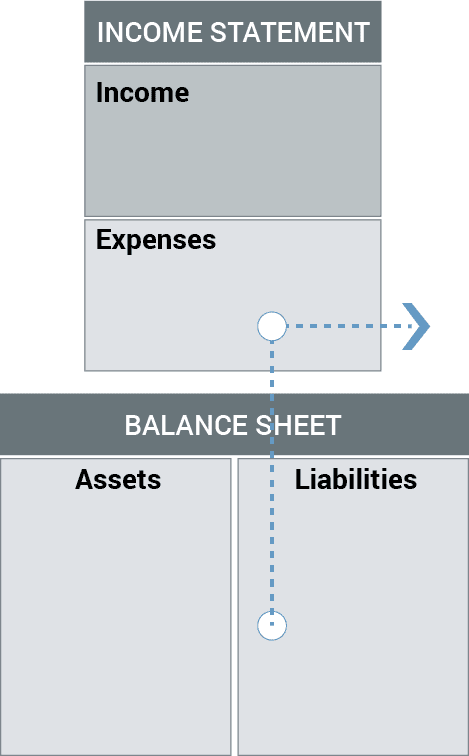
One of the most important lessons I learned in financial management is the concept of assets and liabilities. In simple terms, assets are anything you own that can earn money while liabilities are anything that takes away. The goal of financial management is to always increase your assets and minimize your liabilities.

Assets, however, are useless when they are not being utilized. Recognizing the valuable resources you have now — and being able to use them — will greatly boost your finances. As a matter of fact, this is how I bounced back to business. I simply used what I have:

  • Sold all the stuff I no longer need to raise capital.
  • Contacted a few friends whom I can help sell their stuff for a commission.
  • Stayed with my parents for a couple of years to reduce my monthly overhead expenses.
  • Used my skills and experiences in writing and online selling.

You can check out this post if you want to see the whole process I went through to start my online business: How To Start A Business With No Idea (A 4-Step Guide)
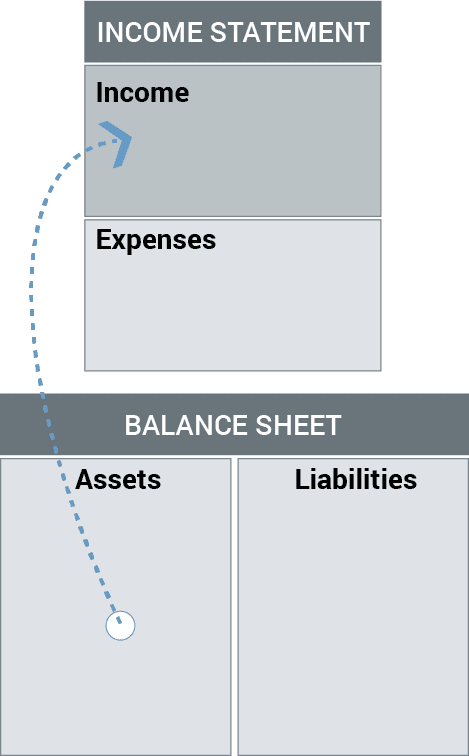
Assets and Liabilities - Asset Cash Flow
An illustration of how assets work. Courtesy of RichDad.com

5. Makes you see and eliminates unnecessary expenses

We have already talked about liabilities previously. It is anything that takes away money from our pockets. While liabilities may sound like a villain in our income statement, they are actually an essential aspect of our finances. We cannot operate our family and businesses without any liabilities. We need to eat, pay for our bills, and maintain our cars.

Nevertheless, what makes liabilities dangerous are those which translate to unnecessary expenses we often overlook. It is those expenditures that do not add any value to our lives. They’re the things we see as important but in reality we can live without them.

Here are some of the examples of unnecessary expenses I personally cut and reduced:

  • Junk food
  • Vices like alcohol, cigarette, and vape
  • Streaming services like Netflix, NBA League Pass, Disney+, etc.
  • Interests paid from debts
  • Insurances you’re not sure why you bought in the first place
  • Unused (or seldom used) gym memberships
  • Pricey mobile plan
  • Frappés and bubble teas
  • Bank charges and service fees
  • Cable TV
Assets and Liabilities -- Liability Cash Flow
An illustration of how liabilities work. Courtesy of RichDad.com

6. Helps you improve your income

Utilizing your available resources and cutting down on unnecessary expenses will already improve your overall financial health. But as you continue with financial management, you will also discover some “invisible expenses” that affect your income. Two great examples of these are inflation and depreciation.

To put it simply, inflation is the idea that the cost of goods and services will continuously go up each year. While depreciation, on the other hand, is the reduction of the value of your assets due to wear and tear or passage of time. Understanding these concepts will allow you to include these unseen expenses in your budget or when pricing your products or services.

7. Alleviates crisis situations

Among the most basic lessons in financial management is to set aside a sum of money dedicated to unforeseen circumstances. This is called an emergency fund. The rule of thumb is to put at least three to six months’ worth of your living or operating expenses. The purpose of this amount is to cover your family or company during trying times. It serves as a cushion in case crises strike. Listed below are a few examples of what an emergency fund covers:

  • Hospitalization due to sickness or an injury.
  • Repair of damage done to assets by calamities.
  • Car or other major repairs needed for day-to-day life.
  • Loss of income due to failure of business or job loss.

8. Assists in developing good relationships with colleagues

I like people who are good at managing their finances. I’m sure you do too. People who know how to care for their money tend to become excellent paying customers or dependable business partners. Money is simply a tool. But the way a person handles his or her finances speaks a lot about their character. Looking back at how I managed my money a decade ago, I surely won’t strike any deal with myself.

9. Prevents you from getting into (more) debt

When you become adept at financial management, you will see that every interest counts. Compound interests — that is, interests making more interests — can make or break your financial health. 3% monthly interest may not sound too much for a person who doesn’t know financial management. But to those who are aware, they know that at this rate, their overall credit card debt can almost double in just two years.

To put this in perspective, you are already making good money with your investments when you earn about 15% per year. At 3% a month, this means credit card companies are killing it at 36% a year! My wife and I learned about this a little too late. We were already buried in debt. We paid a high price for this lesson, and I am teaching it to you for free. Small holes can sink a ship. Don’t underestimate the seemingly minute interest rates being charged to you. Check out this post if you want to learn how we paid off our eight credit card debts.

10. Allows you to prepare for the right opportunities

We all have equal opportunities to make our financial lives a little better each day. Yet, not all of us are prepared enough to capitalize on those opportunities. How many of us have told ourselves, “If only I have the money…”? If only I have the money, I’ll get into that business. If only I have the money, I will invest in that asset. I honestly have told this many times to myself.

But what I learned is we cannot magically have the means to clinch those opportunities we have in front of us. We must be intentional in preparing for it. Through proper financial management, we can dedicate a small portion of our income to investment purposes. As for me, I have disciplined myself to set aside 10% of my pay in an account where it can incur interest. It took a couple of years before I was able to use it to open my e-commerce business.

Summary

Overall, financial management is the discipline of taking care of your money. Engaging in it will enable you to do many wonderful things that will help you improve not only financially but also as a person. Financial management is not easy and takes a considerable amount of time to develop. Yet, it is a worthwhile investment as it is one of the most vital skills you can acquire in your life.

See also

Sources

  • 13 Expenses Destroying Your Budget — U.S News — Money

Follow the Journey

This journal is my way of making sense of the lessons from the journey. Get the next full entry delivered straight to your inbox.

How To Make Someone Buy Your Products Online?

Congratulations! You have successfully put up your own online store. Now what? I am sorry, I don’t mean to spoil the fun. But the reality is, no one would generally go to your website at this stage to buy your products — unless, of course, you are Nike or Apple. Selling to people physically is already difficult. Making them buy online is a hundred times more challenging.

It took me years of trial and error before I concocted the right formula to make people buy my products online. They are simple methods I use that allowed me to become a full-time work-at-home dad for my family. Read on if you want to apply this formula to your e-commerce business as well. But as a disclaimer, this is not a one-size-fits-all approach to online selling. While it has worked for me, it does not necessarily mean it will also work for you. So follow at your own risk.

Lenovo Chromebooks delivered
We delivered 3 units of Lenovo Chromebooks to a client who purchased them from our e-commerce store.

The 4 Ingredients To Make Someone Buy Your Products Online

Traffic. Value. Trust. Call to action. These are the four ingredients to make someone buy your products online. Sure, there are times when you can live without one of them. But it won’t be as effective. If I have to put all these ingredients together in an equation, it will look something like this: Traffic + Value + Trust + Call to action = Online sales

Now let us take a closer look at each ingredient.

Ingredient #1: Traffic — drive visitors to your website.

Online selling is a borderline numbers game. Based on statistics, the average e-commerce conversion rate is 3 to 4 percent. It essentially means you, more or less, make 3 to 4 sales for every 100 visits you get on your website. Of course, you have to take this with a grain of salt as there are other elements like web design, type of products, and brand reputation that come into play.

Personally, I think 3 to 4 percent is a bit high. 1 for every 100 or 200 visits is more realistic, especially for newer sites. Some who are more conservative will even think this rate is still a stretch. In any case, the point is you will not make any sales if you do not make an effort to drive traffic to your online store. People will not accidentally find your website. You have to lead them there yourself.

Below is a list of the popular ways to drive traffic to your site:

  • Search engine. The majority of people go to Google when they are looking for something. In fact, 81% of internet consumers conduct online research before purchasing a product. Search engine marketing or SEM is by far the most effective way to get quality traffic in my experience. 80% of our visitors come from it, and they are not just random people. They are visitors who have the intention to buy.
  • Social media. Facebook Page works for me as well. I heard Instagram is also not bad. Yet it requires a whole different strategy since you cannot put links on your posts to lead people to your site. Social media marketing in general is good when you have clout. It is better suited for “influencers” or people who are part of a large community.
  • Email. I have tried email marketing, but I guess it is not for me. It’s high work, low reward in my book. I have only included it here because there are lots of successful entrepreneurs who swear by it. They said email marketing remains the best at converting visitors into customers. I don’t know, my numbers tell me otherwise. Perhaps you can try it out and see it for yourself.
  • Paid ads. Traffic takes a long time to build. That is why for a newly launched website, paying for ads is something I recommend. It will give you the initial push to keep going. As business owners, our motivation is vital. It can spell life or death for our businesses. My two go-to paid ads are Facebook Ads and Google Ads.

Ingredient #2: Value — offer something your customer needs or wants.

Now people are already visiting your website. What will you do with the traffic? Unless you offer the products or services they are looking for, you will not convert them into sales. Our mission as entrepreneurs, in general, is to add value to our customers’ lives. At the very least, we should be presenting a solution to a problem they may have. Here is a list of products you can offer your customers online:

Physical products

  • Skincare products
  • Fitness equipment
  • Water bottles
  • Electronics
  • Smart home products
  • Jewelry and fashion accessories
  • Baby products
  • Blue light glasses
  • Auto accessories
  • Gardening supplies and furniture

Pro-tip: You more likely want to stay away from products that require different sizes such as shoes, shirts, and pants. This will save you from a lot of headaches. You will thank me later.

Digital products

  • E-books
  • Web-based application
  • Courses
  • Software
  • Graphic and digital art
  • Spreadsheet templates
  • Stock photos
  • Production music
  • Survey and research paper
  • Audiobooks

Services

  • Virtual assistance
  • Graphic design
  • Freelance writing
  • Editing
  • Business consultancy
  • Social media managing
  • Video editing
  • Web development
  • Accountancy
  • Content creating

Ingredient #3: Trust — make your customers feel secure.

You have traffic, and you have something valuable to offer. Yet online consumers are cautious buyers. They don’t just make a purchase until they are sure you aren’t a bogus seller. If your store does not emit trustworthiness, they will not make an effort to convince themselves to buy from you. They can always go to your competitors. It is our duty as online entrepreneurs to project credibility to the businesses we operate. Listed below are some adjustments we can do to make our customers feel more secure in dealing with us:

  • Put yourself out there. People want to deal with real people. There are several ways to do this. First, you can create an About Me page on your website where they can see your photo and brief background. Here is a sample from my online store. Second, have your contact information available such as phone number, email address, or a chat button where they can reach you anytime. Third, you can start a blog or vlog, where your customers can get to know you a lot deeper.
  • Ask for customer feedback. 80 percent of consumers trust the advice of friends and family. The online version of this is they look at what others have to say about your business. Having a page where potential customers can see reviews from past customers will increase your trustworthiness incredibly. This is one of the must-haves if you want your online business to succeed. If this feature isn’t available on your e-commerce platform, you can collect reviews via a Facebook Page or Google My Business.
  • Keep your social media profiles up-to-date. Most potential customers will conduct background checks before they push with the transaction. This means they will also look at your activities on social media. Be sure to keep your profiles updated. A timeline with the most recent post being a month ago may diminish buyer confidence. This is the reason I subscribed to social media management tools like Social Champ. It helps me schedule and automate my postings.
  • Be clear about your product’s warranty and customer support. Another way to boost your customers’ confidence is to be proactive about your warranty policy and customer support. Make a page where they can see what happens when the item they got is a lemon or needs repair. This will make your customers feel you care for them, and that you value high-quality service. Here is a sample of our warranty policy.

Ingredient #4: Call to action — tell them how they can buy from you.

You have traffic. You have something valuable to offer. And your visitors trust you. Now is the time to ask them to make a purchase. It is not uncommon for e-commerce businesses to lose a sale simply because the customer does not know how to proceed. Guiding them through your sales process will increase your conversion rate. Here are a few things to take note of:

  • Make it easy for people to make a purchase. Be sure your “Buy Now” or a “Call Us Now” button can be easily seen on your website. Do not make it hard for your customers to buy from you.
  • Offer several payment options. Not all your customers want to pay via credit card. Your customers will appreciate it if you can offer them different modes of payment.
  • Make it easy for them to contact support. If for any reason their payment won’t push through, make sure there is a chat or contact us button where they can report a bug or ask for assistance.
  • Simplify your sales process. It is also important to note that not all your customers are tech-savvy. It will help them if you can limit your sales process to two to three steps as much as possible after they hit the buy now button. The last thing you want to do is overwhelm them and lose the sale.

Summary

Putting up an e-commerce site is one thing, and making it profitable is another. Overall, driving traffic to your website, offering something your customers value, projecting trustworthiness, and calling them to action are all necessary elements to make people buy your products online. E-commerce business is not a get-rich-quick scheme. It is a real business that requires time and effort to develop.

Check out these tools I personally use in my online businesses:

  • SpreadSimple — The platform I used to build my online store.
  • Social Champ — The social media management tool I use.
  • Income School — Where I learned how to drive traffic to my website from Google.
  • Zoho Mail — Where I host my custom email address.
  • Fiverr — Where I hire freelancers to help me with my businesses.

See also

Sources


Follow the Journey

This journal is my way of making sense of the lessons from the journey. Get the next full entry delivered straight to your inbox.

Is Personal Finance A Good Class To Take?

The struggle is real when it comes to deciding which classes you must take. Should I take marketing, entrepreneurship, or business management? There are virtually thousands of courses available today that can impact your life and career. But if you will ask me, I would take financial management over other classes any day.

Personal finance is among the most essential classes you should take. Money will always be part of the world we live in, thus learning how to manage it is a skill everyone should have. Be sure to enroll in a personal finance class whenever you have the chance. Not all schools teach this subject.

Money will generally be involved in whichever career path you take. You will encounter it in employment, business, or even when you decide to become a stay-at-home parent. Taking any financial management-related course is a wise investment that will bring good returns. Read on if you want to learn more about personal finance classes.

Kids building blocks
Teaching my kids how to build blocks at Kinder City.

What is taught in a personal finance class?

  • How to understand money better.
    What is money? If you can’t answer this confidently, then you might need to consider taking a personal finance class. It breaks my heart to see people work seventy to eighty hours a week without knowing what they are really working for. All they see is money as a means to pay for their needs or wants.
  • How to budget.
    Budgeting is among the core disciplines in personal finance. It is basically the practice of putting a limit to how much you can spend on a certain category in your expenses (e.g. food, utilities, and transportation). Here are a few examples of budgeting methods:

    The envelope system — it is the process of distributing the cash in five to seven envelopes and labeling it to where it should be spent. The fund in those envelopes can’t be spent elsewhere except only in the category written on them.

    The 50/30/20 budget — every payday you will divide your income into these percentages:
    50% on necessities
    30% on wherever you want
    20% on savings, debt payment, or investment.

    The pay-yourself first method — a simple budgeting approach where you determine how much money you want to keep before spending what is left. You can use the 20/80 or 30/70 principle. What it essentially means is you are going to save 20% first and then spend 80%. Or better yet, keep 30% and spend 70%.

    The “no” approach — perhaps the simplest yet the most difficult budgeting strategy. The idea is to just say “no” to yourself when you do not have the money to spend. This method basically keeps you from getting into debt as it does not encourage you to use credits or loans.

    The zero-based budget — this is the practice of spending your income on paper first before actually spending it in real life. The total, in the end, should be zero. This method allows you to think hard about where to spend the money you have currently on hand.
IncomeAmount
Business$1,000
Side-hustle$500
Total income$1,500
ExpensesAmount
Food$300
Rent$400
Utilities$300
Transportation$200
Education$200
Entertainment$100
Total expenses$1,500
Total budget$0
An example of zero-based budgeting.
  • How to make your money earn more money.
    Buying assets or putting your money in vehicles that will make it earn interest is called investing. This is perhaps one of the most important topics you will learn in a personal finance class to help you avoid being scammed. The rule of thumb is to never invest in things you don’t fully understand. Be sure to study first before getting into any kind of investment. Here is a list of the common assets people are investing in:

    — Stocks
    — Real estate
    — Business
    — Commodities such as gold and oil
    — Precious stones
  • How to create financial goals.
    Why are you working? How much is enough? What will you do if money is not an issue? Have you asked yourself these questions? Learning how to set financial goals is important because it will re-align your thoughts on how you should live your life today. As for me and my wife, our aim is to free ourselves from debt. That goal taught us to live a simpler life, so we’ll have excess to pay our creditors.
Dave Ramsey's 7 baby steps
If you do not have a financial goal yet, perhaps you can start with Dave Ramsey’s 7 Baby Steps.
  • How to prepare for life’s uncertainties.
    Knock on wood. But what happens when you suddenly lose your job or fail your business? What happens when you become ill or get involved in an accident? Life can sometimes throw a curveball and, more often than not, it will cost you a great deal of money. Protecting you and your family from life’s uncertainties is one of the major topics personal finance classes cover.

Is personal finance a hard class?

Personal finance as a whole is not a hard class to take. It only involves basic math and most of the ideas are generally common sense. But what will make this class a challenge lies in the level of your interest and the lecturer’s skill to teach the subject. Any class that contains numbers can be taxing. Below is a list of occasions that can make learning personal finance difficult:

  • It can be boring.
    Personal finance is not sexy. You may dread this subject if you are not fully interested, or if your teacher is not skilled enough to make the class interesting. Being broke and being in debt was my initial motivation to attend personal finance classes. But I learned to love it eventually.
  • Understanding financial terms.
    There is a bunch of jargon you need to learn and there is no way around it. Improving your financial vocabulary is vital to understanding personal finance. The more financial terms you learn, the better you understand how money management works. Every word is like a piece of the puzzle that shows you the whole picture when put together.
  • You must know math.
    Learning personal finance requires you to be a master of basic math. You should know addition, subtraction, multiplication, division, and percentages. The reason is you will encounter several important financial equations you must get yourself familiar with. Simply put, if you hate math, there is a big possibility you will hate this subject as well.

    But the good news is that you do not necessarily need to memorize any equations nowadays. You can simply go online and access the many financial calculators for free. The challenge, however, is to grasp the principles behind these formulas, so you will know how to use them.
  • Dealing with wrong money habits and mindset.
    Personal finance classes are in some ways a “character-revealing” class. Taking it will allow you to get to know yourself better and challenge your old beliefs, which is an excruciating thing to do. I had a difficult time accepting the fact that loans and credit cards are unhealthy ways to buy stuff or start a business — because I was raised knowing debt as simply a normal part of one’s life.
  • Applying it to our lives.
    Financial management is fairly easy to learn but very difficult to apply in real life. It requires a great deal of self-discipline and consistency. It is a skill that needs to be part of your lifestyle. I am a graduate of BS Hotel and Restaurant Management, majoring in Travel and Tourism. But more than a decade later, I have yet to use the skills and knowledge I acquired from this course. I hope this does not happen with your personal finance class.

Summary

In essence, personal finance classes are good for everyone who uses money in their daily lives. They will learn how to create a budget, invest, prepare for their future and get better at managing their money overall. It is generally an easy course to pursue since it chiefly requires common sense and basic math proficiency. Nevertheless, students who are not fully interested in money management might find this class challenging.

Recommended online personal finance classes

See also

Sources

  • 5 Simple Budgeting Methods to Help You Live Your Best Life — Student Loan Hero

Follow the Journey

This journal is my way of making sense of the lessons from the journey. Get the next full entry delivered straight to your inbox.