Is Personal Finance Hard?

Learning about money can be intimidating. That might explain why only 1 in 3 adults are financially literate. But this should not be the case. Education has now evolved where it adapts according to what the student needs. This is called progressive learning. With progressive learning (or education), you can now learn personal finance regardless of your skill level. Whether you are a beginner, intermediate, or advanced, there is a class for you. So don’t back out from financial education. Pursue it whenever you get the chance.

Personal finance is generally not that difficult to learn and apply since it mostly involves simple mathematics. Anyone who knows basic math and is willing to practice self-discipline can easily learn personal finance. The area where the majority of people struggle is breaking their unwise spending habits. 

Personal finance is an essential and highly learnable skill. This post aims to help you jump-start your financial literacy journey. Read on to discover how you can become proficient at managing your money, and discover several financial courses that are worth your time.
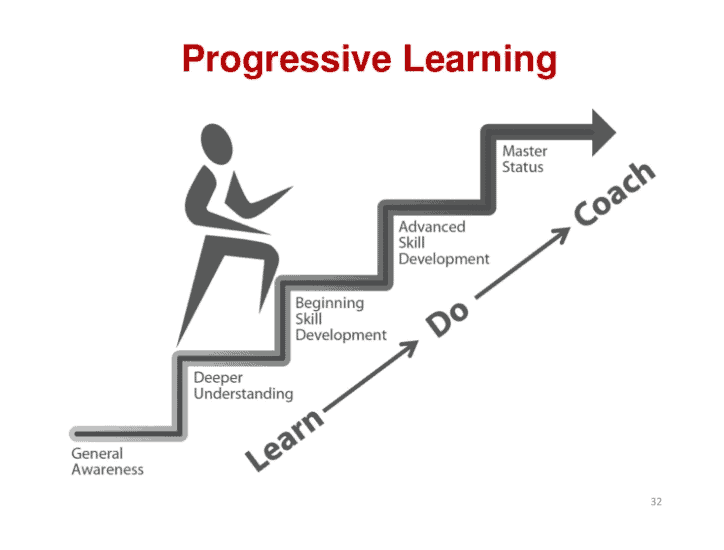
Here is an illustration of progressive learning.
SlideShare.net

Personal finance classes for beginners

If you are looking for a good entry point into personal finance, here are some recommended online courses offered to you by Coursera. Most of the materials in these classes are free unless you intend to receive a certificate after you have completed them. Simply choose the Audit Only option once you have signed up for the course. See Coursera’s enrollment options to learn the advantages and limitations of audit-only courses.

  • Introduction to Finance: The Basics
    A general overview of basic personal finance topics such as budgeting, cash flow, taxes, and setting financial goals. This course is taught by two financial professionals through a series of videos, readings, and activities. Whether you are in college, about to retire, or anywhere in between, this class will help you understand money better and give actionable steps to manage it in the future.
  • Financial Planning for Young Adults
    A course designed to provide an introduction to basic financial planning for young adults. Topics include saving, investing, financial risks, and debt. Each module offers traditional lecture-style videos, and real-world scenarios to encourage critical thinking in making financial decisions. This course is offered by the University of Illinois.
  • Personal and Family Financial Planning
    Offered by the University of Florida, this course addresses many critical financial management issues to help you develop prudent habits throughout your lifetime. It teaches you the time value of money, introduces you to various financial tools, and guides you in developing your personal action plans. By the end of this class, you are expected to gain a better understanding of saving, investing, and insurance.

Specialization
Coursera Specialization combines a series of relevant courses, so you can delve deeper into a particular subject. This is ideal if you plan to embark on a long-term learning journey. Follow this link if you want to learn more about Coursera Specialization.

The Fundamentals of Personal Finance
This Specialization is for anyone who intends to take control of their finances. There will be five courses, and in each course, you will learn and apply the essential skills in personal finance. This enables you to build confidence in making the right call about your own money situation. This module is brought to you by SoFi Technologies Inc., an American online financial company based in San Francisco. Here are the five courses included in this Specialization:

  • Course 1: Introduction To Personal Finance
  • Course 2: Saving Money For The Future
  • Course 3: Managing Debt
  • Course 4: Fundamentals Of Investing
  • Course 5: Risk Management In Personal Finance

Should I take a personal finance class?

In truth, you do not need to take personal finance classes. There are countless books out there that teach sound financial lessons. You can already make yourself financially literate by reading at least ten books about money. I personally am a product of self-study. You can check out this post to see some of my favorite financial books. But that was six years ago. If I had to redo it today, I would definitely take advantage of the courses currently offered.

You can gain many benefits from taking a personal finance class. Online courses, in particular, have a method which combines self-study, traditional lectures, and peer interactions. They call it blended learning. You will have an expert to guide you, a community to support you, and a pace patterned to you.

As much as I enjoy studying by myself, I can’t deny some major challenges I faced:

  • I have no one to ask to clarify a lesson.
  • I do not have a clear road map. I simply read what I think is good.
  • I was susceptible to false information.
  • I do not have access to materials where I can test my ideas. All are applied directly in real-life life, which is risky.

Similar to progressive education, blended learning can help make studying personal finance even less intimidating. You will have access to different mediums to ensure you are learning efficiently and effectively. Another benefit of blended learning is that it prevents you from wasting your time, money, and emotional energy on trial and error.
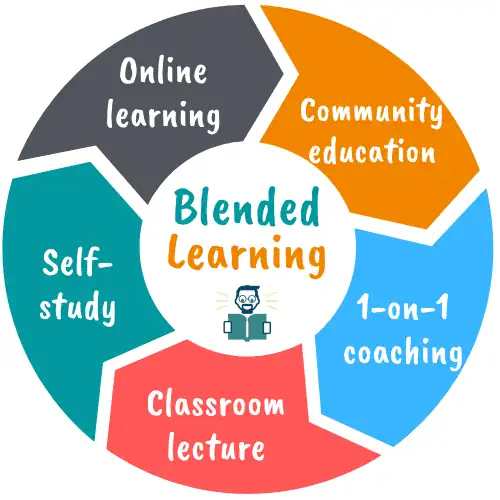
A figure showing the general idea of blended learning.

How long does it take to learn finance?

On average, a personal finance course takes about twelve hours to finish. You can technically graduate from one class every thirty days if you can devote at least three hours per week to your studies. By the end of five to six months, you will already have a solid foundation of basic finance.

But financial education, to me, is an endless process. It is either we are learning something new, or we are re-learning some vital lessons we may have already forgotten along the way. In the era of new “investment” vehicles such as cryptocurrencies and NFTs, it’s now more crucial than ever to sharpen our financial skills. This will allow us to better identify the opportunities to take advantage of and also recognize the pitfalls to avoid.

What do you learn in personal finance?

As a whole, the lessons in personal finance are about making, keeping, and spending money. You’ll learn the different financial terminologies and concepts that will help you understand money better. It will show you various ways of raising capital, as well as how to use it to acquire and protect your assets.

Personal finance is a broad subject. The common topics it covers are saving, budgeting, investing, insurance, taxes, retirement, and so much more. But for someone who is just starting to learn about financial management, my recommendation is to pay close attention to these sub-topics:

  • Jargon.
    Your vocabulary is one of the most vital tools you’ll ever have throughout your learning journey. It will not only help you better understand complex financial concepts, but it also promotes clearer discussion with fellow students and mentors.
  • Risks
    Personal finance, in a way, is about managing financial risks. Mitigating uncertainties is the heart and soul of financial management. You will benefit greatly when you become proficient at this topic.
  • Inflation
    Every year the prices of goods go up, and thus making our money’s buying power decline. Like gravity, inflation is a law. Everyone is affected by it and there is nothing much we can do on a global scale. But there are things we can do on our own to counter it, and that is an essential lesson you need to learn in personal finance. One basic approach is to minimize our expenses, and invest our money where it can yield more than the average inflation rate.
  • Interest
    This is the profit you receive for lending your money, or the price you pay for borrowing. The rise and fall of interest rates is the main influencer of many financial decisions, both individually and globally. Being familiar with the concept of interest will develop you into a better decision-maker.
  • Compound interest
    This is the most powerful concept in finance. In a nutshell, compound interest means the interest has earned more interests. You have to master this principle because it has the potential to make or break your financial life.

How can I get really good at finance?

Self-discipline is the number one delineating factor between the rich, the middle class, and the poor.
Robert Kiyosaki

Finance is 20% knowledge and 80% behavior. To be good at it, you must be committed to learning and self-development. There are lots of ways for you to become proficient with money. You can read books, attend classes, and seek financial advice. Also, don’t forget to practice what you’ve learned.

Let me close with this. If you want to be good with money, remember to SIT:

  • Study. Financial education is not taught in school because there is no accepted standard of practice for it (yet). What we have right now are generally opinions from various financial experts about what they think is the correct way of managing finances. With that said, there is indeed no one size fits all approach to personal finance. You must consume every book, classes, podcast episodes, and whatnot you can find to discover the right financial method for you.
  • Inquire. Do not be afraid to ask questions. If you are unsure about your own knowledge or practice, be sure to open it up with the financial people you trust. Inquiring also applies when buying assets. If you do not understand what you are getting yourself into, ask. If you still do not grasp the idea, it would be better to move on to another opportunity. Never get into something simply because you are pressured to do so.
  • Train. Despite all the knowledge you received, it is a given that you will eventually make mistakes. But do not fret about it, it’s just part of the training. It is better to apply and fail, than be crippled with fear. Training is putting what you learned into action.
See also


Follow the Journey

This journal is my way of making sense of the lessons from the journey. Get the next full entry delivered straight to your inbox.

How Does Personal Finance Impact You?

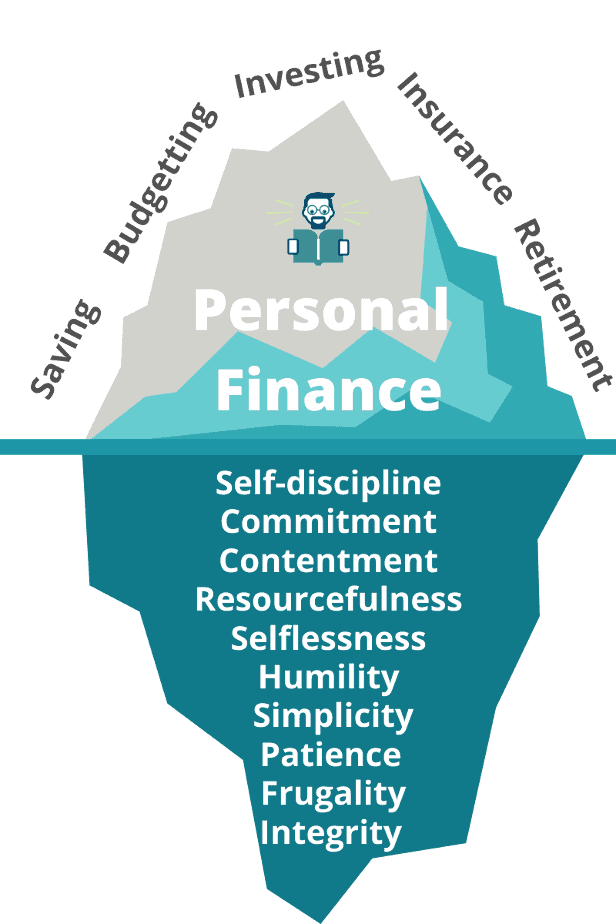
Financial stress is one of the leading causes of physical, mental, and relational issues. That is why I cannot emphasize enough how vital it is for everyone to learn personal finance, especially you as a father. Personal finance will teach you how to manage your money effectively. You will learn how to save, budget, and invest. But these are only the tip of the iceberg. Because the reality is, personal finance is more than just about money.

Personal finance will impact you (and those around you) by helping you become a better person overall. Saving teaches discipline, budgeting instills commitment and investing develops patience. Financial management is beyond head knowledge, it is also a reflection of character.

Personal finance is more than head knowledge. It teaches you how to become a better person.

Personal finance is a topic dear to me. It has helped me get back on track when I got myself deep into debt in 2016. The intention of this article is to encourage you to study personal finance, so you can better manage your resources and live a healthier life. Read on to learn how personal finance can generally help you, and what are the changes you can expect when you begin to engage with it. But please also note this content is for informational purposes only, and is not intended to provide professional financial advice.

How does personal finance help you?

Overall, personal finance will help you manage your money well. It shows you the proper way to raise, keep, and spend money effectively, so you can always make sound financial decisions. Doing personal finance will keep your spending habits in check and improve your financial well-being as a whole.

Listed below are four practical ways personal finance can help you:

#1: It helps you identify the real problem

Most people attribute their financial distress due to the lack of income or having too many expenses. But these are obvious reasons. An outflow greater than an inflow indicates financial trouble. The question is what is the underlying cause of the problem?

When I found myself broke and deeply in debt in 2016, the first thing I did was to sit down with a pen and paper. As I grieved about my current situation, I folded the paper in half and drew a plus sign on the left; and a minus sign on the right. I then listed all my sources of income under “+” and under “-“, the expenses. Here is what I found out:

  • I only have one source of inflow and a bunch of outflows!
  • I pay too much interest because of my debts.
  • I have unnecessary expenses.
+
MerchandiseRent
Utilities
Wages
Borrowed funds
Credit card debts
Mobile postpaid plan
Car fuel and maintenance
Charity
NBA League Pass
Here is what my folded paper looked like. I ran a sports boutique inside a shopping mall from 2012 to 2016.

After I learned about this, I spent the next couple of years eliminating the minuses and adding more pluses. Later, I learned these are called assets and liabilities. By 2018, thank God, I was able to cut my liabilities in half and built ten income-generating assets. Personal finance helped me identify the problem behind the problem. If not for it, I may have put myself in an even more dreadful position. You can read more about this story in a separate essay: Assets and Liabilities Management. There, I shared step by step on how I have minimized my liabilities and ramped up my assets.

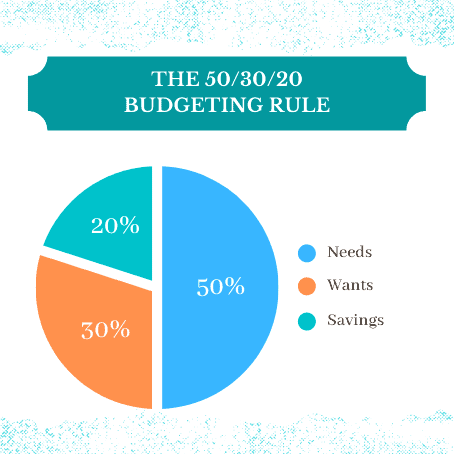
Believe it or not, the root of most financial issues we face today is simply because we do not track where our money is going. If you were to put all your expenses on a pie chart, what would it look like? Are you spending more on your wants or your needs? Basic finance will teach you the right way to track your money as well as guide you on how to spend it wisely. Try doing the simple plus and minus exercise above, you might be surprised by what you’ll discover. And since we are talking about icebergs, more often than not, the real issue behind the money problem is not about money per se. It can be envy, addiction, or the desire to prove yourself.

Budget pie chart
Are you spending more on your wants than needs?

#2: It helps you prepare for life’s uncertainties

Life is uncertain, and the truth is we cannot be 100% prepared for it. But that does not mean we shouldn’t do anything. Wouldn’t it be nice if we can at least block a percentage of those uncertainties? Illnesses, accidents, calamities, and such may result in significant expenses or loss of income. Personal finance will help protect you, your assets, and your loved ones from life’s uncertainties by educating you about the importance of emergency funds and insurance.

  • Emergency Fund
    A 3 to 6 months worth of your living expenses saved in the bank. Money here is only going to be used in times of emergency. This fund serves as a cushion to pay for those unforeseen expenditures to impede you from getting into debt. It is advisable to set aside 10 to 20 percent of your income regularly until you build a solid amount of emergency fund.
  • Insurance
    An agreement with an institution that will cover expenses usually related to critical ailments, disabilities, disasters, and death. Insurance is about preserving your assets and stabilizing your future. It can pay for hospital bills, replace the lost property, and support your children until they can stand on their own. The ideal insurance coverage is between ten to fifteen times your annual income. If you want to learn more about insurance, you can check out this post: Insurance vs Investment — How to know which one is right for me?

#3: It helps you keep out of financial trouble

Another way personal finance can help you is by keeping you out of money-related troubles. Most people who are facing money issues are those who are unaware of basic financial principles. Everyone wants to make money, but not all are interested in studying. They try to cut corners by going into investments they do not understand, and so they end up losing money or being scammed. Here are a few key money principles you should know to avoid financial disaster:

  • Risks
    There is no such thing as a “safe” investment or a “guaranteed” return. Everything in the financial world has its own form of risks. It is up to you if you are more of a high-risk high-return person, or someone who is happy with low-risk low-return. If you are being offered something low-risk with high-return, be skeptical. It is more likely a scam. On the other hand, I guess nobody wants to be part of anything with high-risk and low-return.
  • Inflation
    We lose money each year, and we don’t even know it. Inflation is an invisible expense. As the prices of goods increase, the buying power of our money decreases. The average inflation rate is about 3% per year. What that means is we are losing money at this rate annually. Like gravity, inflation is a law. It affects everyone and there is no way to stop it. The only thing we can do to counter it individually, is to spend less and invest our money in channels that can yield more than the inflation rate.
  • Interest
    They said there are only two kinds of people in the world: the ones who earn interests, and the ones who pay interests. Interests can be an ally or an enemy. If it is an ally, you can earn income passively through the assets you have acquired. If it’s an enemy, it makes you pay more than the value you are getting. Be sure to pay attention to which side of interest you are on.
  • Compound interest
    This is one of the most powerful concepts in finance. Compound interest simply means the interest has earned more interests. This principle alone will make or break your financial life. It can either accelerate you upward to prosperity, or crush you down to poverty. Suppose you did not pay your credit card balance of $1,000 at 3% interest per month (or 36% annually); due to compound interest, your payable will double in two years. The same is true with your investments.

#4: It helps you build a better tomorrow

The time will come when you can no longer do physical work. Your life after retirement will be based on how well you have prepared for it. This is another area where personal finance can help you. It will teach you how to acquire assets such as real estate, stocks, and businesses that can make you earn income passively. Passive income is a way of making money that doesn’t require your physical presence. The following are The Five Laws Of Gold, which you can apply as you build your passive income streams; They are taken from the book, The Richest Man In Babylon.

  1. Gold cometh gladly and in increasing quantity to any man who will put by not less than one-tenth of his earnings to create an estate for his future and that of his family. As much as possible, save at least 10% of your income to build capital and acquire assets.
  1. Gold laboreth diligently and contentedly for the wise owner who finds for it profitable employment, multiplying even as the flocks of the field. Make your money work by investing it in profitable investment vehicles.
  1. Gold clingeth to the protection of the cautious owner who invests it under the advice of men wise in its handling. Always seek counsel from legit financial experts.
  1. Gold slippeth away from the man who invests it in businesses or purposes with which he is not familiar or which are not approved by those skilled in its keep. Rule number 1: Do not invest in things you do not fully understand. Make time to study first.
  1. Gold flees the man who would force it to impossible earnings or who followeth the alluring advice of tricksters and schemers who trust it to their own inexperience and romantic desires in investment. Be cautious. There are people out there who will take advantage of your inexperience. Always use logic more than emotion when making decisions.

How does personal finance change you?

The good news is that it is not rocket science. Personal finance is about 80 percent behavior. It is only about 20 percent head knowledge.
Dave Ramsey

As a whole, when a person changes, his financial situation changes. The concepts of personal finance are meant to guide us to the right mindset and behavior. Unless a person is willing to change, he cannot effectively apply these principles. Financial transformation can only be achieved by people who are willing to accept and let go of their bad money habits.

Let me close by sharing some notable changes you can expect to see in yourself with personal finance:

  • You will read more books. Financial education is a continuous journey. You’ll find yourself reading more books and experimenting on the different approaches to better manage your finances.
  • You become less interested in doodads. Doodads are unnecessary expenses such as the latest gadgets, toys, or junk food. You will become wiser with your spending. You see clearer lines between your wants and needs.
  • You are less anxious. Most of the anxiety comes from being unprepared or not knowing what to do if calamities strikes. Learning how to protect yourself and your family will boost your confidence, thus making you less anxious.
  • You will be more generous. “The more you give, the more you receive” — this is a basic concept in finance not many people find practical. But as you become generous with your resources, you will discover how true this ancient wisdom is up to this day.

See also


Follow the Journey

This journal is my way of making sense of the lessons from the journey. Get the next full entry delivered straight to your inbox.

Where To Buy Chromebooks In The Philippines?

Chromebooks are not yet that popular in the Philippines. People here are generally more interested in MacBooks and Windows-based laptops. For this reason, there aren’t many stores that are willing to take the risk of offering these Google-operated machines to the market. This can be a frustrating thought, especially for those people who have done their research and found the benefits of owning a Chromebook. But don’t worry. There is a store today that does not sell any kinds of laptops except for Chromebooks.

Chromebook Store Philippines offers the latest and greatest Chromebooks available today. You can conveniently buy your preferred model on their website, or via Facebook Messenger, and have it delivered anywhere in the Philippines.

This store is actually one of our businesses. The difficulty of getting a reliable Chromebook in our country is what sparked me to get into this venture. I intended to buy a Chromebook to replace my old laptop a few years ago, but I couldn’t find my preferred model anywhere. It took me months to find the Chromebook I wanted, and I was only able to get it from a seller abroad. Thinking about the people who may have the same problem, I invested in a couple of units to test the market.

Read on to learn more about Chromebooks and how you can purchase yours.

Lenovo Duet 5 -- Chromebook Store PH

How to place an order for my Chromebook?

  1. Buy it directly at ChromebookStorePH.com or reach them via Facebook Messenger.
  2. Fill in the purchase order form and settle the 50% down payment.
    (They accept cash, credit card, bank or mobile transfer).
  3. They will coordinate the shipment with you once the payment is verified.
  4. Your unit will be delivered through their accredited carriers.
  5. Full payment shall be settled once the courier has arrived at the shipping address.

How to pre-order a Chromebook?

Some models may not be available on hand. For this instance, Chromebook Store PH will arrange a special order for you with an estimated delivery time of 3 to 4 weeks upon down payment.

Terms and conditions

  • 50% down payment; 50% upon delivery.
  • Delivery fee is not yet included in the cost.
  • Confirming means you agree they may open the box for quality checking purposes and/or compliance with inspection protocols.

Do Chromebooks work in the Philippines?

I live in the Philippines and I have been working on a Chromebook full-time for more than two years. So far I didn’t encounter any regional issues except for some perks that are not yet available in our country such as the Stadia Pro — which is not a big deal for me. Another gaming platform not yet available in the Philippines (as of this writing) is GeForce NOW, which is again, not a concern for me since I do not play games on my Chromebook. But if you are into gaming, it is only a matter of time before Stadia and GeForce NOW will become available. If you cannot wait, I heard Steam will release its official support for Chromebooks any time soon.

How much does a Chromebook cost in the Philippines?

Chromebook Store Philippines’ prices start from Php 21,000 to Php 65,000++. They focus more on the mid-end to high-end category Chromebooks. But despite the price range, the ideal price for a Chromebook is somewhere Php 25,000 to Php 35,000. At this price, you can already get an Intel Core i3 processor with 8 gigabytes of RAM and 128 gigabytes of local storage. Chrome OS is a superfast and lightweight operating system made by Google which can run at an even lower specification. But the reason I personally recommend this setup is to make your machine future-proof. Applications these days are getting better, but also becoming more demanding. You would want your machine to last for five years, at least.

Acer Spin 713
Acer Spin 713

Where to buy cheap Chromebooks

There is a stigma around Chromebooks as being a cheap alternative to Windows and Mac. Some even call them “disposable laptops.” There were instances when customers were surprised to learn the Chromebooks we offer amount to Php 20,000 and up. They thought Chromebooks should only be priced not more than Php 15,000. I can’t blame them. I had a similar impression at first. But the more I learn about Chromebooks, the more I appreciate them.

I have been a Windows and Mac user for the past two decades. And to be frank, I do not miss them one bit. Chromebooks are easy and simple to use, have a long battery life, are secure and super fast, and most of all, reliable. It doesn’t need an antivirus or maintenance program. It automatically backs up your files and settings in the cloud. And a fully charged battery can last for an average of 10 to 12 hours (may vary with usage). These are the few compelling reasons why you would want to buy a Chromebook, and not simply because it’s cheap.

To be fair, there is some truth in what people think. Besides, Chromebooks became popular because of that anyway. Yet perhaps the biggest contributor to its overall reputation are the resellers. Many young people received Chromebooks as presents but don’t know how to use them. So what they did was sell it at a super cheap price and use the money to buy other laptops. If you want to get a chance to strike such deals, you can test your luck by joining the Chromebook Owners Philippines’ Facebook group.

In the end, “cheap” is not what best describes a Chromebook but “cost-effective.” The reason why it is more affordable than its competitors is that they have removed the bloat. They took out all the unnecessary features from a normal laptop, and only focused on what truly matters.

Closing thoughts:

While I recommend Chromebooks overall, I must admit it is not for everyone. I also have my quirks against it:

  • It is highly internet dependent.
  • Some apps have compatibility issues.
  • No trash or recycle bin yet. — All deleted files are permanent.

So, is the Chromebook the right device for you? If you are a hardcore gamer, Chromebooks are not for you (for now). Most games you want to play are on Windows. If you work mostly with photos and videos, Chromebooks are also not for you. You will be more productive using a Mac. But for the 80% of us who do most of our work online, Chromebook is more than capable of handling our needs.

Can you install Office on a Chromebook? You cannot technically install Microsoft Office on a Chromebook. But you can still get access to Word, Excel, PowerPoint, and other Microsoft products via the browser. You can go to www.office.com and sign-up for an account to use the Microsoft 365 office suite. But you may need to pay for a yearly subscription to be able to use its full potential. If you do not want to pay, another option is to use Docs, Sheets, and Slides. These are Google’s versions of Word, Excel, and PowerPoint. They are completely free to use and almost as powerful as Microsoft’s.

Can you use Zoom on a Chromebook? There are three ways to use Zoom on a Chromebook. First, via the browser. You can go to zoom.us to attend or host a meeting from there. The second is by downloading and installing Zoom PWA via the Google Play Store. Third, is by installing the Zoom app from the Chrome web store. I personally prefer the third option as I find it to be the most stable of them all. It is important to note, however, that Zoom on Chrome OS is not as advanced compared to Windows and Mac. There are still lots of features not present, such as custom backgrounds. I also do not recommend using Zoom on lower-end Chromebooks.

How many years can a Chromebook last? Google will give about 7 years of continuous support and updates from the time a Chromebook was released. Buying a good quality model and knowing how to take care of it will last you a long time. Be sure to check Google’s Auto Update Policy first before you buy a Chromebook to see its expiration date. Furthermore, I also normally recommend getting a metallic body Chromebook as plastic tends to chip over time.

Can I watch Netflix on my Chromebook? There are two ways to watch Netflix on your Chromebook. One is via the browser, and the other is through the Netflix app. You can download it at the Google Play Store. It is recommended, however, that you watch it in the browser as Chrome OS still has compatibility issues with some Android apps.

Which brand of Chromebook is the best? Our best-selling Chromebooks so far are made by Lenovo, Google, Acer, and Asus. If I could break these into budget categories, this is what it would look like:

Budget (Php 21,000 to Php 35,000)Lenovo
Mid-end (Php 36,000 to Php 45,000)Acer and Asus
Premium (Php 46,000 to Php 65,000++)Google

See also

  • Recommended tools — Chromebooks


Follow the Journey

This journal is my way of making sense of the lessons from the journey. Get the next full entry delivered straight to your inbox.